
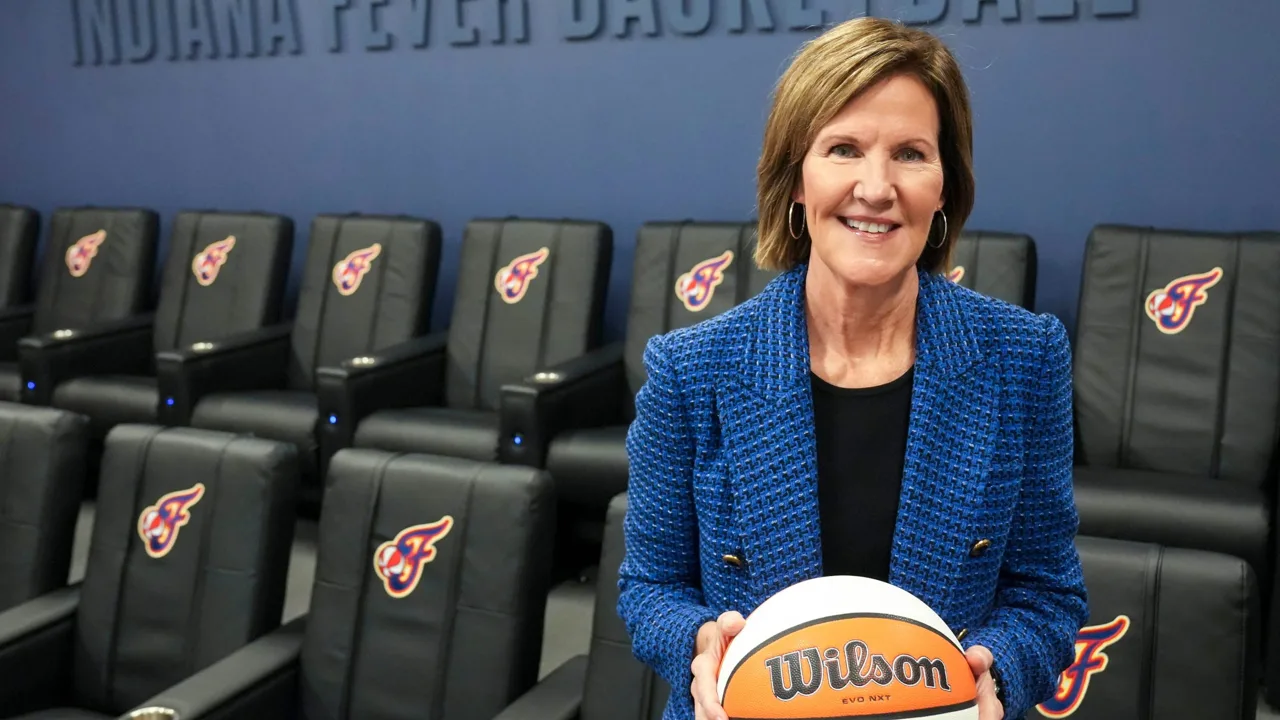
Indiana confirmed two major front-office departures on October 23, 2026: team president Kelly Krauskopf was stepping down, and chief operating officer and general manager Amber Cox was leaving effective immediately. Pacers Sports & Entertainment announced a national search for the next general manager. Those announcements did not announce a new head coach or a completed player transaction.
What Indiana confirmed on October 23
The Krauskopf announcement includes an important timing detail: she made her decision and informed leadership before the end of the 2026 regular season. Describing her departure solely as a reaction to the subsequent playoff result would omit that stated chronology.
The separate Cox announcement confirms that her departure was immediate and that the organization would conduct a national GM search. Associated Press reporting described Cox's exit as a firing. The two developments belong in the same front-office story, but they should not be flattened into an unsupported claim that both executives resigned or both were dismissed under identical circumstances.
The public announcements did not name a successor. A national search is a process, not an appointment, and it does not by itself identify the final job structure. Whether Indiana fills a combined role, distributes responsibilities differently or announces another senior position requires a later organizational statement.
This guide reflects the confirmed information checked on October 27. It separates the positions involved, the decisions that remain ahead and the claims that the available statements do not establish. That is especially useful in a high-profile franchise where executive news, player speculation and coaching criticism can quickly become mixed together.
A reader following the Fever does not need to treat every reported concern as proof of a particular internal cause. The immediate change is who occupies two leadership positions. Its basketball consequences will depend on subsequent appointments and decisions, which can be evaluated when they occur.
The change also does not erase the franchise's existing commitments or history. The next leadership group inherits players, contracts, staff relationships and an organization already operating. Understanding that inheritance is more informative than assuming a front-office change creates a completely new team overnight.
Why president, general manager and head coach are different jobs
These titles describe different responsibilities, even when executives collaborate closely. A team's exact reporting and approval arrangements depend on its organization. The useful distinction for fans is between setting organizational direction, constructing the roster and coaching the players who are available.
Krauskopf's role covered basketball and business leadership
Krauskopf returned in 2024 with the title president of basketball and business operations. That scope extends beyond deciding who should take a late-game shot. It connects the basketball operation with the wider franchise, its resources and longer-term development.
The departure release also credited her involvement in developing the Fever's sports performance center. The facility was described as scheduled to open in March 2027. That is an example of organizational work that continues across seasons and leadership changes. A plan's announced opening date should still be distinguished from a completed opening.
Her long history with the franchise helps explain why the departure carries significance beyond one season. It does not mean every result or investment should be attributed to one person. Ownership, players, coaches, staff and other executives contribute to an organization operating over many years.
Cox held both the GM and chief operating officer titles
Cox joined the Fever in 2024 as both general manager and chief operating officer. The combined title matters because the job was not limited to one narrow basketball function. The original hiring announcement emphasized experience on both the basketball and business sides of professional teams.

In general, a GM's work concerns roster construction and personnel decisions, while an operations role can include the practical and business systems supporting the franchise. The boundaries can overlap. A future announcement should therefore be read for its actual responsibilities rather than assuming that the next person will inherit precisely the same combined position.
The national search confirmed by PS&E is specifically for the next general manager. It does not, by itself, settle how every other responsibility will be distributed. That is an important question for a later organizational announcement.
White's coaching role is a separate question
The head coach's responsibilities concern preparation, player usage, rotations and in-game decisions. Those duties interact with the roster supplied by basketball leadership, but a change above the coaching staff is not automatically a coaching dismissal.
Neither October 23 departure announcement announced Stephanie White's exit. That should not be turned into a promise about her status indefinitely; it means a separate coaching decision needs separate confirmation. A commentator questioning the coach's future is offering an assessment, not issuing a team personnel announcement.
What the announcements do not establish
The public record gives a mixed sporting context rather than a one-line explanation. Indiana finished the regular season 28-16, setting a franchise record for wins. Its season then ended with a 94-83 loss at Las Vegas in the deciding game of a first-round playoff series on October 1. Regular-season progress and postseason disappointment can both be part of an assessment.
Neither fact, by itself, proves the organization's complete reasoning for an executive decision. Ownership can evaluate several responsibilities over a longer period than one game. A fan or analyst can reasonably criticize roster construction or performance without having direct knowledge of the conversations that produced a departure.
That is especially important when discussing Krauskopf's timing. The team explicitly said she had communicated her decision before the regular season concluded. Any account presenting both October 23 developments as identical, spontaneous responses to the playoff elimination should address that information rather than ignore it.
The announcements also do not establish that Caitlin Clark or another player demanded the changes. A player's prominence, attendance at an event or public silence is not evidence of having ordered a personnel move. The Caitlin Clark career guide provides background on her importance to Indiana, but that importance should not be converted into an unsourced account of internal authority.
Likewise, a proposed replacement discussed online is not a confirmed hire. A credible report about an interview would still be different from an agreement, and an agreement would need to be distinguished from an official announcement and effective start date. Keeping those stages separate avoids replacing one uncertain situation with another.
The departure statements deserve the same careful reading as critical reporting. Expressions of gratitude do not settle every performance question, while criticism does not disclose every private reason. Fans can evaluate the basketball evidence and ask clear questions about accountability without pretending the public record contains more than it does.
The next concrete development to watch is therefore an appointment or a clearly described organizational change. It will tell supporters more about the intended direction than speculation that treats every existing employee or player as certain to leave.
The next front office inherits an offseason, not a blank roster
A leadership change does not reset every player contract. The next decision-makers must work from the commitments and rights already in place, then decide how to improve the team within the current collective bargaining agreement. That makes the offseason a connected set of decisions rather than a shopping list of unrelated names.
Boston's existing agreement and Clark's future decisions are different
The Fever announced Aliyah Boston's restructured multiyear agreement on April 17, 2026, extending through the 2029 season. The official Boston signing announcement is an example of a completed agreement. It should not be described as an unresolved negotiation merely because management has changed.
Clark's future extension decisions are a different issue. Contemporary reporting identified a potential EPIC-related extension as part of Indiana's upcoming work. Eligibility for a mechanism, the ability to negotiate and an agreement actually being signed are separate stages. A reader should look for the contract announcement rather than assume an eligible player has automatically accepted a particular deal.
Associated Press reporting also identified Kelsey Mitchell's unrestricted free agency as an offseason question. That makes retaining or replacing an important contributor part of the planning discussion, but it does not establish an outcome. A player's opportunity to choose a destination is not evidence that she has already decided to leave.
These issues interact. An agreement made with one player can affect the flexibility available for another move, and a retained core can influence which complementary skills the team needs. Evaluating a proposed change requires seeing the whole roster rather than treating every decision in isolation.
Roster fit must be evaluated alongside the CBA
The 2026 WNBA CBA overview provides background on the contractual framework. The governing agreement determines which transactions and contract structures are available; it does not prescribe the best basketball choice for Indiana. A desirable player and a feasible acquisition are different questions.
Basketball fit should be specific. Does a proposed addition improve size, secondary ball handling, spacing or a particular defensive assignment? Which existing player would lose minutes, and which lineup would become more workable? Those questions are more informative than assuming that a familiar name necessarily solves a weakness.
The same approach applies to retaining players. Continuity has value when teammates complement each other, but it should be assessed alongside development, available alternatives and contract obligations. A front office must decide what to preserve as well as what to change.
None of this requires inventing salary figures or declaring a specific trade inevitable. Until reliable contract terms and formal moves are available, a useful fan analysis can state the basketball objective and identify the information still needed to judge whether a proposed solution is practical.
How to assess the next appointment when it is announced
The first detail to examine is the job itself. Is Indiana appointing a general manager only, or combining that position with another executive responsibility? Does the announcement describe basketball authority, business leadership or both? The old combination of titles should not be assumed to remain unchanged.
Next, look for a clear explanation of how the person will work with ownership, senior leadership and the coaching staff. A recognizable name is not a substitute for understanding who makes which decisions. Public clarity about responsibilities makes later accountability easier to assess.
Experience should also be evaluated in context. Roster evaluation, contract work, organizational management and player relationships are different skills. A candidate can bring strengths in one area while needing support in another. The useful question is how the entire leadership group will cover the work, rather than whether one biography contains every possible credential.
A meaningful introduction should connect its objectives to the team being inherited. Improving the roster around established contributors is different from beginning an expansion roster, and maintaining business growth is different from choosing a defensive coverage. Listen for specific priorities without expecting the club to disclose confidential negotiating plans.
For fans, a fair evaluation can track several stages: the clarity of the appointment, the rationale for confirmed transactions, the development of workable lineups and eventually the team's performance. The announcement day cannot establish all those outcomes. Neither praise nor criticism needs to be final before the person has made a decision.
That does not require suspending judgment indefinitely. It means using the right evidence for the right stage. A contract announcement can establish what was agreed; game film can inform an assessment of fit; a season provides a broader performance sample. Speculation about an interview cannot perform all three functions.
The October 23 releases set a direction for the process by confirming a GM search. They did not publish a completion deadline or a chosen successor. Any later timetable should come from new information, not from assuming how quickly another organization completed a different search.
What Fever fans should follow next
The next useful update will be a concrete one: an appointment, a description of the leadership structure or a confirmed basketball transaction. For an executive hire, check the exact title, responsibilities and effective date. For a player move, check the actual agreement rather than treating an expression of interest as a completed signing.
When a new report appears, compare its date with the October 23 statements. A profile written before the departures may still describe Krauskopf or Cox in their former jobs. Historical photographs and interviews remain useful background, but their old captions should not be mistaken for confirmation that the organization has reversed its announcement.
Keep executive news separate from player transactions and game listings
A front-office appointment updates the organization's leadership. A player signing, trade or waiver updates the roster. A game listing supplies the date, opponent and viewing information. These records can inform one another, but they do different jobs. One should not be used as a substitute for another.
The Indiana Fever schedule page is the practical place for game context and recorded results. When planning future viewing, use the WNBA broadcast listings rather than extrapolating a channel from an old playoff game. Executive news does not itself establish the team's next televised appearance.
If you use the WNBA calendar tools, continue to check the actual event details as future schedules are published or revised. A management change is not a reason to assume that an existing ticket, calendar subscription or television package has changed its terms. Those questions need the relevant team, event or provider information.
For the basketball discussion, keep a short list of testable questions: who is appointed, what authority is announced, which commitments remain and which confirmed moves improve the roster's fit? That approach leaves room for strong opinions while tying them to decisions that can actually be assessed. The next Fever leadership group will reveal its direction through those decisions, rather than through every rumor attached to the search.
Sign in with Google to join the discussion.