
What We Know Now About Tempo vs Fever on September 18
As of August 19, Indiana has the stronger early case against Toronto, but this is a one-month-out outlook—not a game-day prediction. The Fever have already won both 2026 meetings, and that evidence makes them the sensible preliminary pick. It does not make a September result automatic. Another stretch of regular-season games, a long international break, travel and roster-availability updates all sit between this analysis and tipoff.
The confirmed matchup is Indiana Fever at Toronto Tempo on Friday, September 18, 2026, at 7:30 p.m. Eastern Time. The current official listing places the game at Coca-Cola Coliseum in Toronto. Fans should use the live Tempo–Fever game page for the latest start time, viewing options, game status and eventual final score. Those details belong on a changing game utility; the purpose here is to explain the matchup evidence behind an early lean.
There are also firm limits on what can honestly be predicted this far ahead. No September 18 active lineup is official on August 19. A player who is available today could have a different status after the games before the break, international duty, practice resumption or pregame evaluation. For the same reason, this article does not invent an injury report, betting spread or exact rotation. Any sportsbook price that appears closer to the date would need a fresh check and would not change the fact that a line is a market estimate rather than a result.
The useful conclusion right now is narrower: Indiana has shown the higher ceiling and has solved Toronto twice, while Toronto demonstrated in the second meeting that it can make this matchup competitive. That combination supports a Fever lean with limited confidence, not a lock. The sections below separate what may be repeatable from what could change, then provide a checklist for turning this early outlook into a responsible game-day decision.
What the First Two 2026 Meetings Tell Us
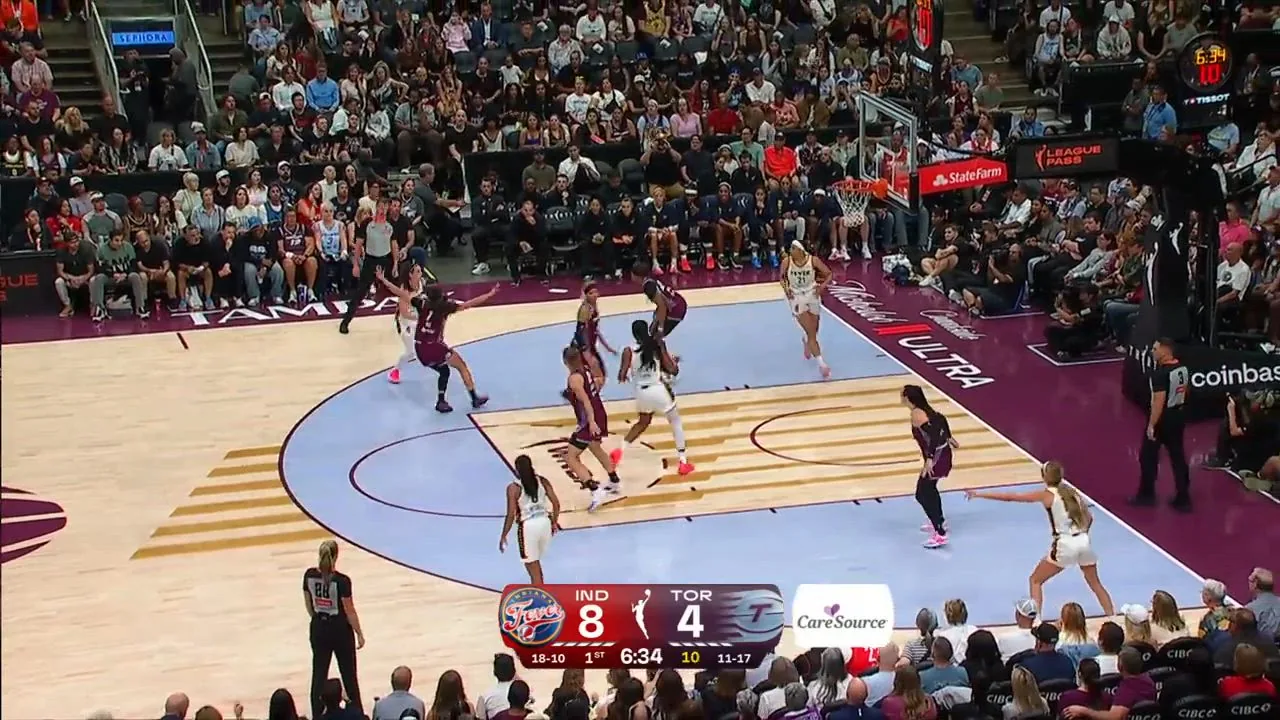
Indiana's 2–0 season-series lead is the clearest evidence for the early prediction, but the shape of the two wins matters more than the count. The Fever won the June 16 meeting 113–91 in Indianapolis, then took the August 18 rematch 101–95 in Toronto. A 22-point home win became a six-point road win, so the series moved toward competitiveness even though the winner did not change.
| Date | Result | Most useful signal |
|---|---|---|
| June 16 | Indiana 113, Toronto 91 | Indiana combined 52.2% shooting with a 43–27 rebound advantage. |
| August 18 | Indiana 101, Toronto 95 | Toronto won rebounds 41–32 and committed four fewer turnovers, yet Indiana's shooting efficiency held. |
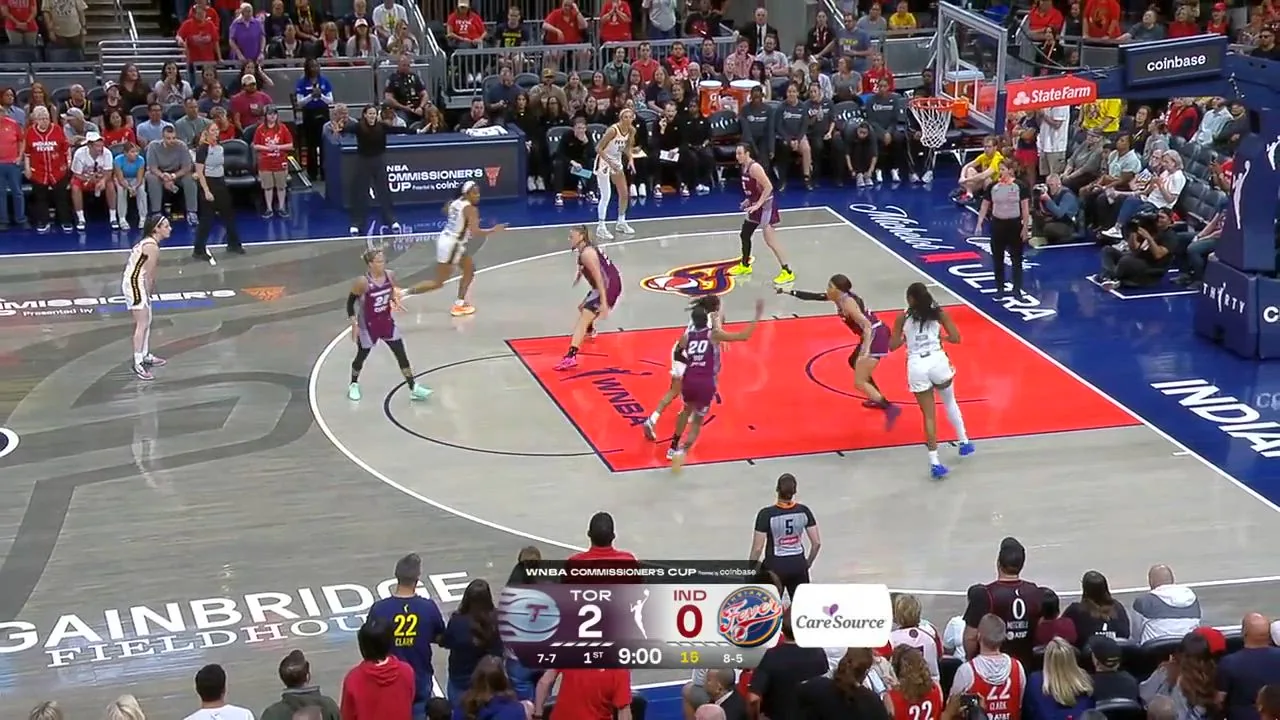
The common thread was Indiana's shot conversion. In June, the Fever shot 52.2% from the field and 43.3% from three. In August, the production box score again put them at 53% overall and 44% from beyond the arc, compared with Toronto's 39% and 32%. That does not mean Indiana will automatically shoot above 50% a third time. It does show Toronto has not yet found a possession-by-possession defensive answer that forces the Fever into consistently inefficient attempts.
The second game also supplies the best case for Toronto. The Tempo created extra possessions through a 41–32 rebound edge and protected the ball better, turning it over 11 times to Indiana's 15. Aneesah Morrow's 16 rebounds were a concrete example of how Toronto can compensate for a shooting deficit. Marina Mabrey scored 22, while Indiana was led by Kelsey Mitchell's 29 and Caitlin Clark's 24 points and seven assists. Those names describe what happened on August 18; they are not a promised September lineup.
The predictive takeaway is therefore balanced. Indiana has produced the more sustainable offensive quality, winning at home and away. Toronto has already shown that rebounding, ball security and a less lopsided pace can shrink the margin. If the Tempo pair those possession gains with better perimeter defense after the break, the third meeting can stay close. If Indiana again gets clean threes and efficient paint touches, the first two results point toward another Fever win.
Where Indiana and Toronto Stand on August 19
The season snapshot favors Indiana by more than the head-to-head results. Through games completed on August 18, the Fever were 24–12 and riding a five-game winning streak. The Tempo were 10–24 and had lost 11 in a row. Those records are dated facts, not the records either team will carry into September 18; Toronto was also due to play again on August 19, after this research cutoff.
| Team through Aug. 18 | Record | Points per game | Points allowed | Average margin |
|---|---|---|---|---|
| Indiana Fever | 24–12 | 96.4 | 90.5 | +5.9 |
| Toronto Tempo | 10–24 | 87.9 | 94.3 | -6.5 |
Indiana's profile is that of a high-output team whose offense has given it room to survive imperfect defensive stretches. The Fever scored at least 95 points in each of their final four games before this cutoff, beating New York, Dallas, Atlanta and Toronto. Add the preceding 90–86 win at Chicago, and the current streak includes different game scripts: close road finishes, a comfortable home win and Tuesday's six-point result in Toronto.
Toronto's snapshot is almost the inverse. The Tempo can manufacture competitive stretches and extra possessions, as the August 18 rebounding edge showed, but their season scoring and prevention numbers have not balanced. An average margin of minus 6.5 points across 34 completed games illustrates the problem without claiming every loss looked the same. Averages describe what has happened; they do not account for the opponent, player availability or the post-break version of the team.
For updated context, use the Indiana Fever schedule and results and the Toronto Tempo schedule and results. The early pick should be revisited after both clubs finish their pre-break schedules. If Indiana sustains efficient scoring and Toronto's losing run continues, confidence in the Fever can rise. If Toronto steadies its defense and enters the break with better form, the current gap should be narrowed rather than ignored.
The Matchup Keys That Could Decide the Rematch
A useful prediction should identify conditions that can be checked, not simply declare that the team with the better record will win. Four levers connect the first two meetings to the September rematch.
Can Toronto Lower Indiana's Shot Quality?
Indiana shot better than 52% overall and 43% from three in each win. Some of that conversion can cool naturally, but Toronto cannot rely on regression alone. The Tempo need cleaner point-of-attack resistance, earlier help without losing shooters and fewer breakdowns that turn one advantage into an open second-side three. The practical benchmark is not holding Indiana to an arbitrary percentage; it is forcing more late-clock attempts and fewer in-rhythm catches.
Who Controls the Paint and the Glass?
The August box score captures the tension. Toronto won the rebounding battle 41–32, including 16 boards from Aneesah Morrow, yet Indiana scored 50 points in the paint to Toronto's 32. The Tempo's extra rebounds helped them stay within six, but they did not consistently prevent efficient Fever finishes. Toronto's best path is to keep the rebounding advantage while reducing deep catches, straight-line drives and easy finishes. Indiana, meanwhile, does not need to dominate the total rebound count if it protects the high-value area and converts before Toronto's defense is organized.
Can the Tempo Win the Possession Count Again?
Toronto committed only 11 turnovers in the second meeting while Indiana had 15. That four-possession difference, combined with the rebounding edge, created enough opportunities to survive a large shooting gap. Repeating that discipline is essential. Empty possessions are especially costly against an Indiana team that can turn a live-ball mistake into an early attack. For the Fever, cleaner entry passes and better spacing would remove one of Toronto's clearest equalizers.
Which Team Executes After the Break?
The September game will be played two days after the league's FIBA break ends. Timing, conditioning and lineup continuity may matter as much as the season averages. If the score is close late, Indiana's broader record of high-scoring wins supports the early lean, but Toronto's six-point August loss shows it can reach a competitive fourth quarter. Game-day judgment should focus on who returns with a stable rotation, who generates reliable half-court actions and who avoids forcing shots when the first option is covered.
These keys also define what would invalidate the early prediction. A Toronto defense that suppresses both paint touches and clean threes, while maintaining its possession edge, can flip the matchup. If those conditions do not appear, Indiana's two-game efficiency advantage remains the most persuasive evidence.
Why the FIBA Break Makes This an Early Outlook
The calendar creates an unusual forecasting problem. The WNBA's official key dates pause league games from August 31 through September 16 for the 2026 FIBA Women's Basketball World Cup. The World Cup runs September 4–13 in Berlin, and the WNBA regular season resumes September 17. Toronto hosts Indiana on September 18, the second day of the resumed league schedule.
Those dates are confirmed; their effect on individual players is not. On August 19, it would be irresponsible to assume that a particular Fever or Tempo player will make a national-team roster, advance to the final rounds, travel on a specific itinerary, receive rest or be unavailable. National-team selections and club availability updates need to be checked after they become official. A tournament roster also does not by itself prove a player's September 18 game status.
The break can influence the matchup in three ways:
- Workload and travel: players active deep into the World Cup could face a compressed transition from Berlin back to WNBA preparation, while others may receive a longer recovery and practice block.
- Team rhythm: both clubs will go nearly three weeks without a WNBA game. A winning streak or losing streak entering August 31 may not resume in the same form after September 16.
- Limited fresh evidence: with the league returning September 17, there may be little or no post-break game tape for these two teams before they meet. Practice reports and official availability can matter more than month-old averages.
This is why the current Fever lean carries limited confidence even though the statistical case is clear. Indiana's two wins and stronger August form are the best evidence available today. The long pause reduces how confidently that evidence can be transported into a single game on September 18.
The responsible update window opens after the World Cup ends on September 13. Recheck official roster and team reports, then confirm game status on September 17 and again on game day. If major rotation pieces face uncertain travel or availability, the prediction should be revised rather than defended. If both teams return close to their established rotations, the two completed meetings regain more predictive weight.
Early Prediction: Fever Have the Edge, but Confidence Is Limited
Early pick as of August 19: Indiana Fever to beat the Toronto Tempo, with low-to-moderate confidence. This is an editorial matchup lean, not a betting line or a guarantee. The final prediction must be rechecked during game week, after official availability and post-FIBA return context become clearer.
The base case is built on repeatability. Indiana has won both meetings, scored efficiently inside and outside in each one, and entered this analysis with a positive season scoring margin and five straight victories. Toronto has not yet forced the Fever into a low-efficiency version of their offense for a full game. If Indiana returns from the break with its primary creation and interior structure intact, another Fever win is more likely than Toronto suddenly reversing every matchup disadvantage.
The likely game script is closer to the August meeting than the June blowout. Toronto is at home, has already demonstrated that rebounding and careful ball handling can narrow the gap, and will have a long preparation window. A competitive game can turn on a few fourth-quarter possessions. Indiana's edge comes from having more demonstrated ways to create efficient scoring, not from an expectation that the Fever will cruise.
Toronto's upset route is also clear. The Tempo need to win the possession count, prevent Indiana from pairing paint efficiency with open threes, and avoid an early deficit that forces rushed offense. A merely average Indiana shooting night, combined with Toronto's August rebounding advantage and improved perimeter conversion, would make the home side dangerous. That is a realistic counter-scenario, not a token disclaimer.
Three developments would justify changing the pick: a significant game-week availability imbalance, a major form reversal before August 31, or post-break evidence that one team has reintegrated its rotation much more smoothly. The article will not guess which players those updates may involve. Until those facts exist, Indiana's 2–0 head-to-head advantage and stronger season profile carry the most weight.
So the answer today is Fever, probably in a more competitive contest than the first meeting. The answer on September 18 should be treated as a new decision. Prediction quality improves when new evidence changes the call; it does not improve by defending a month-old pick after the conditions have changed.
What to Recheck Before Tipoff
A month-old prediction should never substitute for game-week information. Use this timeline to update the early Fever lean without chasing rumors or treating an old roster note as current.
- Before the WNBA break: review every Fever and Tempo result through August 30. Update each record, recent scoring trend and any role changes that are established over multiple games. One hot shooting night should not outweigh a meaningful change in how a team creates or prevents shots.
- After the World Cup ends: check official FIBA and team communications after September 13. Confirm who actually participated, then wait for club guidance about return, practice and availability. Participation alone does not prove that a player will start, sit or face a minutes limit.
- When WNBA play resumes: on September 17, look for the newest team status information and any evidence from the first resumed games. Indiana and Toronto may not both have a post-break result before their meeting, so do not manufacture form where no fresh game evidence exists.
- On September 18: verify the 7:30 p.m. ET start, Coca-Cola Coliseum venue, game status and legal viewing options. The current listing includes ION and TSN, but network access can depend on location and service. A channel name is not a promise of free or universal access.
- Close to tipoff: reassess the prediction with confirmed active personnel and expected roles. The final lineup-based prediction belongs here, not in an August 19 article.
The September 18 WNBA slate provides the date-level view, while the matchup page carries the changing game status and final score. Fans attending in Toronto should also recheck the official event listing before traveling. The current Coca-Cola Coliseum information is supported by the WNBA game page, venue listing and ticket page; an older Tempo theme-night article naming Scotiabank Arena appears to be outdated.
If the core facts remain stable and Indiana returns with a representative rotation, the early Fever pick stands. If official availability, form or post-break reintegration materially favors Toronto, change it. That is not inconsistency—it is the purpose of an update window.
Tempo vs Fever Prediction FAQ
When is Indiana Fever vs Toronto Tempo?
The game is scheduled for Friday, September 18, 2026, at 7:30 p.m. Eastern Time. The current official venue is Coca-Cola Coliseum in Toronto. Because schedules and event operations can change, confirm the matchup page again before traveling or choosing a viewing service.
Who has the early edge?
Indiana is the early pick as of August 19. The Fever won the first two 2026 meetings, 113–91 and 101–95, and carried the stronger season record and recent form at this cutoff. The second meeting was much closer, so the evidence supports an Indiana lean rather than a certain or comfortable win.
Why is confidence limited?
The teams still have games to play before the WNBA pauses from August 31 through September 16. The FIBA World Cup runs September 4–13, and league play resumes September 17. Travel, workload, practice reintegration and official game-week availability could change the matchup. No final September lineup can be known from an August article.
Is this a betting prediction?
No. This is a basketball matchup outlook based on completed games and dated team performance. It does not provide a sportsbook line, total, wager recommendation or guaranteed result. Any game-day market would require a new check, just like the lineups and team status.
Where can fans find the final score and updated viewing details?
The live game page introduced above will carry the latest status, current broadcaster listing and final score when the feed updates. Access can vary by country, market and service tier, so a listed network does not guarantee that every viewer can watch through the same subscription.
What would change the Fever pick?
A meaningful availability disadvantage for Indiana, a major pre-break form reversal, or clearly stronger post-break reintegration by Toronto would justify switching or lowering confidence. The final prediction should be made after those facts exist, ideally close to tipoff, rather than treating this early outlook as permanent.
Sign in with Google to join the discussion.