
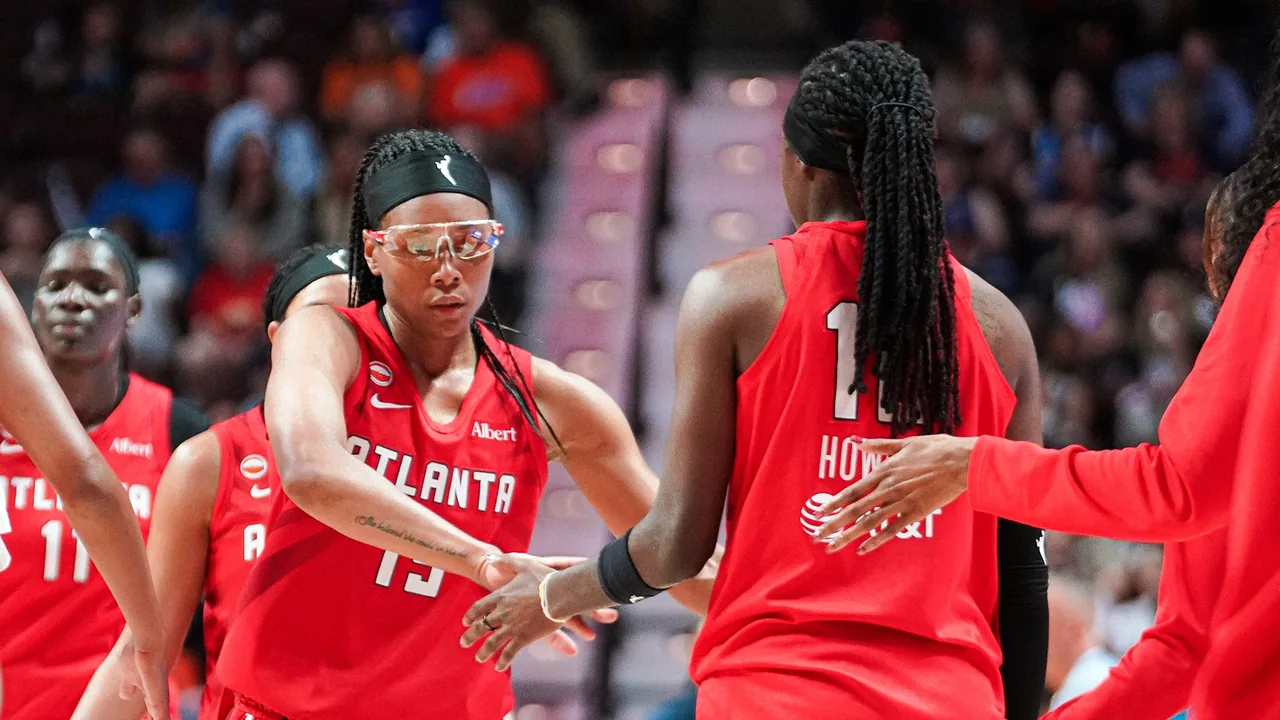
Short answer: WNBA security asked at least three fans to cover shirt messages during the Indiana Fever–Atlanta Dream game at State Farm Arena on August 16, 2026. The reported messages represented opposing views about transgender participation in women’s sports. The WNBA later said the requests should not have happened, while the Dream said its personnel did not make the decision.
This explainer is current through August 19, 2026. It separates facts confirmed by the league or attributable reporting from participant claims and online interpretation. That distinction matters because the league’s correction answers whether the requests were appropriate, but the public record does not reveal every conversation, employee instruction or possible follow-up.
What Happened at the Fever–Dream Game?
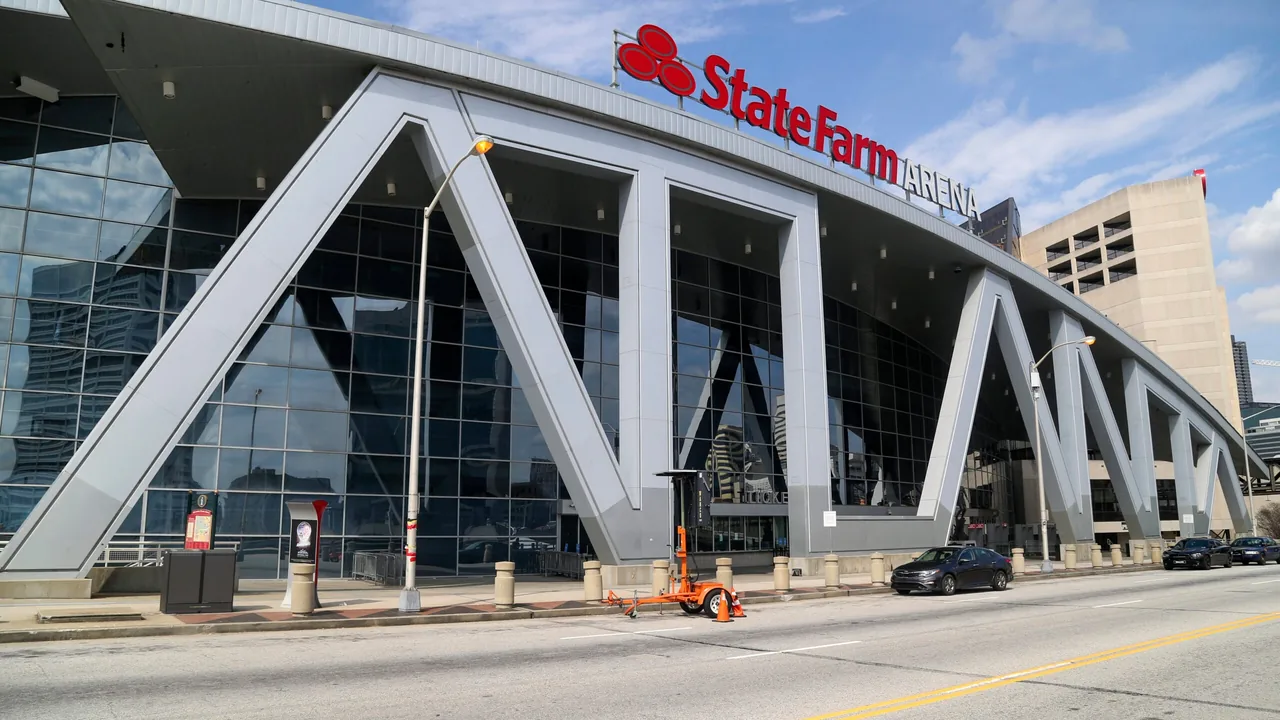
At least three fans were asked by WNBA security to cover messages on their shirts during the Indiana Fever’s visit to the Atlanta Dream on Sunday, August 16, 2026. The interaction happened at State Farm Arena in Atlanta, where the official event listing put the game at 5:00 p.m. local time. The messages addressed transgender participation in women’s sports, but they did not all take the same position. Two fans wore messages opposing transgender participation, while another fan wore a message supporting transgender people, according to Associated Press reporting syndicated by The Guardian.
That detail is important: the reported interventions affected fans expressing opposing viewpoints. This was not simply a case in which one slogan was allowed and its direct opposite was removed. The WNBA later said the fans should have been permitted to display the messages. It also acknowledged that league security, rather than Atlanta Dream personnel, made the requests.
A short timeline of the incident
- Before or during the August 16 game: WNBA security personnel approached at least three fans and asked them to cover shirt messages. The precise conversations varied in reports, so claims about threats, instructions or individual motives need to stay attributed to the people involved.
- After the interactions: AP reported that the security workers were told they had been wrong to require the messages to be covered.
- On August 17: the WNBA publicly acknowledged the interactions and said they should not have happened. The Dream separately said the security action fell short of the experience it wanted for fans and that team personnel did not make the decision.
The date, location and matchup are supported by the Dream’s official schedule and the arena’s event page. Fans looking for future Atlanta games can use the site’s Atlanta Dream schedule, but there is no production game-detail page for this particular matchup, so this article does not invent one.
The reliable takeaway is narrower than many viral posts suggest. A minimum of three people were asked to cover shirt messages; league security made the requests; the WNBA later said that was wrong; and the Dream said its staff was not responsible. Exact dialogue, the reasoning of individual security workers and claims about what would have happened if a fan refused are not established by the public league statement. Those distinctions matter before examining what the WNBA and Dream actually said.
What the WNBA and Atlanta Dream Actually Said
The WNBA’s response supplied the clearest answer to the central question: asking these fans to cover their messages was not the outcome the league endorsed. In a statement reported by the Associated Press, the league acknowledged the interactions, identified the people making the requests as WNBA security and said, in a concise admission, “This should not have happened.” AP also reported that the security personnel were subsequently told they were wrong to require the shirts to be covered.
That statement is meaningful, but it is not a complete public investigation. It does not identify the security workers, say whether they were league employees or contractors, describe the instruction they believed they were enforcing, or announce discipline. It corrects the action without supplying every operational detail behind it.
| Response | What it confirms | What it does not answer |
|---|---|---|
| WNBA | League security asked fans to cover messages; the league said those requests were wrong. | The individual decision path, employment status of the workers, and any personnel consequences. |
| Atlanta Dream | The security actions fell short of the safe, inclusive environment the team says it wants; Dream personnel were not involved in the decision. | Every contact that may have occurred in the building or the precise instruction security received. |
The distinction is easy to lose in headlines. The incident occurred at an Atlanta home game, but a home venue does not automatically mean the home team ordered every security action. The Dream’s response, as quoted in AP’s account, specifically placed the decision outside its personnel. Readers following the visiting club can find future dates on the Indiana Fever schedule; that team route does not imply that Fever staff played a role either.
The two responses also sit beside the league’s existing Fan Code of Conduct. That code promises professional and courteous treatment while banning disruptive conduct and obscene or indecent messages on signs or clothing. The WNBA’s incident statement effectively says these particular requests were a mistaken application, but it does not rewrite the public code or promise that every slogan will be permitted at every venue.
As of August 19, 2026, the strongest defensible conclusion is therefore specific: WNBA security made the requests, the league repudiated them, and the Dream denied that its personnel made the decision. Broader claims about motive, censorship policy or discipline remain unconfirmed unless a later official statement supplies more detail.
Which Shirt Messages Were Involved?
The reported shirts took opposing positions in the debate over transgender participation in women’s sports. The Associated Press account described two fans as wearing messages opposed to transgender participation and a third as wearing a message supportive of transgender people. The WNBA’s correction was not framed as permission for only one side: its response covered the interactions in which league security asked fans to conceal the messages.
This makes precision more useful than repeating slogans. The reliable point is that security’s mistaken intervention was reported across opposing viewpoints. It does not prove that every shirt in the arena was reviewed under the same process, that every message was treated identically, or that the people wearing them shared every argument associated with their respective causes.
AP also reported that another fan wearing a message opposed to transgender participation appeared on the arena video board and the game broadcast. That is a useful detail, but it must be read carefully. A brief camera appearance does not establish that security reviewed or formally approved a shirt. It also does not show that the person was one of the at least three fans who were approached. Counting that individual twice would turn a reported minimum into an unsupported total.
Other coverage, including reports from The Athletic and USA Today, helped move the story into the wider news cycle. Their presence can corroborate that the incident was broadly reported, but access restrictions during this review mean no exact slogan or dialogue from those pages is treated as independently verified here.
For readers, the safest way to evaluate a viral clip is to ask four questions: Who posted it? Does it show the full interaction? Has the league or team addressed it? Is the caption reporting an observable fact or assigning a motive? Applying that sequence preserves the part the WNBA confirmed while avoiding claims the public evidence cannot yet support.
Why Security May Have Intervened—and What Remains Unknown
Security personnel at a WNBA game do have a legitimate role in enforcing conduct rules, but that does not establish why these workers made this particular mistake. The league’s public Fan Code of Conduct says fans should be treated professionally and courteously. It also prohibits disruptive behavior, abusive language, obscene gestures, and obscene or indecent messages displayed on signs or clothing. Trained security can intervene when behavior violates the code.
The key incident-specific fact cuts against assuming that one of those prohibitions applied here: the WNBA itself said the fans should not have been asked to cover the messages. It is therefore reasonable to explain what security normally monitors, but not to label the shirts obscene or indecent, or to claim that employees correctly enforced the written code before the league reversed them.
The league’s No Space for Hate platform adds another layer of context. Introduced in May 2025, it promotes inclusion, respect and unity while describing stronger fan-code enforcement and security measures. That platform helps explain why arena personnel are attentive to conduct and messaging. It is not evidence that the initiative instructed anyone to cover these shirts, and no reviewed public statement draws that causal line.
What is known
- WNBA security made the requests.
- The requests reached fans with opposing messages.
- The league said the action was wrong.
- The workers were reportedly given corrective guidance afterward.
What is not public
- The rule or phrase each worker thought applied.
- Whether a supervisor approved the requests in advance.
- The workers’ employment or contractor status.
- Whether the league will publish narrower guidance or take personnel action.
It is also risky to reduce the episode to a one-line First Amendment claim. A ticketed event in a privately operated venue involves league rules, arena terms and potentially state law; the constitutional rules governing government restrictions do not automatically answer every private-venue dispute. This article is a policy explainer, not legal advice. A fan seeking an individual legal assessment would need a qualified attorney and a much fuller factual record.
That careful boundary is especially important in emotionally charged WNBA stories. The site’s explainer about the separate Celeste Keaton suspension examines a different game, person and disciplinary process; it is useful only as adjacent context on how league accountability stories require official records. Here, the honest answer is that security’s ordinary mandate is documented, but its precise mistaken reasoning at the Fever–Dream game was not public as of August 19.
How the Incident Fits the Wider 2026 WNBA Debate
The Atlanta interaction became national news partly because it arrived during an already visible debate around the Fever and transgender participation in women’s sports. Earlier in August, Associated Press reporting documented competing rallies outside a Fever–Lynx game after Indiana guard Sophie Cunningham’s public comments on the subject. That history helps explain the attention around shirt messages at a later Fever game, but it does not establish that Cunningham, either team or rally organizers had any role in Atlanta’s security decision.
The league was also dealing with a broader problem: the line between intense disagreement and targeted abuse. In a July 22, 2026 joint statement, the WNBA and WNBPA discussed racist, hateful and abusive messages directed at people in the league. They described proactive communication and enhanced security resources. That statement preceded the Fever–Dream game by more than three weeks. It shows the league’s security environment, not an instruction to suppress ordinary political expression.
The same distinction applies to No Space for Hate. The WNBA launched the platform in May 2025 to promote inclusion, respect and unity and to strengthen fan-code enforcement. It would be tempting to cite that initiative as the reason security approached the fans. No official or reliable incident source reviewed here makes that connection. In fact, the league’s later correction says the requests at issue were not a proper outcome.
Context is not causation
Readers can keep the distinction clear by checking three things whenever a post supplies a dramatic backstory:
- Date: did the statement or rally happen before the Atlanta game?
- Connection: does the source say the earlier event influenced the security workers, or is that the poster’s inference?
- Scope: is a source describing political disagreement, targeted abuse, venue safety or a specific clothing rule? Those are not interchangeable categories.
The wider debate matters because it shaped how audiences interpreted a short arena interaction. It should not replace the incident record. As of August 19, the record still supports a limited conclusion: WNBA security asked fans on opposing sides to cover messages, and the league later said those requests were wrong. Neither earlier rallies nor the league’s anti-abuse work changes that confirmed sequence.
What Fans Should Do About Clothing and Signs at WNBA Games
A fan planning to wear a message or bring a sign should check two layers of rules: the WNBA’s league-wide conduct code and the policy for the specific arena and event. The league code supplies broad standards, while a venue may set dimensions, prohibited-item rules and operational restrictions. Neither layer guarantees that a particular message will be admitted, and event-specific instructions can change.
Before you leave for the arena
- Confirm the correct event and venue. Start with the WNBA games today page, then open the team or arena’s official event listing. A policy from another city may not apply.
- Read the WNBA Fan Code. The published code bars obscene or indecent messages on signs or clothing, as well as abusive and disruptive conduct.
- Check the local sign rules. State Farm Arena’s prohibited-items page, for example, says signs larger than 11 by 17 inches are prohibited. It also restricts signs that obstruct views, interfere with operations, are commercial, or contain objectionable subject matter. Other venues can use different measurements.
- Look for an event-specific update. Arena policies can vary by event, and a tour, playoff game or special promotion may have additional limits.
- Carry a practical backup. If a message sits near an unclear policy boundary, a plain outer layer lets you resolve an entry issue without missing the game. That is preparation, not an admission that the message violates a rule.
If security questions a shirt or sign
Stay calm and ask which written rule the employee believes applies. If it can be done without blocking a line or escalating the exchange, ask for a supervisor or Guest Services representative. The arena’s policy page tells guests to seek staff assistance during events, and its contact page publishes a Guest Services channel for questions.
Safety comes first. Comply with an immediate instruction if the alternative is a confrontation, then preserve the ticket and any written communication. Note the time, gate or section, the instruction given and an employee name or identifier if it is voluntarily available. Recording may be restricted by venue policy or law, so written notes are often the simplest record. Follow up with the team, arena or league using factual language: describe what was displayed, what was requested and what response you want.
This process cannot promise admission, a refund or a particular investigation result. It does give both the fan and the venue a clearer record than a heated social post, and it makes it easier to compare the interaction with the actual published rule.
What to Watch for After the WNBA’s Response
As of the August 19, 2026 research cutoff, the WNBA has answered the most immediate question: league security should not have asked the fans to cover these messages. The reported corrective guidance to the security workers shows that the league addressed the immediate action. It does not tell the public whether a broader review, training change or personnel process is happening behind the scenes.
Four kinds of follow-up would materially change the public record:
- Written policy clarification: a league update explaining how the existing clothing language in the Fan Code applies to advocacy messages that are not obscene or indecent.
- Security-process detail: an explanation of whether workers received a mistaken event instruction, made individual judgments or needed additional training.
- A personnel outcome: a league or contractor announcement identifying discipline or another employment action. None was located in the official material reviewed for this article.
- A documented participant follow-up: a complaint resolution, refund response or additional account that can be attributed to a named person or official record.
These are items to monitor, not predictions. A lack of public personnel detail does not prove that nothing happened internally, just as a viral claim about a firing does not prove that someone was disciplined. Readers should compare the publication date of any claimed update with the WNBA’s official news feed, the Dream’s official site and attributable reporting such as the Associated Press account.
A reliable update test
Before sharing a new post, look for a named source, a direct statement, a publication timestamp and a clear distinction between an announced policy and a reporter’s inference. Screenshots should link back to the full item; cropped text can omit qualifications or an older date. If an official statement changes, the newer dated version should take precedence and this explainer should be updated.
Until then, the defensible conclusion stays narrow and neutral. Fans with opposing messages were asked to cover shirts, the WNBA said that request was wrong, and the Dream said its personnel did not make the decision. The episode demonstrates why league rules, venue procedures and individual enforcement are related but not identical—and why careful sourcing matters when a short arena interaction becomes a national controversy.
Sign in with Google to join the discussion.