
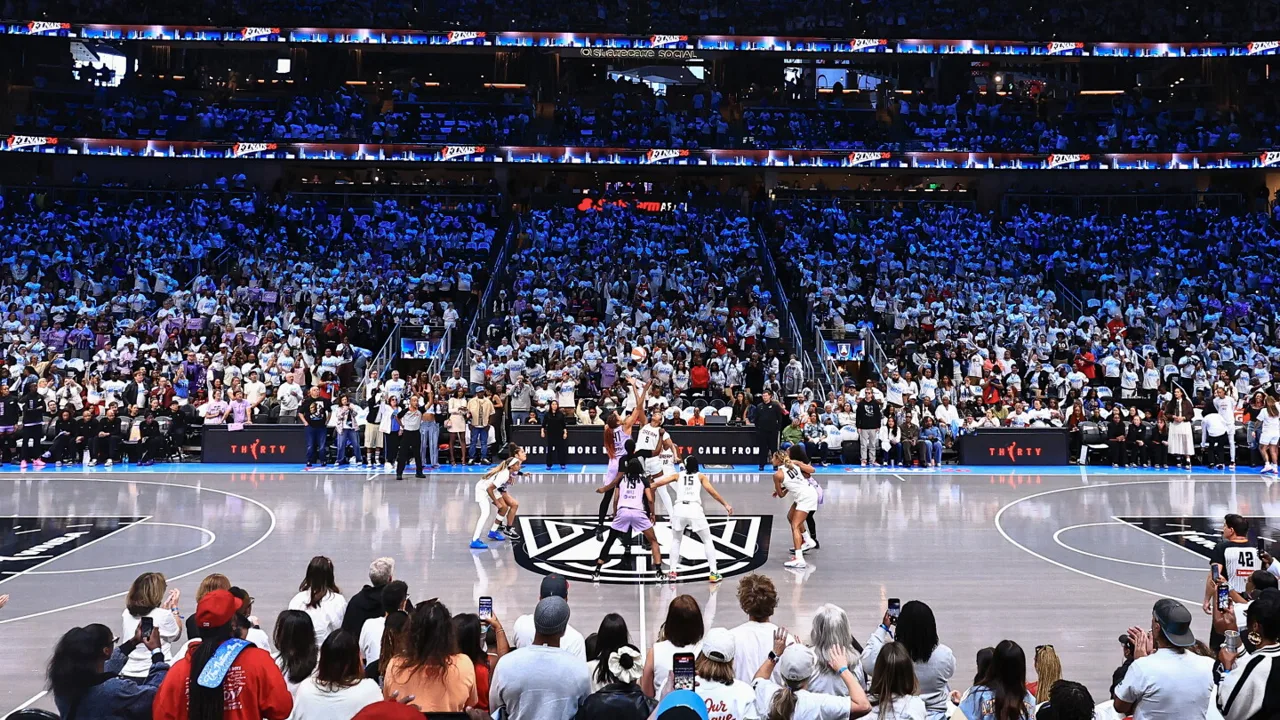
WNBA Finals Game 6 is scheduled for Thursday, October 29, 2026, at 12:30 p.m. ET at State Farm Arena in Atlanta. The afternoon start accommodates the move to the larger building, where the Atlanta Hawks also have an NBA game that evening. The change creates more room for spectators while making attendance and live viewing harder for many people working or studying that day.
What the October 26 announcement changed
The WNBA announced the new arrangement on October 26. The Golden State Valkyries' official announcement confirms both the arena and the revised start. This was a change to the game itself, not merely the beginning of a television pregame show. An older listing showing an 8 p.m. ET tipoff should not be used to plan attendance.
The game remains an Atlanta home date against Golden State. Moving a home game to another building in the same market does not change which team hosts it. However, it can change the journey to the game, the seating information a customer needs and the time available for work or travel beforehand. Those practical consequences are why updating only the television reminder is insufficient.
The announcement also kept the same national viewing outlets: USA Network and Peacock. A new tipoff does not necessarily require a new subscription, but viewers still need to check that their existing service includes the relevant channel or stream. The game-time decision and the customer's access rights are separate questions.
This explanation reflects the October 26 announcement, checked on October 27. It does not predict Game 6's result or turn a possible championship celebration into a confirmed itinerary. For the broader series, the current WNBA schedule provides the appropriate place to check subsequent dates and changes. The specific issue here is why this game moved into the middle of a weekday.
If you saved an invitation before the announcement, treat it as something to verify rather than proof that the game is still in the evening. Check the date, time zone and venue together. An accurate date attached to an outdated start time can still lead to a missed game.
Why a larger arena produced an earlier tipoff
The scheduling problem had two parts: choosing a building capable of accommodating a larger crowd and finding time to stage the game there. Solving the first did not remove the second. State Farm Arena was available only within a day that also included an NBA fixture, so the announced arrangement put the WNBA game first.
The Dream gained a bigger stage at State Farm Arena
The capacity difference is substantial. The Dream's smaller Gateway Center home holds roughly 3,500 spectators, compared with approximately 17,000 in the larger arena configuration described by NBC Sports. Exact available inventory depends on the event, but the scale explains why moving matters for fans hoping to attend.
The league pointed to the atmosphere and sellout crowds at Games 3 and 4 when explaining the decision. That provides a reason for seeking the same venue again. It does not establish that every interested fan can obtain a ticket, that Game 6 will have identical seating arrangements or that an earlier photograph depicts the forthcoming crowd.
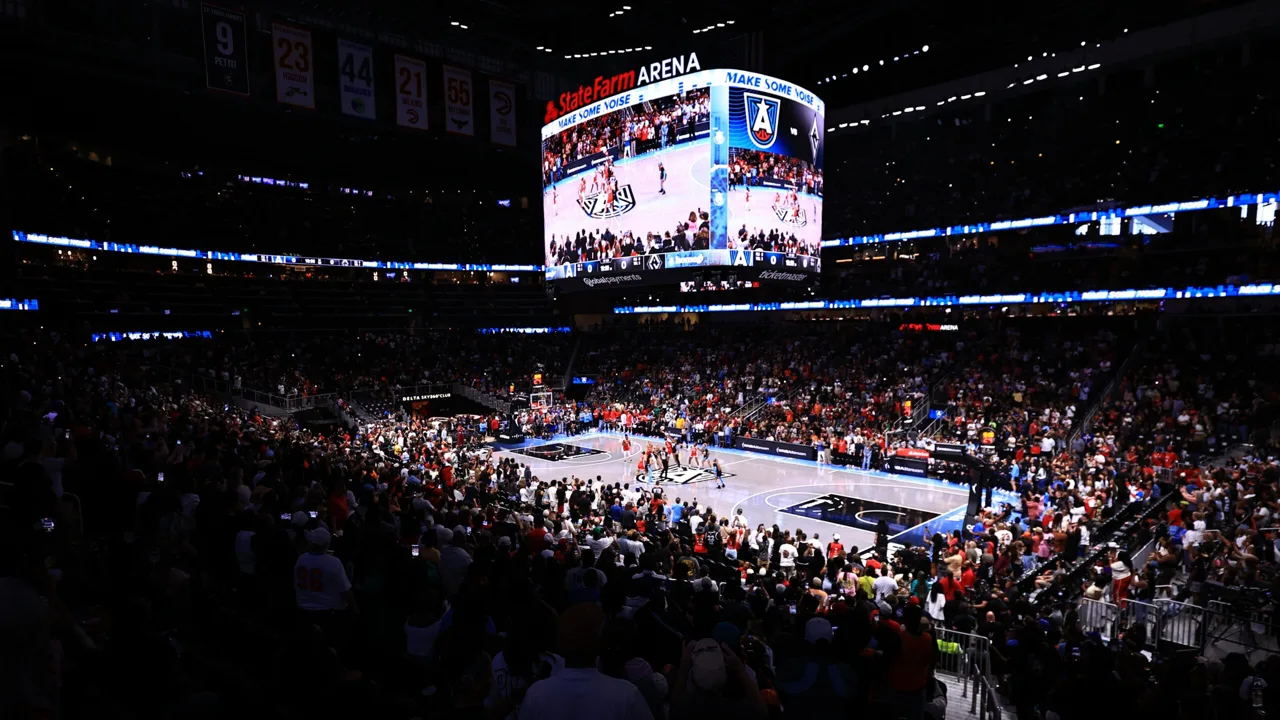
A larger venue can expand the number of people inside the building and create a stronger event atmosphere. Those are real benefits. They are also different from retaining an evening window when more viewers can watch without changing their workday. The choice exchanged one form of accessibility for another rather than improving every fan's circumstances simultaneously.
The Hawks still had an evening game in the same building
The Hawks were scheduled to host the Cleveland Cavaliers that evening. The official announcement says the NBA game's start moved to 8 p.m. ET to accommodate the Finals arrangement. That is a confirmed accommodation; claims about what the teams privately demanded or which other options they refused require separate evidence.
Two basketball games in one arena still need separate event operations. The announced start times should not be mistaken for a public guarantee about how long a postgame event, media session or arena conversion will take. Those details require event-specific instructions. The underlying fact is simpler: the building was serving both leagues that day.
The guide to WNBA scheduling overlaps explains the broader problem of competing windows. This case is more specific because an arena change and a national television change affected the same Finals date. The new time follows from that combined arrangement, rather than a general rule that WNBA Finals games must be played during the afternoon.
Why fans objected to the weekday start
The practical complaint is easy to understand without turning it into a claim that every supporter has the same schedule. A Thursday afternoon game can conflict with employment, classes, caregiving and school pickups. For Golden State's local audience, the announced time is 9:30 a.m. PT, placing the start near the beginning of many people's working day.
In a fan discussion of the announcement, some commenters said they preferred an evening game in the smaller arena. Others described being unable to attend or watch live despite wanting to follow the Finals. Those comments establish the nature of the objection; they are not a representative audience survey or proof of how many viewers will be lost.
Notice matters as well. An October 26 announcement for an October 29 game leaves a short period to revise plans. A fan who could have attended in the evening may need leave approval, a changed ride or different childcare. A remote viewer may need to arrange a recording. These are different costs, and none is resolved merely by advertising the new time more frequently.
More seats and easier viewing are different kinds of access
For a fan who can attend during the afternoon, the larger arena can be a welcome improvement. For another who cannot leave work, the same decision can remove the possibility of seeing the game live. Both experiences can be true. Capacity measures how many people the venue can accommodate, while timing affects which people are able to use that capacity.
The television audience creates a second layer. Increasing the number of seats does not automatically improve the experience for people watching elsewhere. Conversely, preserving a convenient broadcast window would not create additional tickets in a smaller building. Evaluating the decision means acknowledging both audiences rather than treating either group as unimportant.
Not everyone works standard daytime hours, and an evening start is not universally convenient either. That does not invalidate the complaints. It means that a useful assessment should identify the affected groups and the notice they received. Predictions about attendance, ratings or long-term reputation should remain predictions until evidence becomes available after the game.
How to update your viewing and travel plans
Begin with the confirmed start rather than a social-media screenshot or an invitation created before October 26. Update the event you already saved, then check that the change appears on the device you actually use. If another person organized your group, make sure everyone has the same information before changing rides or taking time off.
Convert the time before changing your calendar
The announced tipoff corresponds to the following major continental U.S. time zones on October 29:
| Time zone | Game 6 tipoff |
|---|---|
| Eastern | 12:30 p.m. |
| Central | 11:30 a.m. |
| Mountain | 10:30 a.m. |
| Pacific | 9:30 a.m. |
A calendar application can display an event in your local zone, but that is only helpful if the underlying event contains the revised time. A manually created evening reminder will not fix itself because the league issued a release. A subscribed feed may also refresh on its own schedule. Open the saved event and compare it with the announced start.
The WNBA calendar page is a useful starting point for calendar options. Avoid creating several overlapping reminders while trying to correct one outdated entry. If you live outside the listed zones or are traveling that week, check the event in the destination's local time rather than applying an assumed offset.
Check the broadcaster and your ticket account separately
The official announcement retains USA Network and Peacock. Use the WNBA TV listings and your provider's current game entry to confirm the feed you can access. A channel appearing in a guide does not establish that it is included in every package, and an arena announcement does not remove regional service restrictions.
If you cannot watch at tipoff, check your service's recording or replay options before the game. Do not assume that all services provide a full replay immediately, or that pausing one device preserves a stream indefinitely. Test the feature your plan actually offers and decide how you want to avoid score notifications if watching later matters to you.
For attendance, sign in to the account associated with your purchase. Recheck the venue, seat assignment, mobile ticket and any message from the seller. Then review the arena's current entry and transportation instructions. A daytime journey can interact differently with work schedules and other downtown activity than an evening trip.
Refunds, exchanges and transfer deadlines depend on the purchase terms and subsequent instructions. The announcement alone should not be read as a universal refund offer. Ask the original ticket channel about your specific order before buying replacement seats or changing a resale listing.
What remains unconfirmed about the game-day arrangements
The October 26 release confirms the matchup, building, tipoff, national outlets and the Hawks' revised evening start. It does not provide a complete minute-by-minute event plan. An accurate explanation should preserve that distinction rather than filling the gaps with assumptions.
In particular, do not treat discussion of a possible championship presentation or another postgame location as a finalized arrangement. The shared arena schedule understandably creates questions about the period after the final buzzer. A question about what might happen is different from an official instruction about where spectators should go.
A later announcement could supply additional detail. Until then, attending fans should follow messages from the team, arena and their ticket channel. A commentator's proposed solution, an anonymous online claim or a screenshot without a date should not override an event-specific instruction. Check when a message was issued and whether it refers to this game.
The same caution applies to door times, premium hospitality, parking validity and ticket transfers. These details can be affected by the revised event, but the time change does not establish exactly how each service will work. If a purchased add-on matters to your trip, confirm it with the provider rather than assuming that an evening arrangement carries over unchanged.
There is no need to wait for every operational detail to correct the most consequential item: the game is scheduled for 12:30 p.m. ET. At the same time, planning around a possible ceremony before the result is known can create another layer of uncertainty. Build your attendance plan around the confirmed basketball event, allow reasonable flexibility and check for later official instructions.
For people watching remotely, the unconfirmed arena details do not change the announced viewing outlets. They may matter to the story afterward, but they should not displace the immediate task of finding the correct live window. Separate what you need to know before tipoff from what can only be reported once the game has ended.
What this scheduling dispute says about future Finals planning
The immediate task is to help fans find the correct game. The league's release promises a coordinated promotional effort across its partners to raise awareness of the new time. That can reduce confusion, although it cannot give everyone the flexibility to rearrange a weekday. Communication is part of the solution, not a substitute for the original scheduling decision.
For future series, a useful planning principle would be to establish a preferred venue and a credible fallback before a potential deciding game approaches. Conditional dates are difficult because not every playoff game occurs. Still, a contingency plan can specify what triggers a venue change, which start times remain possible and when supporters will receive a final decision.
Such a plan would involve tradeoffs of its own. Holding a large building for a game that may never happen can carry costs, and a tenant's existing event cannot be treated as if it has no contractual or operational significance. Publicly available information does not establish the price of every alternative in this case. A fair critique can ask for earlier planning without pretending those unknowns are settled.
Another improvement would be to treat the announcement, ticket account, broadcast listing and calendar entry as one update task. Fans encounter the schedule in different places. A corrected press release does not help someone who sees only an older team listing, and a revised television guide does not automatically change a manually saved calendar invitation.
Clearer notices should also distinguish confirmed items from details still being arranged. Supporters need the new tipoff and venue immediately; they need a reliable place to obtain later entry or ticket instructions. Presenting that sequence plainly is more useful than leaving people to reconstruct it from scattered posts.
These are recommendations, not new WNBA policies announced with Game 6. For October 29, the operative information remains the afternoon start at State Farm Arena. The larger setting explains the decision; the workday timing explains the frustration. Fans can recognize both while asking the league and its partners to make future championship planning easier to follow.
Sign in with Google to join the discussion.