
The 2027 WNBA report-by date
The 2027 WNBA prioritization deadline is April 15 or the first day of WNBA training camp, whichever comes later. The collective bargaining agreement defines the start of the WNBA season as the first day of camp for this purpose. A player who is already under contract and covered by the rule must report at the time and place her team designates. The agreement uses the same later-of date in a separate test for players who still have an offseason playing obligation and signed no WNBA contract before camp. Signed WNBA–WNBPA agreement, Article XIV, Section 9 and CBA definition of Season.
As of November 19, 2026, the league’s public calendar still lists the 2026 dates. The WNBA has announced a 50-game regular season for 2027 and said it would release more scheduling details. Once the 2027 training camp date is official, fans can use it to calculate the threshold and follow team updates for any reporting arrangements. Official WNBA key dates and the league’s 50-game announcement.
How to use the later-of rule
Suppose camp opens April 12. April 15 comes later, so it is the prioritization threshold in that example. A team could still require its contracted players to attend April 12. Those early days matter to team reporting even though the league’s threshold comes later. If camp opens April 20, the April 20 opening is the threshold because it falls after April 15. Both camp dates are hypothetical.
The 2026 calendar helps show why the year matters. Camp opened April 19 and regular-season games began May 8. The formula that year used May 1 as the fixed comparison date, giving the 2026 thresholds and games different dates. From 2027, the same calculation uses April 15. When an older article cites May 1, check which season it covers before using that date to read a current roster announcement. 2026 league calendar and 2027 WNBA coverage.
What happens if a player reports late
Check the player’s contract status as of the day before camp opens. A contract for the coming WNBA season puts her in the group that must report to its team by the threshold. If she was outside that group on the same day, the agreement instead tests when she completed outside playing obligations. The consequences differ, even for two players coming from the same overseas club. CBA Article XIV, Section 9(a).
Players already under contract
For a player under contract by the day before camp, the team sets her reporting time and location. Missing the club’s reporting date can carry team discipline under the CBA. The league applies a separate sanction when a covered player misses the later-of deadline without a qualifying exception. It suspends her without pay for the rest of the WNBA season. Under this provision, the league looks at whether she reported on time and whether an exception applies. A conflicting basketball commitment is one way a player could miss the deadline.
Imagine camp starts April 12, and a player already under contract was told to report that day. If she reports April 14, she has still missed the club’s reporting date. She has arrived by April 15, the later date in this example, so the league deadline does not trigger a season-long suspension. If she also misses April 15, the league rule applies unless one of the agreement’s exceptions covers her absence. Team discipline is also distinct from a provision that can require additional unpaid promotional appearances for time missed due to basketball commitments with another organization. CBA Article XIV, Sections 8 and 9.
Another provision covers leaving after reporting. A contracted player who leaves her team during the WNBA season to provide basketball services elsewhere, or for a personal reason outside the listed exceptions, can lose the rest of that season without pay. Section 9 also makes her ineligible the next season. It does so through a suspension if already under contract for that next season at the time of the first suspension, or through a signing bar if she is out of contract for that next season. CBA Article XIV, Section 9(b).
Players who are still unsigned
If a player was unsigned as of the day before camp, she must fully complete any offseason playing obligation before the later date to remain eligible under this part of the rule. Missing the cutoff makes her ineligible to sign for any part of that WNBA season, subject to the agreement’s exceptions. The CBA defines those obligations broadly. They can include a contract to play in another professional league or other outside playing services, including some where there is no contract. The rule specifically allows someone in this unsigned group to train or play with her national team after the deadline. CBA Article XIV, Section 9(a)(ii) and CBA definition of offseason playing obligation.
For a hypothetical April 20 camp opening, check whether the player was under contract on April 19 and when her outside obligation ended. If she was unsigned on April 19 and still owed an outside club a final on April 23, a season signing bar can apply if she has no exception. If that engagement ended on April 18, the outside obligation clears the timing test. A WNBA offer and final roster decision would still have to follow.
Who gets an exception
Section 9 has exceptions based on credited service and certain reasons for the absence. The explanation a player or team gives can matter alongside the dates. An absence for a continental championship, an extra week with an overseas club and a family commitment are different circumstances under the agreement. The conditions below govern the prioritization sanctions in Section 9.
Players with two or fewer credited years
The prioritization provisions in Section 9 exempt players who have zero, one or two credited Years of Service at the end of the preceding WNBA season. Use the total after the 2026 season for a 2027 case. For example, a player who ended 2026 with two credited years qualifies under the service exception. A teammate who just earned her third credited year has crossed that threshold. She could still qualify under another exception. CBA Article XIV, Section 9(c).
A draft date or count of stat lines can point you to the relevant seasons. The league’s definition looks to qualifying active-list service, generally under a standard WNBA contract. A season spent solely on seven-day contracts, or on a development contract, can be treated differently under that definition. If a player’s listed appearances span three seasons, check whether she earned credit for each one before applying the cutoff. CBA definition of Year of Service.
National-team competitions
The agreement covers some late reports and in-season departures to play for a national team at a FIBA World Cup or a FIBA continental championship. The exception can include up to two weeks of training immediately before the competition. The player has to return to her WNBA team within 48 hours after her national team finishes its tournament play. If her team is eliminated early, its last game is the relevant event for that clock. The World Cup provision generally applies when there is no WNBA hiatus for that World Cup. The agreement provided different arrangements for the 2026 World Cup only. CBA national-team exceptions.
FIBA scheduled the 2027 Women’s EuroBasket finals for June 16 to 27. It separately lists qualification games, including a February window. The CBA names the championships themselves in this exception for late reporting or departures. Verify how the team classifies a qualifier, friendly or standalone camp before assuming the same protection. If the player was unsigned as of the day before WNBA camp, also check the separate provision allowing her to train or play with her national team after the prioritization deadline. FIBA championship dates and FIBA qualifiers.
Other exceptions in the agreement
The agreement also accounts for significant life events wholly unrelated to offseason playing obligations. Its examples include a graduation ceremony, non-birthing parental leave and a death in the family. The player must make a good-faith effort to give her WNBA team advance notice and must report or return within 24 hours after the commitments related to that event end. Use the 24-hour period for this provision and the 48-hour period for the stated FIBA exception. A delayed club playoff alone falls outside the listed life-event grounds. CBA Article XIV, Section 9(c).
How overseas and winter leagues fit on the calendar
Fans can watch a player in winter basketball and then see her report to a WNBA team in the spring. For prioritization, the question is whether her outside obligation and WNBA duties can both fit. The CBA’s outside-playing definition covers obligations beyond the WNBA, whether the other event is in the United States or abroad. A published opener shows when an event begins. The last date on a particular player’s calendar can depend on playoffs, her agreement and whether she is still expected to play. CBA definition of offseason playing obligation.
Domestic winter basketball and Project B
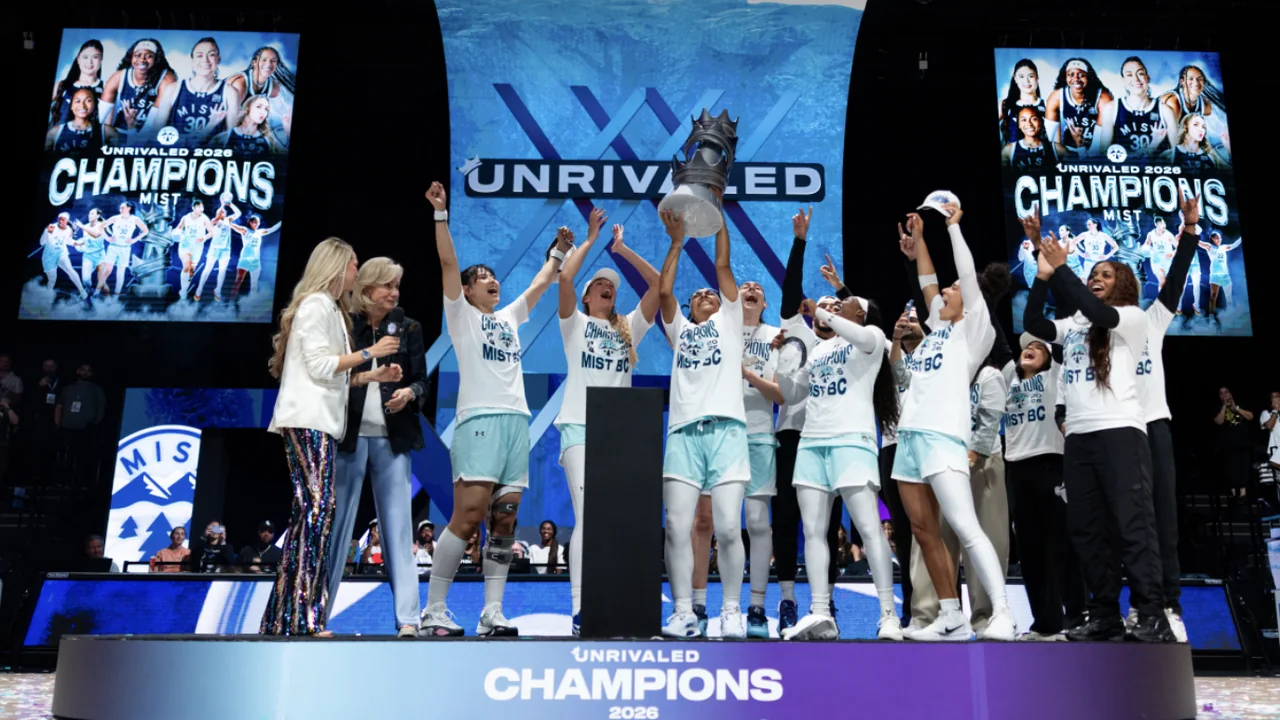
Unrivaled announced that its third season opens January 8, 2027. Its opening slate includes league newcomer Olivia Miles with Hive BC. The regular-season schedule also lists a March 5 flex slate. Those games fall before April 15. Use them to follow a player’s announced club, then check the latest calendar for any dates that depend on how her club does. Unrivaled’s season announcement and its game schedule.
Project B has its own calendar. Its first announced competition stop is in Hangzhou from January 19 to 24, 2027, and the organizer announced a Tokyo stop from March 26 to April 4. The Tokyo dates also precede April 15. They describe one stop on the circuit. When evaluating a possible WNBA conflict, use the player’s full confirmed obligation, including later events if she is due to participate. An announcement that she joined a separate league tells you where she plans to play there. Her WNBA club’s reporting instructions and her actual commitments determine whether the calendars conflict. Project B’s official site, Hangzhou announcement and the organizer’s Tokyo announcement.
Overseas club seasons
EuroLeague Women is a spring example worth watching. FIBA has scheduled the 2027 Final Six for April 14 to 18 in Zaragoza, Spain. Consider a player whose club reaches the April 18 final. With a hypothetical April 14 WNBA camp opening, the April 15 threshold would come before that final. With a hypothetical April 20 opening, the threshold would come after it. Her actual playing obligations, WNBA contract status and travel time to the designated reporting location can still matter. FIBA’s official European club calendar.
For a concrete player case, check the club’s progression and whether she has been released from her obligation. A team eliminated earlier can have a different last date from the event’s final. A domestic league can also have its own calendar after a continental club event. The CBA’s exception for certain FIBA national-team championships concerns national-team duties. The Final Six is a club competition.
What to check when a player is missing from camp
Start with the club’s training camp release. A roster often includes an arrival note beside a player the club still expects to join. When Golden State opened camp on April 19, 2026, for example, the Valkyries marked six players as late arrivals and said they would report after their international commitments. Gabby Williams and Justė Jocytė were both in that group. The club’s wording tells readers its plans as of that announcement. An actual arrival date or ruling requires a later update. Golden State’s 2026 camp release.
Next, confirm the season and the date the club expected the player to attend. Under the CBA, the commissioner sets the camp opening, no earlier than April 1 and no more than 30 days before the regular season begins. Those limits help explain the scheduling window. For the date you should use in the April 15 calculation, consult the league’s posted key dates for the correct year, then read the team report for its own instructions or confirmed roster changes. CBA Article XVII, Section 1 and WNBA key dates.
Look for a dated signing when you need to know whether a contract covered the season before camp. A WNBA player page can help identify which club she last appeared for, and an official transaction can show when a new deal was recorded. A camp invitation tells you the club wants her there. A release saying the two sides discussed a deal leaves the signing date open. If reports give different reasons for an absence, look for an update from the team or league before assigning a service exception, suspension or signing restriction to the player. WNBA player finder and official WNBA transactions.
When you are planning which games to follow, the game calendar answers a different question. It tells you when teams play, while personnel updates give you the latest available information on who has reported, signed or joined the active roster. Start times will be useful once dates are released. For now, use the April 15 comparison to understand the rule and check the season’s official camp date when it becomes available. WNBA game schedule and WNBA calendar feeds.
Sign in with Google to join the discussion.