
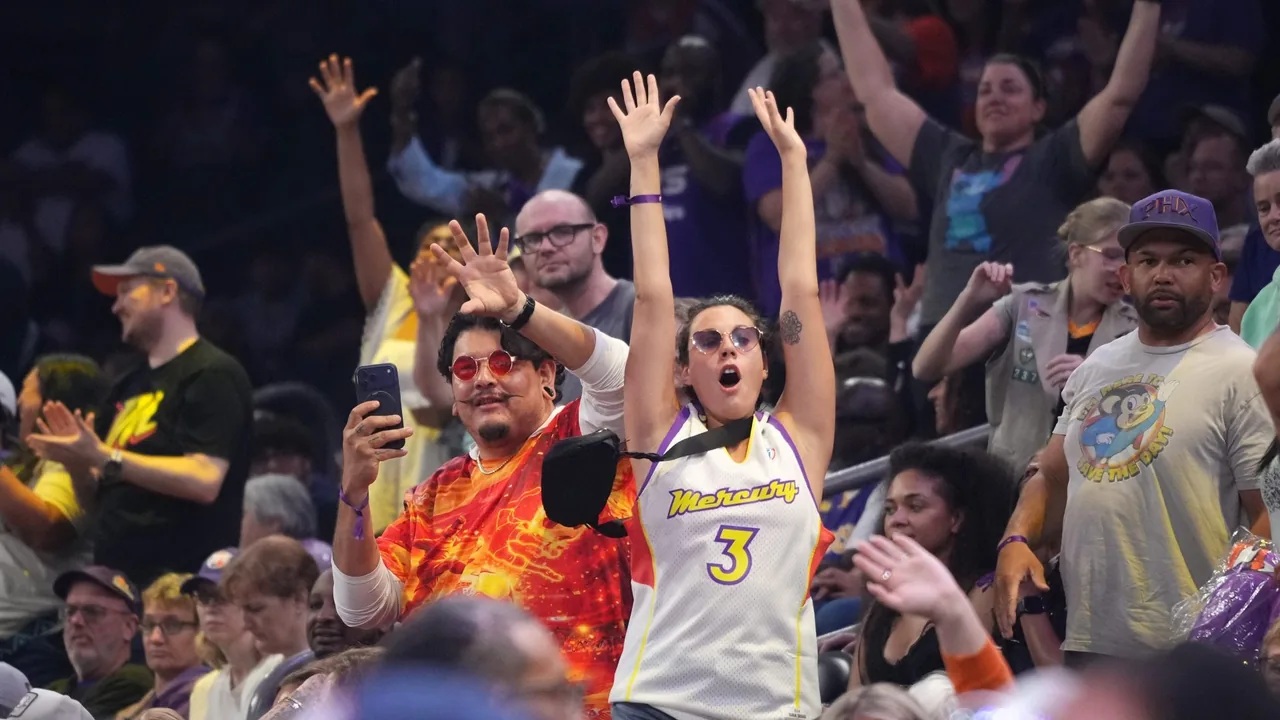
Some 2027 WNBA season-ticket renewals cost more because each team will have 25 regular-season home games instead of 22, but the three added games do not explain every reported increase. Invoice-based reporting from Washington, Phoenix and Minnesota shows that certain holders also received higher per-game rates. The percentage varies widely by team, section, package and account; there is no official league-wide increase.
That distinction is essential. Moving from 22 to 25 home games adds 13.6% more regular-season inventory before any seat price changes. A renewal that rises by much more may also reflect a new per-game rate, premium-seat demand, benefits, fees or a changed package. Another holder in the same arena can see a very different percentage.
This guide was last checked on September 3, 2026. Its figures are dated examples from invoices reviewed by reporters, not a 2027 WNBA price chart. Use them to understand the issue, then evaluate the exact offer in your team account. For broader advice on primary tickets, resale, deposits and fees, see our WNBA ticket buying guide.
Before accepting or declining, compare total cost and cost per included game, identify any automatic charges, and ask the team to clarify unclear terms in writing. The most useful number is not somebody else’s percentage; it is what your own renewal buys.
What Changed for 2027 WNBA Season-Ticket Packages?
The league made one large, universal schedule change: the regular season expands from 44 games per team in 2026 to 50 games per team in 2027. In the standard home-and-away count, that means 25 regular-season home games instead of 22. The WNBA announced the expansion in June 2026 as part of the league’s growth.

Washington’s official renewal FAQ makes the ticket effect explicit: 2027 membership pricing reflects three added home games along with the team’s annual increase. If the price per game stayed exactly flat, increasing the regular-season count from 22 to 25 would raise the package total by about 13.6%. That is the baseline quantity change, not evidence that every renewal should rise by precisely 13.6%.
Twenty-five games may not be the whole package
A season membership can cover more than the regular season. Seattle says its 2027 Storm 360 membership contains 26 home events: 25 regular-season games and one preseason game. Another club may handle preseason admission differently. Playoff tickets may be excluded, sold with member priority or charged conditionally. Parking, food, merchandise credits, events and exchange privileges may also change the value without changing the number printed beside “regular season.”
That is why buyers should begin with the package definition. Count only events actually included in the quoted total and distinguish an admission from an opportunity to buy later. “Playoff priority” is not the same as free playoff tickets. A deposit is not a ticket. A benefit has value only if the holder expects to use it.
The detailed 2027 opponent-by-opponent calendar was not the subject of the June announcement. When it is available, use the full WNBA schedule to match the included dates against work, travel and family commitments before deciding how many games the package is worth to you.
How Large Are the Reported 2027 Renewal Increases?
The short answer is that the published examples are large but highly uneven. Front Office Sports reviewed invoices and interviewed holders in Washington and Phoenix. The Minnesota Star Tribune separately collected 15 pairs of Lynx invoices. None of these datasets covers every seat, account or team, so they should be read as evidence of variation—not as a league price range.
| Market and reported sample | 2026 to 2027 change | What the number does and does not show |
|---|---|---|
| Washington floor-seat holder | $6,907.50 to $10,200; 48% total increase | One holder’s floor-seat invoice reviewed in reporting, not every Mystics seat. |
| Washington stand-seat holder | 70% total; $51.14 to $76.50 per game, a 50% per-game increase | One reported account showing that added games were not the only change. |
| Phoenix courtside holder | $9,100 to $14,600 per ticket; 60% increase | A premium-seat example, not a Mercury-wide rate. |
| Phoenix holder with two products | $3,900 to $5,600 for courtside; stand seats up 5% per game | One buyer’s own products moved at sharply different rates. |
| Minnesota, 15 submitted invoices | 15.3% to 47.3%; sample average 28.7% | An average of 15 interviewed holders who supplied invoices, not the full Lynx base. |
Front Office Sports also reported other Washington examples: one holder had a 42% total increase and another a 70% increase. Another longtime Phoenix holder said two seats went from less than $8,000 to $11,800. These figures help explain the sticker shock, but combining them into one “average WNBA increase” would be methodologically wrong.
Seat type is especially important. A courtside package can bundle hospitality or other services and is priced from a much smaller pool than a stand seat. Even within one customer’s Phoenix account, the cited courtside and stand products changed at very different rates. Market, row, package, tenure and benefits can all break a direct comparison.
If one of these markets is yours, start with the current Washington Mystics schedule, Phoenix Mercury schedule or Minnesota Lynx schedule, then compare the renewal against the games you actually attend. A headline percentage alone cannot tell you whether your seat has the same experience or value.
Why Three Extra Home Games Do Not Explain Every Increase
A package total naturally rises when it buys more games. If a seat cost $50 per regular-season game in 2026, a 22-game package would total $1,100 before any other item. At the same $50 rate, 25 games in 2027 would total $1,250—a 13.6% increase caused entirely by quantity. This is a hypothetical example, not a published team price.
Now suppose that same 2027 package costs $1,500. The headline total is up 36.4%, but the new per-game rate is $60, up 20%. Both statements are true. The larger total combines three extra games with a more expensive seat each night. This is why a team can accurately mention the expanded season while a holder can accurately say the increase goes beyond extra inventory.
Use two calculations, not one
- Total increase: divide the new package total by the old total, subtract one, then multiply by 100.
- Per-game increase: divide each season total by its comparable included games, then compare the two per-game figures.
Comparable is the key word. Remove optional parking or merchandise charges if they appear in only one year. Add required fees if one invoice shows them and the other hides them until payment. Do not divide by a preseason game in one package while excluding it from the other, and do not count conditional playoff tickets as guaranteed regular-season inventory.
Then perform a personal calculation: divide the total by the number of games you realistically expect to attend, not simply the maximum number listed. A $60 nominal per-game package becomes $83.33 for a holder who uses only 18 of 25 dates and cannot exchange or resell the rest. The WNBA calendar can help a household flag conflicts before committing.
This normalized view will not tell you whether a price feels fair. It will tell you what changed. That makes a conversation with a ticket representative more specific: ask why the comparable per-game rate moved, which benefits changed, and whether a lower-cost section or smaller plan exists.
Is the New WNBA CBA Causing Higher Ticket Prices?
There is no evidence of a standard “CBA surcharge” applied to every WNBA season ticket. The new collective bargaining agreement substantially improved player compensation, but individual teams still set ticket prices. A customer's invoice does not itemize how much, if any, is attributable to salaries, arena costs, demand or another business consideration.
The confusion came from conflicting messages. Front Office Sports reported that ticket representatives in Washington and Phoenix told some holders that higher player salaries were part of the reason for renewal increases. The Mystics then told the publication that the CBA’s salary increases were well deserved but were not a factor in its ticket changes. The team said any representative who cited salaries had done so in error and instead pointed to operating costs and investment in the fan experience.
The players’ union was also direct. WNBPA executive director Terri Carmichael Jackson told the publication that describing price increases as a consequence of the CBA was inaccurate, because ticket pricing is a business decision made by individual teams and ownership groups; players and the union are not consulted on those decisions.
What can be concluded responsibly?
Team expenses, revenues and player compensation all exist inside the same growing sports business. That does not prove a one-dollar salary increase creates a one-dollar ticket increase, or that higher prices were required to fund the CBA. Owners can choose different prices for different seats based on demand and strategy, and the reported variation within Phoenix shows that even products sold by one club can move at different rates.
Fans can support better player pay and still question affordability, notice and value. Those positions are not contradictory. The useful questions for a team are specific: Who approved the new price? What changed in this section? Which benefits or services improve? What lower-cost options are available? Blaming players does not answer those questions.
The broader CBA deserves its own explanation of salaries, revenue sharing, benefits and roster rules. For renewal decisions, however, the bottom line is narrower: treat the invoice as a team offer, not as a mandatory league labor charge.
How Demand, Arena Capacity and Seat Tier Affect Prices
Season tickets are not priced like identical units. A team can charge differently for each section because the view, scarcity, hospitality and demand are different. When more people want to attend than a desirable area can hold, a club has room to raise that area's price without making the same change upstairs.
Washington illustrates the capacity issue. CareFirst Arena holds about 4,200, according to Front Office Sports, which makes the Mystics one of the league’s smallest home environments. Limited supply can intensify competition for preferred locations. Yet capacity cannot explain every market by itself: Phoenix plays in a much larger arena, and the same report still found sharp increases in selected courtside products.
The better explanation is layered demand. An arena may have thousands of open or moderately priced seats while its small courtside inventory has a waitlist. A high-demand opponent can lift single-game value; a winning team or star can increase renewal interest; a club may also choose to reposition premium inventory toward corporate or hospitality buyers. Those are market possibilities, not proof of why any unnamed account changed.
Premium and standard seats can move differently
One Phoenix holder in the reporting had a courtside package move from $3,900 to $5,600 while the same customer’s seats in the stands increased only 5% per game. That single comparison is more informative than a league average: even one buyer, one club and one renewal cycle contained two different pricing decisions.
Premium products also require an apples-to-apples benefits check. Courtside in one building might include parking, a private entrance, food or club access; another quote may cover only the seat. If a benefit was added or removed, the nominal seat rate does not capture the whole change. Ask for the package components and compare the same section, row, number of seats and included events.
The practical lesson is not that every close seat is becoming unaffordable. It is that another fan’s market or tier is a weak benchmark. Track your exact seat’s total and per-game rate, then compare any relocation offer with its actual view and benefits. Demand explains why a team may believe a price will sell; it does not decide whether that price fits your budget.
What Season-Ticket Holders Are Frustrated About
The complaint is not only “tickets cost more.” In interviews and community discussions, some holders describe a gap between how quickly the price changed and how clearly the team explained the change. A large invoice arriving with a short decision window can make a loyal customer feel like continuity is being used as pressure rather than rewarded.
Affordability is the most direct concern. Front Office Sports interviewed longtime holders who were ready to give up premium seats, including a founding Phoenix member who described the 2027 increase as the final straw. Minnesota reporting likewise found supporters who understood the league’s growth but worried they could eventually be priced out. Those are individual experiences, not a universal fan vote, but they show the human impact hidden by a percentage.
Fans are asking what improves with the price
Value is the second concern. Holders have asked whether higher totals bring better food, parking, member events, player engagement, exchange rights or venue comfort. A team may list benefits, but a perk does not have equal value to every household. Someone who cannot attend a member event should not count it at the marketing value; someone who frequently uses exchanges may value that flexibility highly.
A Reddit thread about Washington renewals also captured anxiety over poor advance communication and whether switching sections or buying selected games would make more sense. That thread proves people are discussing those choices; it does not verify official prices beyond a poster’s own account. Invoice-backed reporting and team terms remain the factual sources.
Finally, some fans worry that premium areas will gradually shift from longtime individuals toward corporate buyers. That outcome is not established league-wide, but the fear explains why this debate feels bigger than a normal annual increase. Season tickets can represent community, routine and identity. A transparent team response should therefore explain the product, timing and alternatives, not merely repeat that demand is strong.
How to Audit a 2027 Renewal Invoice Before Paying
Treat the renewal like a contract and a household budget, not just a seat reservation. Open the 2026 invoice beside the 2027 offer and work through the same fields in the same order:
- Count included admissions. Separate 25 regular-season home games from preseason, exhibitions and conditional postseason inventory.
- Calculate both price changes. Record the total percentage and the comparable per-game percentage. Also calculate cost per game you expect to attend.
- Reconcile every charge. Identify required fees, taxes, parking, food or merchandise commitments instead of comparing a subtotal with an all-in total.
- Find the renewal mechanism. Check whether the account renews automatically, the opt-out method, the first charge date and every later installment.
- Read playoff language literally. “Priority,” “preferred price” and “included” are different. Find out whether possible home games will be charged automatically and how unplayed games are credited or refunded.
- Value benefits honestly. List the events, discounts, exchange rights, resale permissions and hospitality you used in 2026. Assign no value to benefits you will not use.
- Ask about seat changes. Get the relocation window, available sections, tenure priority and whether payments already made follow you to a different plan.
- Save the terms. Download the invoice or capture the current account page, and keep written answers from the representative.
Why team-specific fine print matters
The Mystics' 2027 page said accounts would auto-renew on August 17, 2026 unless the member opted out, then described a nine-month payment schedule. It also connected certain 2026 playoff purchase terms to a successful 2027 renewal payment and explained how unplayed playoff games would be credited or refunded. Those were Washington terms for that renewal cycle, not league policy.
Seattle provides a different example. Its page asks for a $250-per-seat deposit for new 2027 members, calls the deposit nonrefundable, and says someone who does not proceed may apply it toward certain other Storm ticket products. It also lists one preseason plus 25 regular-season games. Do not assume another team's deposit, refund or package works the same way.
If anything is ambiguous, email the representative a short numbered list and ask for a written reply before the deadline. The existing WNBA ticket guide has a broader checklist for deposits, required fees, mobile delivery and verified resale. Renewal pressure is not a reason to skip basic documentation.
Should You Renew, Downgrade or Buy Games Separately?
Renew when the all-in cost fits your budget, you can attend or exchange most dates, and the seat continuity and benefits matter to you. A season membership can still be the right product after an increase. The decision does not require believing the price is low; it requires deciding that the complete package is worth more to you than the alternatives.
Consider relocating or taking a smaller plan when you value membership but the current section no longer works. Official team sites show that full, half and partial products exist in parts of the league, and some renewal programs offer a later seat-relocation process. Availability is not guaranteed. Ask what inventory is real, when selection occurs and whether money already paid transfers to the new product.
Single-game buying offers flexibility, especially if you attend only a few dates. It also gives up guaranteed seat continuity and can expose you to higher prices or limited supply for popular opponents. Verified resale prices may fall for one game and rise for another. There is no safe promise that waiting until game day is cheaper.
Quick renewal questions
Does every team have the same deadline? No. Deadlines and auto-renewal processes are team and account specific. Use the notice in your official account, not another market’s date.
Are playoff tickets included? Not necessarily. Some programs offer priority or a preferred member rate and then charge possible home games separately. Read what happens when a game is not played.
Can a deposit be refunded? It depends on the written terms. Seattle, for example, calls its 2027 deposit nonrefundable but describes ways it may be applied to other Storm products. That does not establish a league rule.
Will 2027 prices fall later? No one can guarantee that. A team may open new sections or plans, while high-demand inventory may disappear. Decide using confirmed options available before your deadline rather than a prediction.
Build a simple final comparison: renewal cost, relocation or partial-plan cost, and the expected cost of only the games you want. Use the WNBA schedule and calendar when 2027 dates are published, include fees and travel, and place a dollar value only on benefits you will use. If the renewal loses, declining it is a budget decision—not a statement about how much of a fan you are.
Sign in with Google to join the discussion.