
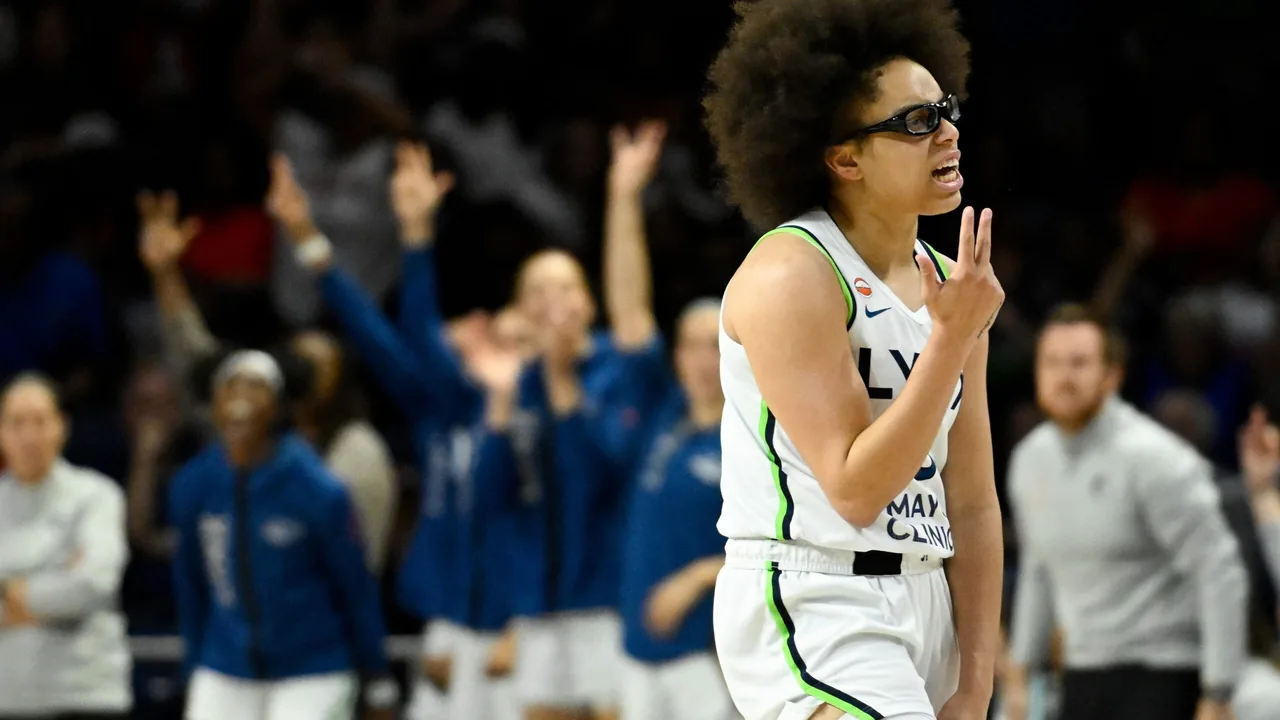
Updated August 27, 2026: Minnesota is the championship pick in this forecast, with Las Vegas projected as the other finalist. The predicted First Round winners are Minnesota, Indiana, Las Vegas and Golden State. Those are editorial calls based on the evidence available now—not an official bracket, league announcement or betting advice.
The regular season does not end until September 24, so the seeds can still move. This page answers a forward-looking question: if the strongest full-season signals continue, which matchups and winners are most plausible? Readers looking for clinch status, tiebreakers and the standings after the next completed game should use the current 2026 WNBA playoff picture.
Projected 2026 WNBA playoff bracket at a glance
The seed line below starts with the official WNBA standings as checked on August 27. It then carries that order forward as a projection. The league has not assigned these matchups, and a “projected seed” is not the same thing as a clinched final seed.
| Projected First Round matchup | Records checked Aug. 27 | Series prediction |
|---|---|---|
| No. 1 Minnesota vs. No. 8 Dallas | Minnesota 31-8; Dallas 23-16 | Minnesota, 2-0 |
| No. 4 Atlanta vs. No. 5 Indiana | Atlanta 25-13; Indiana 25-14 | Indiana, 2-1 |
| No. 3 Las Vegas vs. No. 6 New York | Las Vegas 26-13; New York 23-15 | Las Vegas, 2-1 |
| No. 2 Golden State vs. No. 7 Washington | Golden State 27-11; Washington 23-15 | Golden State, 2-0 |
Following those projected winners through their current bracket paths produces Minnesota over Indiana in four games in one Semifinal and Las Vegas over Golden State in five in the other. The final call is Minnesota over Las Vegas in six games.
The table is intentionally compact. It does not pretend that the final bracket has been posted, and the predicted scores express confidence rather than a game-by-game script. The Atlanta–Indiana opener is the closest First Round call; the Golden State–Las Vegas Semifinal is the least certain later-round pick. Minnesota’s full-season separation supplies the firmest baseline, but Las Vegas’s win over Minnesota in June is an important warning against treating the favorite as inevitable.
There is also a timing reason to remain cautious. The official schedule places a World Cup break from August 31 through September 16, followed by only eight days of regular-season play before the September 24 finale. Records will freeze during the pause, but a team’s practical outlook may not. Confirmed availability, post-break rhythm and the final week’s seed movement can all force a rewrite before the postseason begins September 27.
How these WNBA playoff predictions are made
This forecast uses a five-part editorial scorecard. It is not a proprietary simulation, a sportsbook probability or a claim that a series has already been played on paper. The weights make the judgment visible enough for a reader to disagree with it intelligently:
- Season baseline (35%): winning percentage and performance sustained across the full schedule. A long résumé receives more weight than one hot week.
- Two-way profile (25%): scoring margin and the quality of a team’s offense and defense. The WNBA’s advanced-stat pages define tools such as offensive, defensive and net rating; the principle here is to favor teams that can win at both ends.
- Matchup evidence (20%): head-to-head results, turnover pressure, rebounding, shot creation and whether one team has repeatedly forced another away from its preferred style.
- Recent form (10%): the last several games matter, but this category is capped so recency does not erase months of evidence.
- Context (10%): projected home court, schedule rhythm and only confirmed player availability. An unverified injury rumor or assumed World Cup absence receives no weight.
The scorecard also explains the predicted series lengths. “Minnesota in two” signals a strong First Round lean supported by both season quality and direct matchup results. It does not mean Minnesota is guaranteed to win Games 1 and 2 in that exact sequence. A short best-of-three can swing on one poor shooting night, which is why the 2-1 calls identify matchups where the underdog has a credible route to force a decider.
Home court matters, but seed is not used twice. The current record informs the projected seed; home-court order then receives only a smaller contextual adjustment. Readers who need the round lengths and hosting sequence can use the 2026 playoff format guide. Keeping the mechanics there prevents this forecast from becoming a duplicate rules article.
Finally, star reputation is a tiebreaking consideration, not a substitute for current evidence. Championship experience can help a team solve late-series adjustments, but an old trophy does not score in 2026. The forecast changes when the inputs change: a different seed, a meaningful run of results, a verified rotation loss or a post-break form shift should alter the pick. One isolated upset should prompt analysis, not automatic overcorrection.
First Round projected matchups and series picks
These four pairings assume the August 27 standings order survives the remaining regular season. That is a useful working bracket, not a declaration that the seeds are locked. Head-to-head results matter heavily below because the First Round is short, but the full-season record remains the first filter.
No. 1 Minnesota vs. No. 8 Dallas: Lynx in two
Prediction: Minnesota wins 2-0. This is the clearest opening-round lean. Minnesota held a 31-8 record at the checkpoint, while Dallas was 23-16, and the Lynx won all four regular-season meetings. In the last one, Minnesota beat Dallas 103-90 on August 9 to complete the sweep.
The final score does not mean every minute was one-sided. Dallas and Minnesota were tied 66-66 with 3:26 left in the third quarter before the Lynx closed the game with a 37-24 stretch. That is the Dallas countercase: Paige Bueckers and the Wings can create enough quality offense to keep a game live. It is also the reason for the Minnesota pick. When the matchup reached its decisive phase, the league leader found another gear.
A Dallas upset path would require efficient guard creation, a favorable turnover margin and a cold perimeter night from Minnesota. The forecast does not dismiss that path; it judges it unlikely to occur twice before Minnesota wins twice. The 4-0 season result and the larger full-season résumé point in the same direction.
No. 4 Atlanta vs. No. 5 Indiana: Fever in three
Prediction: Indiana wins 2-1. This is the projected First Round upset and the lowest-confidence pick of the round. Atlanta was slightly ahead by winning percentage on August 27, and the teams split four regular-season meetings. Indiana won 83-71 on June 4, Atlanta answered 108-101 and 113-96 on June 18 and 20, and Indiana took the August 16 rematch 95-91 in overtime.
Those results argue against a confident pick in either direction. Atlanta outscored Indiana by eight points across the four games, while Indiana won the most recent and most playoff-like finish. The Fever lean comes from late-clock creation: Caitlin Clark and Kelsey Mitchell can bend a defense with range, passing and one-on-one shotmaking, while Aliyah Boston gives the offense an interior answer. In a deciding game, having several ways to manufacture a late possession is a small but real edge.
Atlanta can overturn the pick with balanced scoring, offensive rebounding and ball pressure that keeps Indiana from organizing. The Dream scored 108 and 113 in their two wins, so their ceiling in this matchup is not theoretical. “Fever in three” should be read as a narrow final-possession lean, not proof that the lower projected seed is the better team.
No. 3 Las Vegas vs. No. 6 New York: Aces in three
Prediction: Las Vegas wins 2-1. No pick fights its head-to-head evidence more than this one. New York won 87-76 on June 23 and routed Las Vegas 111-71 on August 9; the Aces’ regular-season win was a 104-99 game on July 30. The Liberty also beat Las Vegas in the separate Commissioner’s Cup Championship, although that Cup final should not be counted as a regular-season-series game.
Why keep Las Vegas? At 26-13, the Aces owned the better full-season record at the checkpoint, and A’ja Wilson gives them the most powerful individual answer in a tight half-court series. Chelsea Gray’s control and Jackie Young’s two-way value make it plausible that Las Vegas can adjust after seeing New York repeatedly. The prediction assumes that the higher projected seed turns those adjustments and home court into a deciding win.
Still, the Liberty are a genuine upset threat, not a ceremonial No. 6. Breanna Stewart, Sabrina Ionescu and Jonquel Jones can stress different parts of a defense, and the 40-point August result is impossible to wave away. If the final seed changes, New York enters healthier rhythm, or the Liberty again dictate the three-point line, this should be the first First Round pick to reconsider.
No. 2 Golden State vs. No. 7 Washington: Valkyries in two
Prediction: Golden State wins 2-0. Golden State’s 27-11 checkpoint record and defensive identity create the stronger baseline. The Valkyries held Washington to 49 points in a 62-49 win on July 6, then won 74-69 on July 18. Those games showed two useful playoff traits: Golden State can survive an ugly offensive night, and it can pressure a young opponent into long empty stretches.
Washington supplied an important correction by winning the July 20 meeting 90-82. That result prevents any honest claim that the matchup is solved. Sonia Citron and Kiki Iriafen give the Mystics young talent that can improve within a season, and Washington’s 23-15 record was much closer to Golden State than a typical seventh seed’s résumé might suggest.
The 2-0 call ultimately reflects trust in Golden State’s repeatable defense and depth. Veronica Burton and Gabby Williams can influence possessions without needing to dominate shot volume, while the Valkyries have shown they can win at different tempos. Washington can force a third game by protecting the ball and recreating the aggression of its 90-point response; the prediction is that Golden State prevents those conditions from holding for two nights.
Projected Semifinals and series picks
The projected bracket puts the Minnesota–Dallas winner on the same side as Atlanta–Indiana, while Golden State–Washington feeds into the side containing Las Vegas–New York. The matchups below therefore depend on both the seed assumptions and the First Round picks above. Neither Semifinal is official.
Minnesota vs. Indiana: Lynx in four
Prediction: Minnesota wins 3-1. The Lynx start with the strongest season baseline in the league, and they won the only completed 2026 meeting with Indiana 108-100 on August 2. Minnesota reached 25-6 with that victory, its 10th straight at the time, by finding enough offense to withstand a 100-point Fever performance. That is useful series evidence: Indiana can reach a dangerous scoring level and still require another defensive answer.
Indiana’s best route is to turn every game into a spacing and decision-making contest. Clark’s passing can punish aggressive help, Mitchell can score without holding the ball for an entire possession, and Boston can make small lineups pay inside. That combination is good enough to project at least one win and makes a sweep call too strong.
Minnesota gets the 3-1 lean because its answers are broader. The Lynx can change defensive assignments, generate offense through several creators and survive a game that is not played at their preferred pace. Their record also gives them a larger margin for one bad shooting night. Two regular-season meetings still scheduled for the closing week can change this call; a convincing Indiana sweep of those games would be more relevant than the current one-game sample.
Golden State vs. Las Vegas: Aces in five
Prediction: Las Vegas wins 3-2. Golden State projects to hold the higher seed and home court, but direct matchup evidence flips the series winner. Las Vegas swept the three regular-season meetings: 91-81 on May 31, 84-79 on June 6 and 92-73 on June 21. The Aces won once at Chase Center and twice in Las Vegas, so the result cannot be explained only by venue.
The matchup has repeatedly tested Golden State’s ability to score when Las Vegas controls the paint and forces difficult perimeter volume. Wilson’s interior scoring, rebounding and rim protection create pressure on both ends; Young and Gray can then attack the rotations that follow. In the largest of the three wins, Las Vegas built its 92-73 advantage with a 21-2 first-half run, a reminder that a defense-first opponent can still be broken by several consecutive high-quality possessions.
Why five games instead of a comfortable Aces win? Golden State’s August 27 record was slightly better, its defense travels, and projected home court gives it the final game. Burton and Williams can raise the point-of-attack pressure, while the Valkyries’ depth gives them more lineup combinations to try after each loss. The series forecast respects those adjustment tools. It simply concludes that a 3-0 season sweep is too strong to ignore when the teams’ overall records are otherwise close.
WNBA Finals prediction: Minnesota over Las Vegas in six
Finals prediction: Minnesota wins 4-2. This matchup assumes Minnesota survives the Indiana side of the bracket and Las Vegas turns its strong Golden State matchup into a Semifinal win. It is not the official 2026 WNBA Finals pairing. It is the most defensible championship path produced by the evidence available August 27.
Minnesota gets the title pick from two signals that agree. The Lynx owned the league’s best record at 31-8, creating meaningful separation over a 26-13 Las Vegas team. Minnesota also won the regular-season series 2-1. The Aces took a 100-97 game on June 13, but the Lynx answered 98-87 on August 8 and 92-87 on August 15.
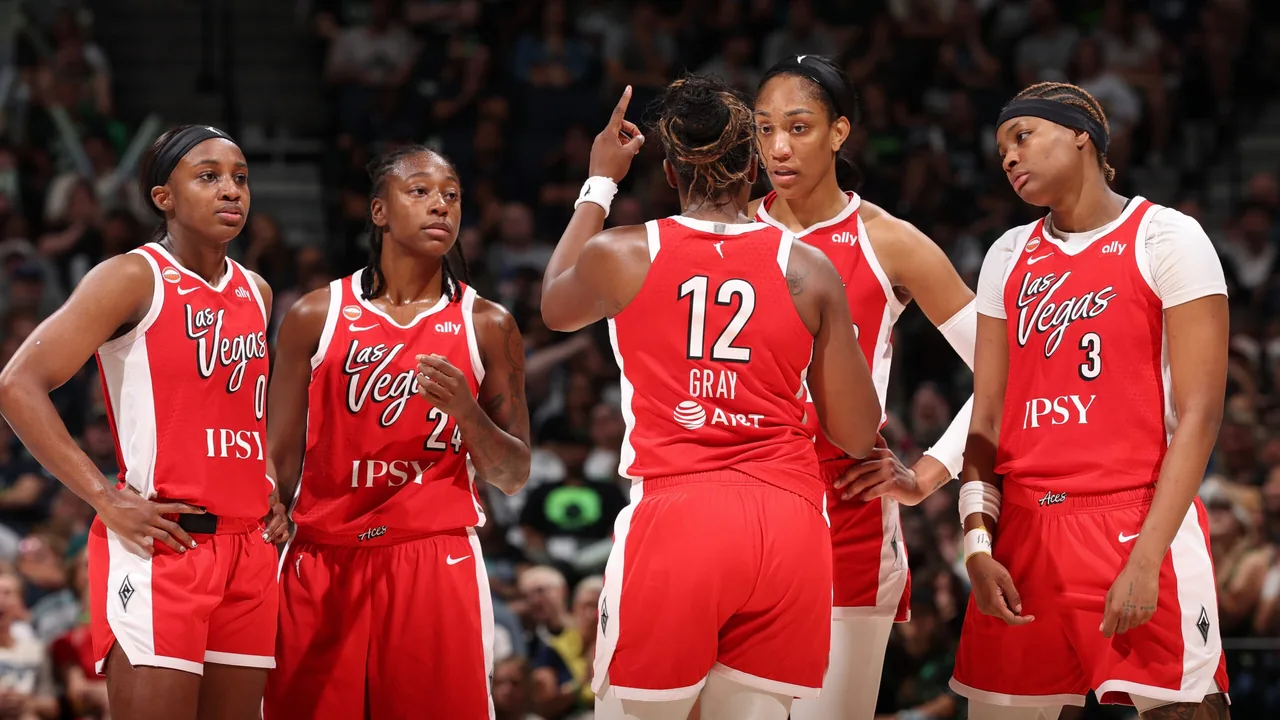
The June loss is exactly why the pick extends to six games. Las Vegas proved it can execute at the end of a close game: Wilson and Gray made the late free throws that protected a three-point win, while Wilson’s interior presence required constant attention. A best-of-seven gives the Aces time to identify the coverages they like and return to them. Young and Gray also provide experienced late-possession creation when the first action breaks down.
Minnesota’s answer is variety. Miles can create an advantage with the ball, McBride stretches a defense without needing every possession called for her, and Collier changes the geometry at both ends. The Lynx do not have to win one narrow style of game. They can generate offense early, play through the half court or use defensive stops to create easier chances. Over six projected games, that flexibility is more trustworthy than depending on one matchup every night.
The swing minutes may come when the primary stars rest or when foul trouble changes a frontcourt rotation. Minnesota’s route is to avoid live-ball turnovers, keep Las Vegas from living at the rim and make Wilson work through multiple defenders without overhelping. The Aces’ route is to win the paint, force Minnesota’s secondary creators into decisions and prevent the Lynx from building leads with deeper combinations.
A 4-2 prediction is not a claim that Minnesota wins four specific dates. Exact Finals dates and the actual participants remain separate factual questions; the 2026 WNBA Finals schedule guide should handle those announcements. Before accepting this matchup, follow the Minnesota Lynx schedule through the final week and recheck the bracket after every seed-changing result.
The upset paths that could break this bracket
A useful prediction should explain how it can be wrong. The alternative paths are not equally likely, and “upset” can be misleading when the middle seeds are separated by only a few games. These are the four branches most capable of breaking the projected route.
New York eliminates Las Vegas
This is the strongest alternative because it already has direct evidence. New York won two of the three regular-season games, including a 111-71 result on August 9, and also beat Las Vegas in the separate Commissioner’s Cup Championship. If the Liberty again win the three-point line and make Wilson work against set bodies before Las Vegas can establish the paint, the No. 6 label will matter much less than the matchup history.
New York would not need another 40-point margin. It would need two controlled performances in a short series. That makes Liberty-over-Aces more plausible than the seed gap suggests and explains why the main pick is Las Vegas in three rather than two.
Atlanta turns the 4/5 matchup back in its favor
Calling Atlanta over Indiana an upset is mostly a bracket technicality. The Dream held the slightly better August 27 winning percentage, split four games with the Fever and outscored Indiana by eight points across those meetings. Atlanta’s path is to create extra possessions through rebounding and pressure, then keep enough size on the floor to discourage Indiana from living at the rim.
The Fever pick rests on late-game creation, not a clear season-long gap. If Atlanta prevents Clark and Mitchell from turning every close finish into a favorable guard matchup—or if the Dream build the kind of transition volume that produced 108 and 113 points in their wins—the projected upset simply flips back toward the higher seed.
Golden State finally solves Las Vegas
The Valkyries’ better checkpoint record and projected home court make this an understandable alternative, but they must solve a real matchup problem. Las Vegas won all three regular-season games. In the May 31 meeting, the Aces scored 38 points in the paint to Golden State’s 16 and held the Valkyries below 34% from the field.
Golden State’s route is defensive disruption plus better shot quality. Burton and Williams need to turn pressure into live-ball chances, the half-court offense must avoid settling for contested threes, and the depth advantage has to show up when Wilson rests. If those bench minutes produce separation, a Game 5 at the projected higher seed becomes a meaningful edge.
Dallas steals a game from Minnesota
A full Wings series win is the least likely branch here, but a third game is plausible. Dallas was tied with Minnesota late in the third quarter on August 9 before the Lynx pulled away. Bueckers can create a high-efficiency scoring night, and one burst of three-point variance can change a short series.
The distinction matters: one competitive game does not erase Minnesota’s 4-0 sweep. Dallas would need that shotmaking, disciplined transition defense and a favorable turnover margin twice. The forecast gives the Wings a route to one win while declining to turn that route into an unsupported series call.
What could change before the playoff bracket is official
This forecast has a short shelf life. The August 27 standings still leave only half a game between Atlanta and Indiana, while New York and Washington are tied at 23-15. A small change in order can replace a projected opponent, move home court or send a winner onto a different Semifinal path even if the same eight teams remain above the line.
- Games through August 30: Recalculate every projected seed after the final games before the break. Do not carry the August 27 order forward just because the league pauses.
- World Cup break, August 31–September 16: Verify player availability from official team or league reporting before changing a pick. International participation alone is not evidence of an injury, workload limit or absence.
- Return on September 17: Refresh the projection after every result that changes seed order. The late Minnesota–Indiana games on September 22 and 24 are especially important because they can add direct evidence to a projected Semifinal that currently rests on one completed meeting.
- Regular-season finales on September 24: Replace the hypothetical pairings with the official bracket once every result and tiebreak is resolved. Keep winner calls labeled as predictions even after the matchups become facts.
The official schedule release sets September 24 as the end of the regular season and September 27 as the playoff opener, but the league’s key-dates page also notes that dates are subject to change. Use the full WNBA schedule for the current slate and results. This page should answer “Who would win?” only after the schedule and playoff-picture pages answer “Who actually plays?”
2026 WNBA playoff prediction FAQ
Are these the official 2026 WNBA playoff matchups?
No. They are projected from the standings and completed results through August 27, 2026. The regular season continues through September 24, so the seed order, home-court positions and pairings can still change. Only the league’s post-finale bracket should be treated as official.
Who is the 2026 WNBA Finals prediction?
The prediction is Minnesota over Las Vegas in six games, at medium confidence. Minnesota’s 31-8 checkpoint record and 2-1 regular-season edge over the Aces point in the same direction. Las Vegas’s 100-97 win in June and its half-court star power are why the projection allows a long series rather than a quick result.
What is the likeliest First Round upset?
The bracket pick is No. 5 Indiana over No. 4 Atlanta in three. That is a low-confidence upset: the teams split four regular-season meetings, Atlanta had the slightly better August 27 record and Indiana won the most recent game in overtime. Among outcomes not selected in the main bracket, New York over Las Vegas is the most credible alternative because the Liberty won their regular-season series 2-1.
When should these bracket predictions be updated?
Update the seed projection after the August 30 games, verify player availability before the September 17 restart, and recalculate after every result that moves a team in the top eight. After the September 24 finales, switch the pairings to official bracket facts but keep every series winner and score clearly labeled as a prediction.
Sign in with Google to join the discussion.