
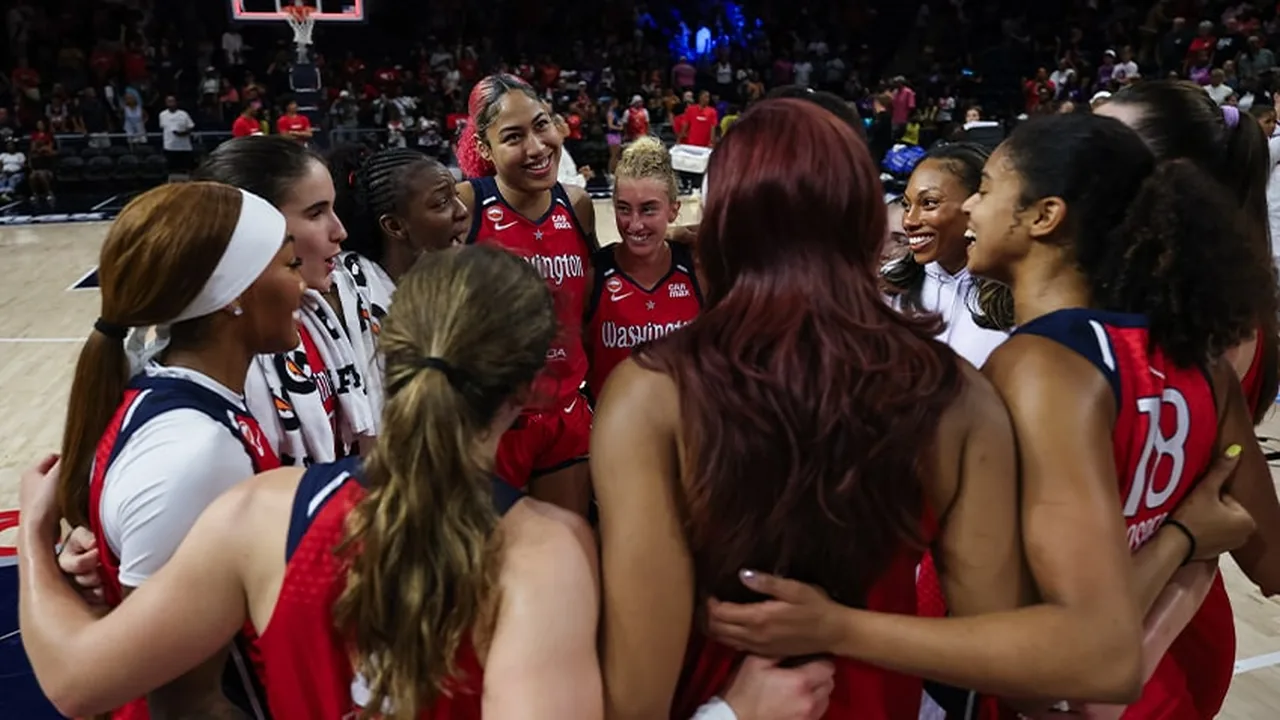
2026 WNBA power rankings at a glance
Updated August 12, 2026: Minnesota is the clear No. 1 in our 2026 WNBA power rankings, with Golden State and Las Vegas completing the leading tier. The middle is much tighter: Indiana, New York, Atlanta, Washington and Dallas all have credible paths to a dangerous playoff seed. At the other end, Seattle has already been eliminated from postseason contention, while Connecticut and Toronto are playing for development as much as position.
This is an editorial snapshot, not the official standings. We start with the full-season record, then weigh recent form, quality of wins, player availability, lineup stability and how repeatable a team's strengths look in a playoff series. A team can therefore sit above another club with a similar—or even slightly better—record if its current defense, shot creation or health profile is stronger. Records below came from the official standings snapshot checked on August 12; games played after that check are not included.
| Rank | Team | Record | Current read |
|---|---|---|---|
| 1 | Minnesota Lynx | 27-7 | League standard |
| 2 | Golden State Valkyries | 23-9 | Elite form and depth |
| 3 | Las Vegas Aces | 23-11 | Proven title ceiling |
| 4 | Indiana Fever | 21-12 | Balanced contender |
| 5 | New York Liberty | 20-14 | Rising at the right time |
| 6 | Atlanta Dream | 20-12 | Strong season, recent wobble |
| 7 | Washington Mystics | 19-13 | Clutch and resilient |
| 8 | Dallas Wings | 19-14 | Playoff quality, form concerns |
| 9 | Portland Fire | 13-19 | Best of the chase group |
| 10 | Los Angeles Sparks | 12-20 | Upside after major changes |
| 11 | Chicago Sky | 12-21 | Still alive, little margin |
| 12 | Phoenix Mercury | 13-22 | Talent, but too much ground |
| 13 | Connecticut Sun | 8-23 | Competitive development |
| 14 | Toronto Tempo | 10-22 | Expansion-season slide |
| 15 | Seattle Storm | 7-28 | Eliminated, evaluating future |
The order can move quickly because the regular-season finish is compressed. Check today's WNBA games for the latest matchups and results, then use the WNBA schedule this week to see which teams have the best opportunity to gain ground. Those live pages are the source for current game information; this ranking is the interpretation around it.
Ranks 1–3: the championship standard
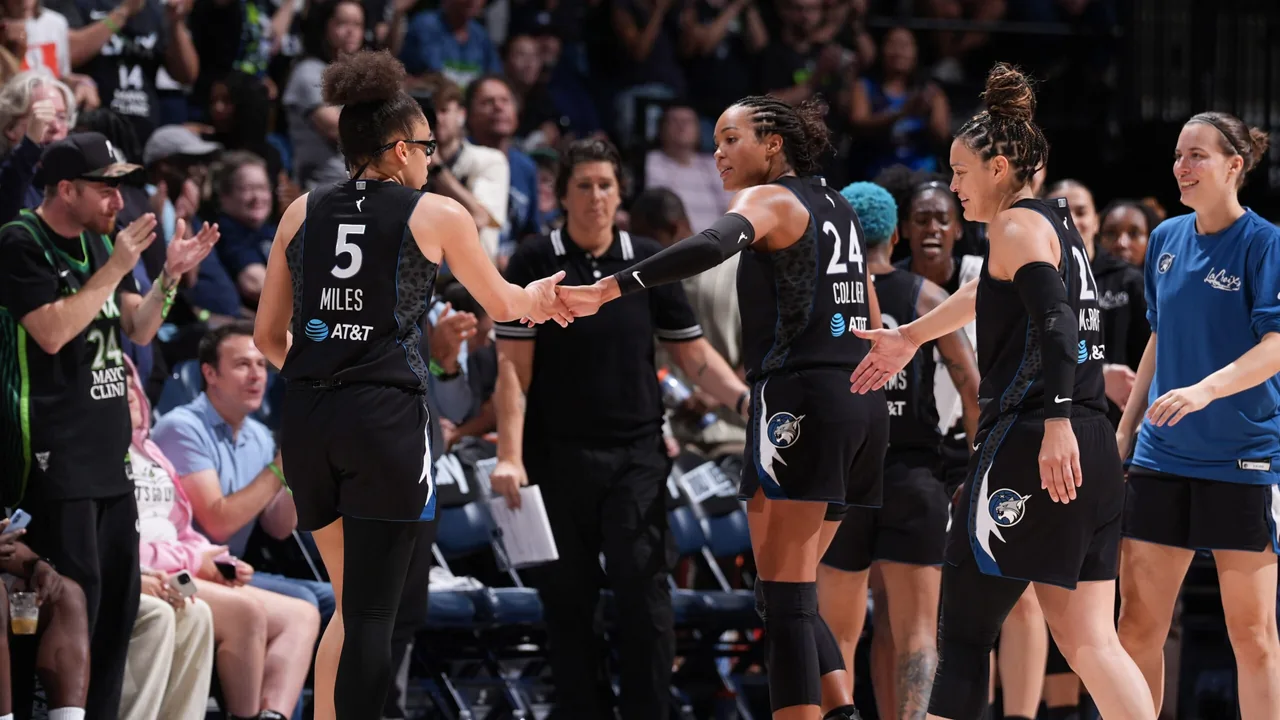
1. Minnesota Lynx
Minnesota owns the most complete résumé and the fewest reasons for doubt. The Lynx were 27-7 in the August 12 standings snapshot, and the official Week 11 analysis noted that they had won 12 of 13 games dating to July 8. That stretch matters because it was not just an early-season burst: Minnesota sustained top-level results as scouting reports became more detailed and the playoff race grew more urgent.
The championship case starts with repeatability. Minnesota can win without needing one narrow shot profile or one player to create every late-clock answer. That makes a bad shooting night less fatal and gives the coaching staff more ways to solve a series. The concern is simply the burden of expectation. Every opponent treats the league leader as a measuring-stick game, and maintaining health matters more than chasing a cosmetic margin in the standings.
2. Golden State Valkyries
Golden State is no novelty at No. 2. The Valkyries stood 23-9 and, according to the official Week 11 review, had won 13 of their previous 15 games. That is the kind of long-enough sample that turns “hot team” into “serious contender.” Their depth can keep pace high without asking one unit to carry every minute, while their defensive activity creates easier offense and protects them when half-court shooting cools.
The question is postseason translation. A seven-game surge proves quality, but a playoff series repeatedly attacks the same matchup and forces a team to win after the first plan is taken away. Golden State must show that its second and third counters are as reliable as its regular-season depth. The talent and form are strong enough that only Minnesota ranks ahead.
3. Las Vegas Aces
Las Vegas gets the benefit that a proven core earns, but not a free pass. The Aces were 23-11 in the August 12 snapshot. Their best version still offers the league's most intimidating individual problem in A'ja Wilson, experienced shot creation and a group that understands high-pressure possessions. That ceiling is why they remain above teams with comparable records.
There has also been more variance than Minnesota has shown. The official Week 11 analysis arrived after consecutive road defeats and noted that Las Vegas faced a demanding homestand. The Aces need healthy stars and steadier possession-to-possession defense to turn reputation into another title run. Fans can track the next test on the full WNBA schedule; the top three order should respond to what happens on the court, not to championship history alone.
Ranks 4–8: playoff teams with real upside
This tier is where a power ranking becomes more useful than reading winning percentages in order. Five teams entered August 12 within a narrow record band, yet they arrived there through very different styles and trends. Any of them can win a playoff series. Each also has a flaw that could turn a favorable seed into a short stay.
4. Indiana Fever
Indiana's 21-12 record gives it the best current line in this group. The Fever have enough perimeter creation to survive late-clock possessions and enough interior presence to avoid becoming one-dimensional. Kelsey Mitchell's scoring consistency was a central point in the official Week 11 review, which makes Indiana harder to load up against than a team dependent on a single initiator. The next step is showing that balance against the top defenses when transition chances disappear.
5. New York Liberty
New York ranks fifth despite a 20-14 record because its recent recovery changed the shape of the season. The Liberty were 7-1 over the eight games through August 9, according to the official ranking, after a difficult middle stretch. Their established stars still provide a playoff ceiling that few middle-tier clubs can match. Fifth, rather than fourth, reflects the accumulated losses and the need to prove that the rebound is durable against a stronger run of opponents.
6. Atlanta Dream
Atlanta is 20-12 and owns a strong full-season case. The Dream's physicality and multiple scoring options make them capable of dictating a matchup instead of merely reacting to it. They land behind New York because the official Week 11 snapshot followed a 1-2 week that interrupted a five-game winning streak. That is not a crisis; it is a reminder that the separation among Nos. 4–7 is tiny and that form against other playoff teams carries extra weight.
7. Washington Mystics
Washington has been one of the season's most convincing pressure teams. The official Week 11 analysis recorded a seven-game winning streak through August 9 and a 14-6 mark in games that were within five points in the final five minutes. Clutch success can reflect composure and good execution, but it also leaves less cushion than consistently winning by comfortable margins. The Mystics' 19-13 record keeps them in the pack, while their late-game reliability gives them a credible upset route.
8. Dallas Wings
Dallas holds the last place in this tier at 19-14. The Wings have already shown enough offense and high-end talent to trouble anyone, but the trend entering Week 11 was uncomfortable: the official review put them at 1-5 since the All-Star break and identified increased turnovers plus weak three-point production as major causes. Those are correctable, yet both become more punishing when playoff possessions slow down.
Finishing fourth rather than eighth changes travel, home-court opportunity and the opponent waiting in the first round. Our 2026 WNBA playoff format guide explains the bracket and dates, while the all 15 WNBA teams guide provides franchise context. The key point here is not that the order is permanent; it is that this five-team cluster has no harmless matchup.
Ranks 9–12: the chase group
The standings gap between eighth and ninth is more revealing than the one-game differences inside this tier. Dallas was 19-14 on August 12; Portland, the leading chase team, was 13-19. That makes every dropped game expensive and shifts part of the evaluation toward 2027: which systems, pairings and young players are worth carrying forward?
9. Portland Fire
Portland has the best blend of current cohesion and expansion-season progress in the lower half. The Fire were 13-19 after snapping a five-game slide with consecutive wins entering Week 11. Beating teams in their immediate neighborhood is the first requirement for a late push, and Portland has enough competitive structure to stay above the other chasers. The remaining test is consistency against top-eight opposition; isolated good nights will not close a large gap.
10. Los Angeles Sparks
Los Angeles is the hardest team here to price because the roster context changed at the trade deadline. The Sparks stood 12-20, but their Week 11 résumé included the win that ended Minnesota's 10-game streak and a 2-2 start after moving Kelsey Plum to Phoenix. That is a small sample, not proof of a turnaround. It does show why Los Angeles ranks ahead of teams with a similar record: Cameron Brink, Dearica Hamby and the revised rotation offer useful evaluation questions rather than a lineup that has already reached its limit.
11. Chicago Sky
Chicago's 12-21 record leaves almost no tolerance for a prolonged slump. The Sky can create difficult interior matchups and have produced enough competitive stretches to remain above the bottom three, but road performance was a major concern in the official Week 11 review. A chase team cannot depend on home rhythm when so many remaining opportunities require travel. Chicago needs cleaner half-court possessions and fewer empty stretches before its physical strengths can change outcomes consistently.
12. Phoenix Mercury
Phoenix had one more win than Chicago in the August 12 snapshot, at 13-22, yet ranks one place lower because the path had narrowed and the rotation was absorbing a major deadline addition. Kelsey Plum raises the offensive ceiling, but an acquisition is not an instant repair for a full season's defensive and continuity problems. The official Week 11 analysis had Phoenix 7.5 games behind eighth with 10 games left before its Tuesday result; that dated figure explains the urgency without pretending the current elimination math is frozen.
For these four clubs, a “successful” finish is not identical. Portland can establish an expansion identity. Los Angeles can test its post-trade core. Chicago can prove which offense survives close games, and Phoenix can learn whether its new guard mix works. A late surge would matter, but development that carries into the next roster cycle also has real value.
Ranks 13–15: rebuilding teams and how to use this list
13. Connecticut Sun
Connecticut's 8-23 record is a rebuilding record, but the Sun have shown enough competitive resistance to avoid last place. Their Week 11 entry followed a win in their only game of the prior week, and close-game experience can be useful even when it does not change the playoff picture. The evaluation now is about sustainable pieces: which defenders can execute the scheme, which creators can generate efficient shots without ideal spacing, and which lineups can survive against first units rather than only opposing benches.
14. Toronto Tempo
Toronto has more wins than Connecticut, at 10-22, but current direction pushes the Tempo lower. Through August 9, the expansion club had lost eight straight and 12 of 13. An inaugural roster is supposed to reveal needs as well as strengths, so the slide is information, not a verdict on the franchise. Toronto can improve its standing in this list by stabilizing defensive possessions, reducing the stretches in which one missed shot becomes several hurried ones, and building reliable combinations around the players most likely to return.
15. Seattle Storm
Seattle is last at 7-28 and was the first team officially eliminated from the 2026 playoff race. The Storm had tied a franchise-record 11-game losing streak through August 9 before their next result. With the postseason question settled, game results still matter, but development decisions matter more. The useful measures are whether young players can take larger assignments without losing efficiency, whether the team can establish a dependable defensive base, and which veterans fit the next competitive version of the roster.
Who is No. 1 in the 2026 WNBA power rankings?
Minnesota is No. 1 in this August 12 ranking. The Lynx combined the league's best record, sustained recent form and the most complete team profile. That answer is tied to the update date; a later ranking should be checked against later games.
Are WNBA power rankings the same as the standings?
No. Standings are official and ordered by wins, losses and league tiebreak procedures. Power rankings are an editorial estimate of current team strength. They can include recent form, health, opponent quality and playoff matchup potential, so two teams with similar records may appear in a different order.
How often should power rankings be updated?
A weekly rhythm works during a busy part of the season, with additional updates after a major injury, trade or playoff clinch. Updating after every game can overreact to noise; waiting a month can hide a genuine change. This page should always show its check date so readers know exactly what evidence it includes.
How many teams make the 2026 WNBA playoffs?
Eight teams qualify for the postseason. That is why the line around Dallas matters so much and why the large gap to Portland shaped this edition. Rankings do not award a berth, however. Only official results, standings and tiebreak procedures determine the field.
The fairest way to use any ranking is as a conversation starter with a timestamp. Look at the reasons, compare them with the next games, and move teams when the evidence changes. Minnesota leads today; nobody receives points in the standings for leading this list.
Sign in with Google to join the discussion.