
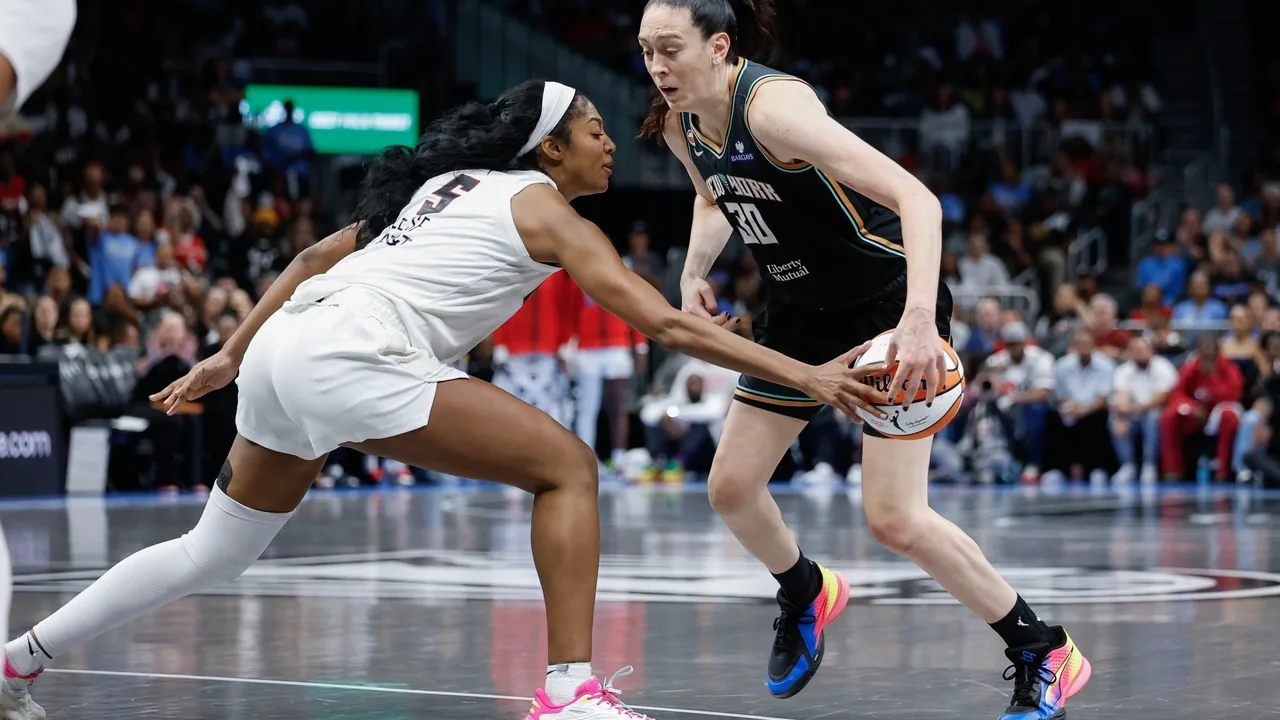
Updated October 10, 2026. The 2026 WNBA semifinals are over: the Atlanta Dream swept the New York Liberty 3-0, and the Golden State Valkyries swept the Las Vegas Aces 3-0. Atlanta and Golden State will meet for the championship, with Game 1 scheduled for October 17. The Finals have not begun as of this update. If you want the changing bracket or the next tipoff rather than a review of the completed round, use our WNBA playoff tracker.
The 2026 WNBA semifinal results at a glance
Both matchups were best-of-five series. That means the first team to win three games advanced; neither needed a fourth game. Atlanta entered as the No. 4 seed and eliminated No. 8 New York. Golden State, the No. 2 seed, eliminated No. 3 Las Vegas. The league's official playoff bracket confirms the two sweeps and the Finals pairing.
| Game | Date | Atlanta vs. New York | Golden State vs. Las Vegas |
|---|---|---|---|
| 1 | October 4 | Dream 92, Liberty 82 | Valkyries 71, Aces 60 |
| 2 | October 7 | Dream 101, Liberty 98 (OT) | Valkyries 83, Aces 81 |
| 3 | October 9 | Dream 85, Liberty 83 | Valkyries 87, Aces 77 (OT) |
| Series | Completed October 9 | Atlanta wins 3-0 | Golden State wins 3-0 |
The table shows why the matching 3-0 series scores conceal two different stories. Atlanta made a sharp defensive turn in Game 1, then survived an overtime game and a two-point closeout. Golden State opened by holding Las Vegas to 60 points, won a two-point Game 2, and required overtime to finish Game 3. A sweep is a measure of winning every game, not proof that every game was comfortable. The completed WNBA scores are the place to revisit individual results; the discussion below focuses on how the series were won.
The finalists have different seeding and history, too. Golden State owns Finals home-court advantage as the higher seed. Atlanta last reached the Finals in 2013; Golden State is playing for a championship in only its second WNBA season. Neither club had won a WNBA title before this matchup. Those facts make the upcoming series compelling, but the semifinal scores do not decide it in advance. The Finals use a best-of-seven format, giving both teams a different test from the three-win round they just completed.
How Atlanta swept New York
Atlanta's path was a test of adaptability. The No. 4 seed came in with a defense capable of turning a mistake into an immediate scoring chance, but the Game 1 injury to Allisha Gray altered its rotation. The Dream still won three times, two of them by three points or fewer. The 3-0 result is striking because New York had just eliminated top-seeded Minnesota in the first round. That made the Liberty a dangerous No. 8 seed, not a routine opponent. Atlanta answered with pressure, timely reserve production and enough half-court scoring to survive when its usual starters were unavailable.
Game 1: pressure changed a close contest
The opening 92-82 result did not look inevitable at halftime. New York led 40-37 after an even first half with repeated lead changes. Gray had hurt her left hand and left during the second quarter, creating a practical question about who would cover her minutes and scoring. DeWanna Bonner supplied 23 points off the bench, while Rhyne Howard handled additional playmaking. According to the Dream's account of Game 1, Howard finished with eight assists, and Jordin Canada led Atlanta with 25 points and five steals.
The break between halves was the hinge. Atlanta scored 32 third-quarter points to New York's 15. That was not simply a hot shooting spell: the Dream forced nine turnovers in the quarter and scored 16 points off those mistakes. Over the whole game, New York committed 21 turnovers, which Atlanta converted into 32 points. The league's game recap says the latter total tied a WNBA playoff record. The surge gave Atlanta possessions before New York could set its defense and allowed it to carry a 69-55 lead into the fourth quarter.
New York made the finish competitive. Breanna Stewart's layup cut the gap to five late in the fourth; Angel Reese answered near the end of a shot clock, and Canada later hit a corner three. Those are the plays that prevented the early second-half surge from being wasted. For fans trying to understand this series, Game 1 supplied the template: Atlanta could survive an imperfect offensive half by creating its own extra chances. It also showed why Gray's absence mattered. One star left the rotation, so Canada, Howard, Bonner and Reese needed to share the work rather than wait for a single replacement to copy her role.
Games 2 and 3: winning without Allisha Gray
Game 2 was no repeat of the 10-point opener. New York pushed Atlanta into overtime on October 7, and the Dream escaped 101-98. The official game summary credits Angel Reese with 23 points and Naz Hillmon with the go-ahead layup with 20.8 seconds remaining in the extra period. The decisive basket is a reminder that a playoff series is not won by its headliners alone. Atlanta needed Hillmon's finish at the rim while New York was one possession away from changing the direction of the matchup.
With a 2-0 series lead, Atlanta traveled to Brooklyn for Game 3 on October 9. Gray warmed up but was ruled out before tipoff, according to the league's recap. The Dream had to close the series without a confirmed return from one of their leading scorers. Reese scored 22 points and collected nine rebounds, Howard scored 21, Canada contributed 19 points and 11 assists, and Bonner added a 13-point, 13-rebound double-double, as the team's closeout recap reports. That balance explains more than the final two-point margin does.
The finish was tense. Atlanta led 83-81 late, then Stewart missed a chance near the basket to tie it. Bonner grabbed the rebound, was fouled and made two free throws. Stewart's put-back at the buzzer made the final 85-83, but it did not change who advanced. A sweep built from a 10-point win, an overtime escape and a two-point road closeout gave Atlanta its first Finals trip since 2013. It did not settle Gray's availability for the championship round; fans should check an official team update before treating her as available or unavailable for Game 1. For current matchups rather than an old series snapshot, use the WNBA schedule.
How Golden State swept Las Vegas
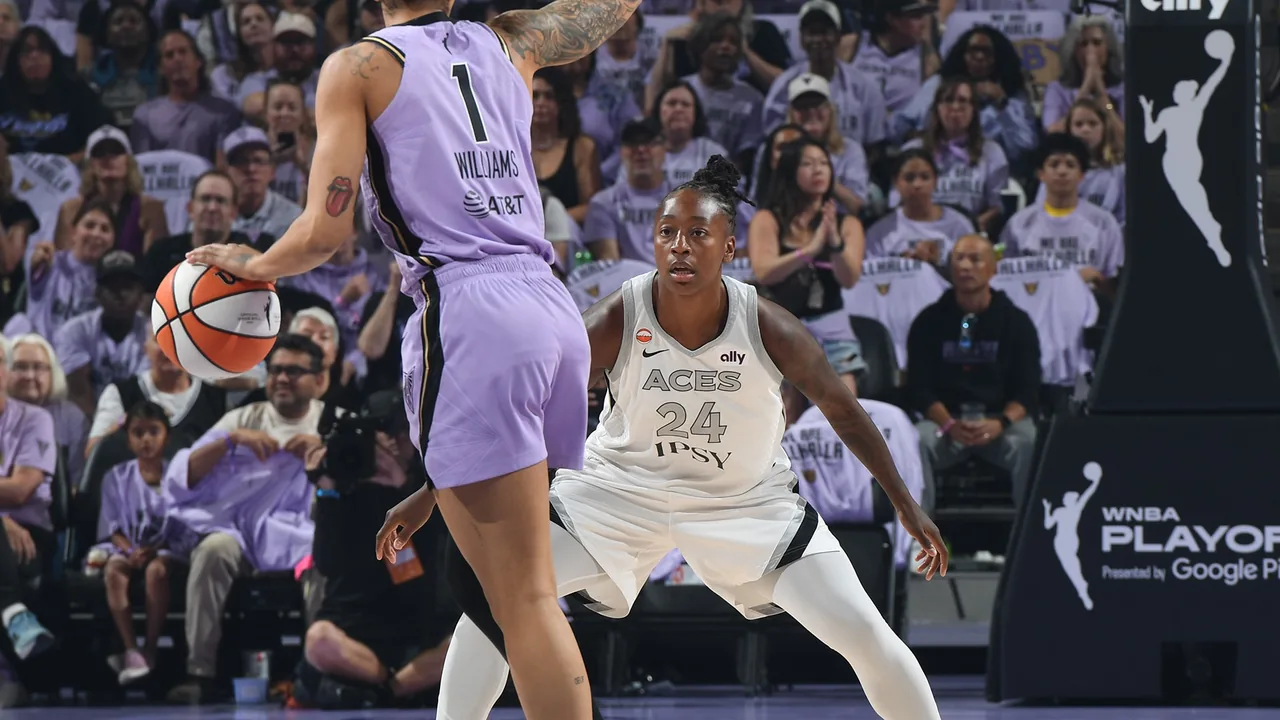
Golden State faced the defending champion Las Vegas Aces, a team with established postseason stars and recent title experience. Yet the second-year Valkyries won every game, first with defense and rebounding at home, then with late execution in two much closer contests. The three results are evidence of a full-team effort. Gabby Williams, Tiffany Hayes, Veronica Burton, Kayla Thornton and Kiah Stokes each mattered in different ways; treating the sweep as one player's hot streak would miss how Golden State changed the terms of each game.
Game 1: boards and defense established the terms
The Valkyries won the opener 71-60 on October 4. That score suggests a low-possession, difficult shooting game, and the league's game account supports that reading: Golden State shot 37.7 percent, Las Vegas 33.9 percent. The major separation was on the glass. Golden State held a 52-25 rebounding advantage, and the Aces scored their fewest points of the season. When neither team shoots especially well, claiming the missed ball becomes an offensive resource and a defensive stop. Golden State repeatedly ended Las Vegas possessions and created chances for itself.
Williams gave the Valkyries the scoring they needed with 25 points, 11 rebounds and five assists, including 18 points before halftime. Stokes added 14 rebounds and three blocked shots. Their contributions had different shapes: Williams drove the offense while also helping on the glass; Stokes protected the rim and helped prevent second chances. Las Vegas still had 24 points from A'ja Wilson and 16 from Chelsea Gray, but two efficient individual totals could not overcome the team rebounding gap. Golden State won without needing a high-scoring shootout against the defending champions.
That opener also gave the series an important question for Game 2. Would Las Vegas find a way to finish possessions and make Golden State work in a closer endgame? The Aces did answer part of that challenge. They made the next two games much tighter than the first, which is why the final 3-0 series score alone is an incomplete account of the matchup.
Games 2 and 3: two different closeout tests
Golden State took Game 2 by just two points, 83-81, on October 7. The Aces had cut into a substantial deficit, and the game turned on possessions rather than another rebounding rout. The official Game 2 summary describes Veronica Burton's deep three-pointer, which put Golden State ahead with 41 seconds remaining, followed by two late free throws. Hayes scored 21. A team that had won the opener by control now had to make the right play under immediate pressure. Burton did so at both the arc and the foul line, allowing the Valkyries to carry a 2-0 lead to Las Vegas.
Game 3 was an even sharper test. Las Vegas led by six late in regulation on October 9, but Golden State tied it, including a steal by Williams and a Thornton transition layup that made it 69-69 with 1:50 remaining. The game went to overtime. There, the Valkyries outscored the Aces 16-6 and finished an 87-77 win. Thornton scored 18 points overall; Williams scored 16, eight of them in the extra period. Those figures come from the league recap and the Valkyries' own closeout account. Las Vegas had 21 from Wilson, but she shot 6-for-19, reflecting how difficult Golden State made her attempts.
The final 10-point margin therefore conceals the tight regulation finish. Golden State earned the sweep by surviving an 83-81 Game 2 and then extending Game 3 after trailing late. The club became the quickest expansion team to reach a WNBA Finals, doing so in its second season. That history does not make its Finals opponent easy. It does establish that the Valkyries have already beaten a champion with more than one kind of win: a physical defensive opener, a clutch-shot Game 2 and a resilient overtime closeout.
What the two sweeps reveal about the Finals
The semifinals produced a new Finals matchup, but they did not produce a reliable favorite on their own. Atlanta and Golden State each won three straight, while their opponents and game conditions differed. The useful comparison is to look at what each team repeatedly tried to control, then watch whether that control survives against the other finalist. Golden State is the No. 2 seed and will have home court against No. 4 Atlanta. The title series is best of seven, so the adjustment window is longer than it was in either semifinal.
Atlanta's possession battle against Golden State's rebounding
Atlanta's clearest single-game signal came in the opener against New York: 21 turnovers forced and 32 points scored off them. Those are concrete Game 1 numbers, not an average for the whole series. Golden State's most conspicuous Game 1 number against Las Vegas was its 52-25 rebounding edge. It is tempting to turn those into a simple Finals prediction, but a different opponent can change where shots come from, how the ball is protected and who is available to rebound. The numbers are better used as viewing questions.
Can Atlanta bother Golden State's ballhandlers enough to create quick points before the Valkyries set their defense? Can Golden State limit second chances and make Atlanta defend through an entire possession? A live-ball steal is valuable only when it is finished well, while a defensive rebound matters most when it keeps the opponent from another shot. Fans can follow those events in the game scores and stats as the Finals unfold, but a single box score will still need context. For example, a team can win the turnover count and lose on the glass, or secure rebounds but fail to convert them into efficient offense.
The close games in both series point to a second shared test: late-game execution. Atlanta got a go-ahead overtime layup from Hillmon in Game 2 and Bonner's foul shots in Game 3. Golden State got Burton's late three and free throws in Game 2, then an overwhelming overtime period in Game 3. Those episodes show both teams have already met pressure. They do not prove which club will handle it better when the opponent changes and the championship stakes increase. A useful Finals watch is who gets a clean shot, who retrieves the miss and who stays organized after a turnover in the final two minutes.
History and uncertainty before Game 1
There is genuine historical weight to this pairing. The WNBA's championship history lists Atlanta as a runner-up in 2010, 2011 and 2013, but not as a champion through 2025. Golden State entered the league in 2025 and reached its first Finals in 2026, according to the team's berth announcement. One franchise is returning to the championship round after a long absence; the other got there in its second season. Either outcome would produce a first title for that franchise, although no outcome can be stated before the games are played.
Availability and adjustment remain open questions. Atlanta completed its semifinal closeout without Gray, but there was no verified Finals status for her at this October 10 check. Fans should not assume that warming up before Game 3 means she will play in Game 1, or that missing Game 3 means she cannot. Likewise, Golden State's rebound advantage over Las Vegas does not guarantee the same matchup against Atlanta. Coaches will have at least four games to respond in a best-of-seven series, and the schedule can stretch further if neither team wins quickly. The sweeps tell us who earned the right to play; they do not compress the Finals into a three-game replay.
Where fans can check the next games
As of October 10, the WNBA lists Finals Game 1 for Saturday, October 17 at 3:30 p.m. Eastern, which is 12:30 p.m. Pacific, at Golden State's Chase Center. The league's postseason FAQ lists NBC and Peacock for that opener. That is a scheduled future game, not a result. If you are planning around a broadcast or traveling to the arena, verify the listing again near game day because start times and availability can change.
For a quick view of the developing title series, visit our playoff bracket; for channels and streaming listings, use the WNBA TV schedule. The playoff format guide explains why this round required three wins while the Finals require four. The answer to the two most common semifinal questions is now fixed: yes, both series were 3-0 sweeps, and yes, Golden State hosts first as the higher seed. The championship answer remains open until the Finals are played.
Sign in with Google to join the discussion.