
What is a WNBA EPIC rookie extension?
A WNBA EPIC extension is an agreement that can accelerate the earnings of a qualifying player on a rookie-scale contract. EPIC stands for Exceptional Performance on Initial Contract. It can combine a renegotiated fourth-year option salary with additional seasons, allowing an eligible young player and her team to address compensation before the original rookie arrangement simply runs its course.
Eligibility does not automatically change the contract. An award can open the door to this mechanism; the player and team still need to agree to terms. A report that someone qualifies therefore carries a different meaning from an announcement that she signed. That distinction is central to discussions about Aliyah Boston, Caitlin Clark and other players whose early-career achievements attract salary questions.
The governing framework is the 2026 collective bargaining agreement published by the WNBPA. Its EPIC provisions distinguish the final option year of the existing deal from the later extended term. Those periods do not necessarily use the same salary ceiling, which is why a single headline saying max contract can leave an important question unanswered.
EPIC is also separate from the broader upward adjustments to rookie pay under the new labor agreement. A league-wide adjustment and an individually negotiated extension are different changes. One should not be used as evidence that every player on a rookie deal has signed a new multiyear contract.
Our WNBA CBA guide covers the wider salary and roster reforms. Here the focus is narrower: the qualifying honors, the signing window, the option-year treatment and the distinction between a possible deal and a completed one. The rules and examples below were checked on October 27, 2026; future annual salary limits and future signing calendars must be read for their own applicable season.
Which awards qualify a player for EPIC?
The formal award category matters more than the general description star player. A successful young professional can accumulate several impressive honors without meeting this particular clause. Conversely, one qualifying selection can matter even when a player is not the league's most famous name.
MVP and All-WNBA First or Second Team are the qualifying honors
The CBA identifies the WNBA Most Valuable Player award and selection to either the All-WNBA First Team or Second Team. Those are alternative routes: a player does not need to win MVP and make an All-WNBA team. The provision applies to an eligible player on a rookie-scale contract, with the relevant early-contract timing.
Second Team is sufficient for the All-WNBA route. It is a mistake to shorten the rule to First Team only, just as it is a mistake to substitute an informal best-players ranking for the league's official selection. A published ballot, a journalist's preferred team and the announced All-WNBA result are different pieces of information.
For example, suppose two otherwise similarly situated rookie-contract players are being discussed. Player A has an official All-WNBA Second Team selection; Player B appears only on a media outlet's unofficial third team. The first distinction is relevant to the clause. The second does not create a qualifying honor simply because the article uses an all-league label.
All-Star, Rookie of the Year and defensive awards do not substitute
An All-Star selection alone does not satisfy the listed criteria. Neither does Rookie of the Year, All-Rookie recognition, Defensive Player of the Year or an All-Defensive team selection. Those awards may coexist with a qualifying honor, but they are not interchangeable with it.
The most easily confused names are All-WNBA Second Team and All-Defensive Second Team. Both are official awards and both include the words Second Team, but they recognize different selections. A contract discussion that drops the middle of the award's name can accidentally change the answer.
The practical check is simple: identify the exact official honor and the season in which the player received it, then place that season within her rookie-contract timeline. Only after those facts are established should a report discuss the possible EPIC terms. Fan enthusiasm, a strong defensive reputation or an All-Star vote total cannot replace that first step.
When can an eligible player sign the extension?
EPIC has both a performance condition and a timing condition. Meeting the first does not eliminate the second. The signing window is defined by contract seasons and the applicable moratorium, so a career timeline is more useful than simply counting how many awards a player has.
The window follows the second or third contract season
The 2026 CBA opens the EPIC extension period on the day after the relevant moratorium ends following either the second or third season covered by the rookie contract. That window continues through the immediately following May 1. The agreement's ordinary rookie-extension provision and its EPIC provision are separate paragraphs; EPIC supplies an earlier opportunity after the second season.
A qualifying honor in a player's first season does not mean she can sign an EPIC extension immediately after that first season. The honor establishes a performance fact. The specified second- or third-season window establishes when the agreement can be entered into under this mechanism.
Calendar dates must also be checked for the relevant year. The league's 2026 free-agency calendar described that particular offseason. It should not be copied into a 2027 contract story as though every negotiation period starts on the same date. A report can accurately describe the CBA window without inventing an unannounced future opening day.
The option year and three added seasons are separate
An EPIC extension must provide for exercise of the rookie deal's option year and must add an extended term covering three seasons. The option year belongs to the original contract. It is not one of those three added seasons.
For a simple hypothetical timeline, label the original contract's seasons one through four, with season four the option year. The extended term then covers seasons five, six and seven. Signing after season two does not turn season three into the fourth-year option or erase it from the original arrangement.
This is why headlines describing a four-season package can be compatible with a three-season extension: they may be counting the reworked option year alongside the three added years. Before comparing two deals, establish which years the headline includes. The number of seasons covered, the salary in each season and the degree of salary protection remain different contract details.
How the option-year ceiling differs from the extension ceiling
The central salary distinction appears on printed page 100 of the 2026 CBA. The award determines the permitted ceiling for renegotiating the option year. A separate provision governs the first season of the extended term. Reading only one of those sentences can produce the wrong conclusion about the whole agreement.
| Part of the agreement | Relevant condition | Permitted upper limit |
|---|---|---|
| Renegotiated original option year | Previous WNBA MVP | The applicable Supermax Salary |
| Renegotiated original option year | All-WNBA First or Second Team, without a previous WNBA MVP | The applicable Standard Maximum Salary |
| First season of the added term | An EPIC extension satisfying the CBA | The applicable Supermax Salary, subject to the required salary floor |
That floor matters. The first extended season cannot provide less base salary than the final season of the original term after any renegotiation. The extended term therefore has both a minimum relationship to the preceding salary and a maximum for its own salary-cap year. It is not an unrestricted blank check.
Suppose an otherwise eligible player has an All-WNBA selection but has never been WNBA MVP. The option-year renegotiation uses the standard-maximum route. That does not mean the first added season is permanently barred from the supermax ceiling. Those are different contract periods, and the applicable annual amounts may also differ.
The CBA includes another conditional possibility for a player who signs after her second season using the All-WNBA route. The agreement may provide for the option-year ceiling to rise to the supermax if she becomes WNBA MVP in her third season. The existence of that permitted clause is not proof that every signed deal contains it.
Finally, up to is a ceiling, not a promise that the player receives that amount. Annual salary changes are governed by the agreement's separate salary provisions. A projected future cap, a headline total and one year's salary should not be mixed together as though they describe the same figure.
What Boston's signing and Clark's eligibility actually show
Two Indiana examples make the difference between a rule and a transaction easier to see. Boston's case includes a team-confirmed agreement. Clark's award history demonstrates a qualifying honor, which is a different kind of evidence.
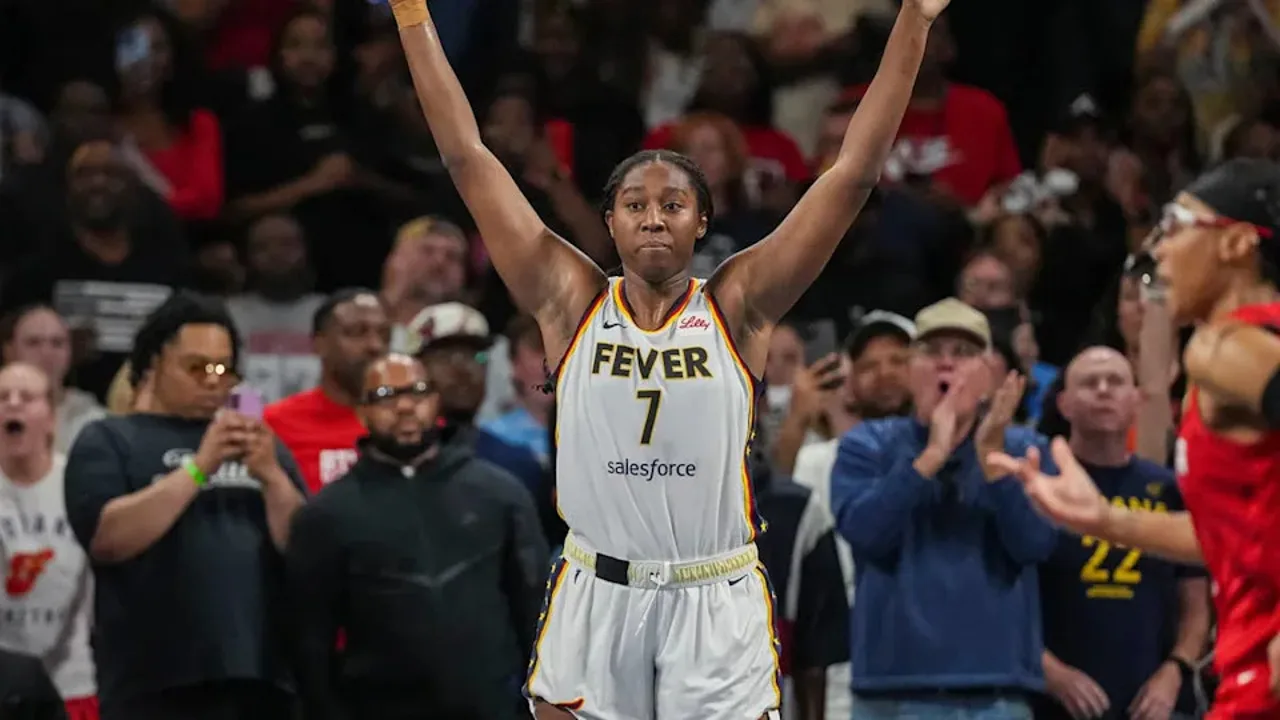
Aliyah Boston signed an EPIC agreement through 2029
In its April 17, 2026 announcement, the Fever confirmed that Boston had signed an agreement running through the 2029 season and identified it as the first deal using EPIC. The announcement linked her eligibility to her 2025 All-WNBA Second Team selection. It did not depend on treating her All-Star appearances or Rookie of the Year award as substitutes.
Her timeline illustrates the contract structure. She entered 2026 in the fourth year of the original rookie deal, and the agreement continued through three subsequent seasons. A reader can understand that sequence without assuming every salary number reported elsewhere was disclosed in the team's announcement.
For comparisons, ask what the team actually confirmed: signature, covered seasons and the mechanism used. If a separate report supplies a total value or a year-by-year estimate, retain that attribution. Do not quietly convert reported financial details into an official statement simply because the signing itself is confirmed.
Caitlin Clark's honors do not announce a signed contract
Clark was officially selected to the 2024 All-WNBA First Team. That is the relevant type of honor for the EPIC route. Her Rookie of the Year award is an additional career achievement, but it is not the qualifying category that does the work here.
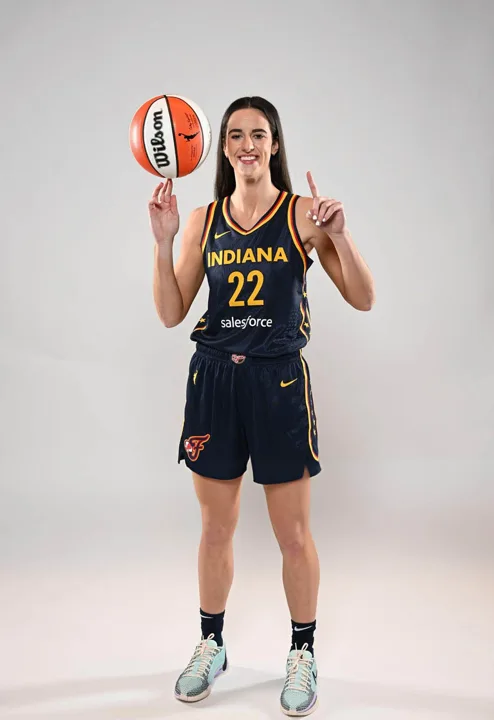
Using her rookie-contract chronology, 2027 is the fourth-year option and 2028 would be the first added season if an EPIC agreement is reached on that sequence. That timeline explains why two different future years can appear in the same salary discussion. It does not establish a negotiated amount or an actual signature.
Our Clark career timeline supplies background, while the WNBA transactions guide explains how to distinguish completed moves from reports. An award announcement establishes an award. A signed-contract announcement establishes a transaction. Reading those records separately avoids turning eligibility into an invented deal.
Why an eligible player may negotiate below the ceiling
The right to negotiate within a permitted range does not prescribe the final choice. A player and team can discuss annual pay, the covered seasons and other permitted terms together. Qualification tells a reader which mechanism is available; it does not reveal how either party values a particular proposed package.
Team-building discussions add another layer because player contracts exist within a salary-cap system. A smaller commitment to one player can affect the overall budget, but it does not guarantee that a named teammate stays or a particular free agent arrives. Other contracts, roster requirements and applicable exceptions also matter. A claim that one star's decision automatically creates a championship roster goes beyond what the contract rule establishes.
Consider a hypothetical eligible player comparing two allowable offers. One may emphasize higher immediate base salary; another may combine different annual amounts with terms the player prefers. Without the actual offers and agreement, an outside observer cannot know that the second choice represents a required sacrifice, a better bargain or a specific recruiting plan.
The same caution applies to future salary growth. A multiyear total based partly on projected annual limits is different from a fixed amount already disclosed in a signed agreement. Reports should identify which figures are contractual, which are estimates and which season each figure covers. The headline total alone cannot answer all three questions.
For fans, the useful approach is to evaluate confirmed terms when available and describe possible preferences as possibilities. An athlete's eligibility should not become an assumption about her motives. Nor should deciding not to sign at the first possible opportunity be confused with losing the underlying award or proving that a departure is planned.
How to read the next EPIC contract report
Start by locating the claim on the contract timeline. A useful report should make it possible to distinguish the player's qualifying status, the signing opportunity and the agreement itself. If those are blurred together, the apparent salary comparison may be misleading even when the individual numbers look plausible.
- Identify the qualifying honor. Look for WNBA MVP or an official All-WNBA First or Second Team selection, with the correct season.
- Confirm the contract stage. Establish that the player is on a rookie-scale contract and identify the relevant second- or third-season window.
- Separate the option year from added seasons. Ask whether a reported total includes a renegotiated original year, three new seasons or both.
- Match the ceiling to the year. The option-year award route and the first extended season do not use identical tests.
- Check the status of the money. Distinguish disclosed annual salary, attributed reporting and estimates based on future annual limits.
- Look for the transaction. An eligibility discussion does not replace a team or league announcement that an agreement was signed.
Boston's announcement is a useful model for that final question because it confirms an actual agreement and its covered endpoint. Clark's official award record answers a different question: whether her accomplishments include the relevant kind of honor. Neither record needs to be stretched beyond what it documents.
If a future report updates one of those facts, update the corresponding part of the timeline. A new award, a newly published calendar and a completed signing are separate developments. Following them separately makes it easier to understand the deal without assuming that every rookie raise is EPIC or that every eligible player receives the same contract.
Sign in with Google to join the discussion.