
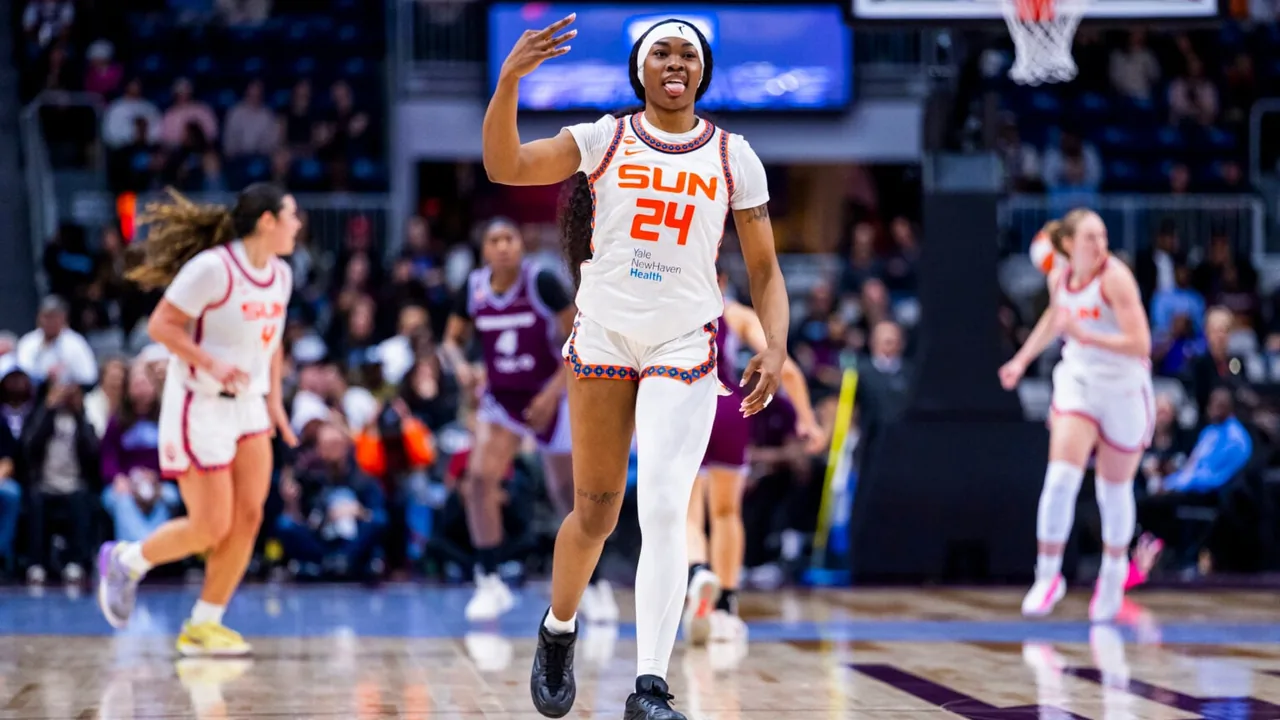
Last updated: August 27, 2026. The 2026 WNBA trade deadline is over, but roster movement is not. Teams can still announce eligible signings, waivers, releases, claims and contract-status changes as they manage injuries, international absences and the run to the playoffs. This tracker separates confirmed transactions from speculation and uses a dated cutoff so readers know exactly what has been checked.
The two trades immediately before the deadline sent Aneesah Morrow to Toronto and Kelsey Plum to Phoenix. Since then, the transaction wire has continued to feature shorter-term roster moves rather than new trades. For a player’s present team and roster status, use the WNBA’s official roster tracker; for what the move means on the court, compare it with the 2026 playoff picture and the remaining schedule.
Latest 2026 WNBA Transactions at a Glance
The most important distinction is between a completed transaction and a report about what a team might do. The entries below are completed moves found in the official league record or corroborated transaction logs through the stated update date. They are a useful snapshot, not a promise that no later paperwork has been filed.
| Date | Team | Confirmed move | Type |
|---|---|---|---|
| Aug. 16 | Los Angeles | Signed Tonie Morgan to a standard contract | Signing |
| Aug. 15 | Los Angeles | Waived Kiana Williams | Waiver |
| Aug. 15 | Connecticut | Released Rayah Marshall, then signed her to a development contract; also signed Ashlon Jackson | Contract changes |
| Aug. 8 | Washington | Claimed Betnijah Laney-Hamilton off waivers | Waiver claim |
| Aug. 2 | Phoenix/Los Angeles | Completed the Kelsey Plum–Monique Akoa Makani trade | Trade |
The league’s official key-dates page lists August 2 at 3 p.m. ET as the 2026 trade deadline and August 24 as the player playoff-eligibility date for waivers. That means no new in-season trade should be added after August 2, while a later signing or waiver can still appear without contradicting the closed trade window. The August 24 date also makes the exact date of a waiver more consequential for postseason eligibility.
If you are checking a lineup minutes before a game, treat this article as context and verify the player on the official team roster. Then use today’s WNBA games for the matchup, start time and TV listing, or browse the full 2026 WNBA schedule for the rest of the season.
Every 2026 WNBA Trade at the Deadline
The deadline produced two completed deals, according to the WNBA’s official recap. That is a much shorter list than a raw transaction feed, because a signing, waiver, release or contract conversion is not a trade. The two deals also had different time horizons: Phoenix added an established scorer for the stretch run, while Toronto added a young rebounder and Connecticut and Los Angeles collected future assets.
Kelsey Plum to Phoenix on August 2
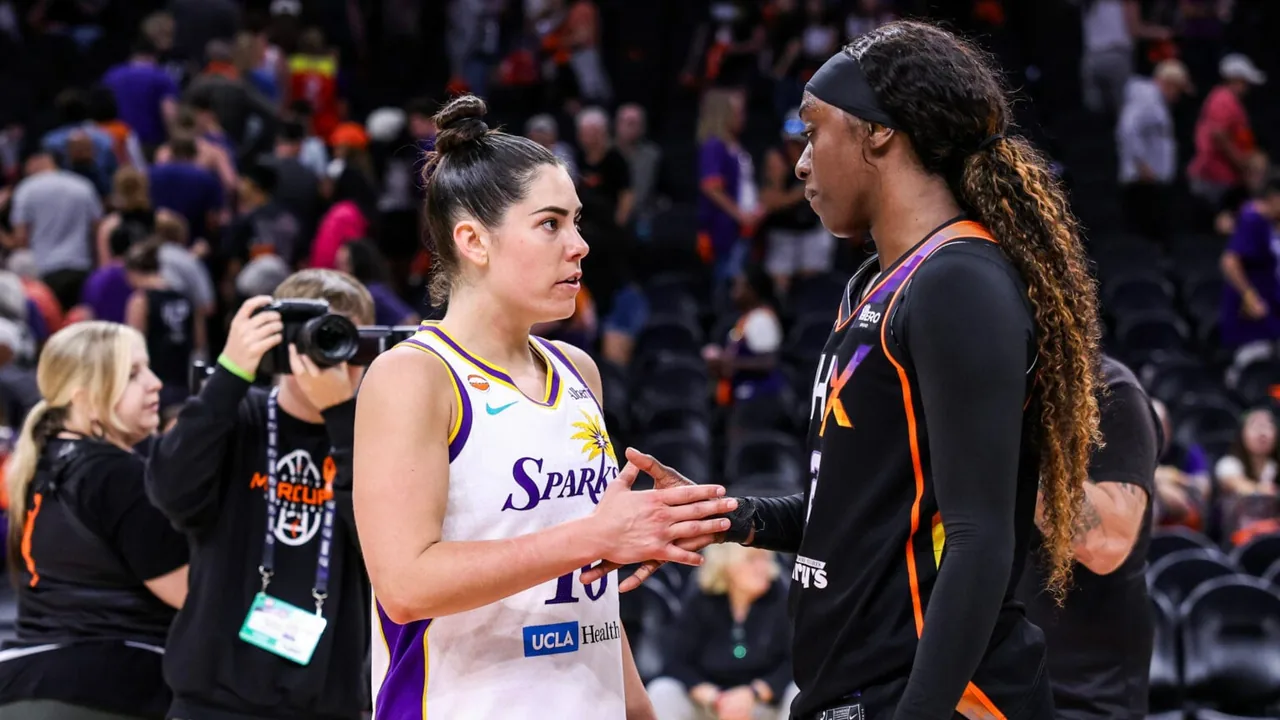
Phoenix received guard Kelsey Plum. Los Angeles received guard Monique Akoa Makani, Phoenix’s 2027 first-round draft pick and its 2028 second-round pick. The Sparks’ announcement initially described completion as pending a physical assessment and final league approval; the WNBA’s subsequent deadline recap listed the transaction as completed.
The return makes the teams’ priorities legible without requiring speculation about private negotiations. Phoenix accepted short-term uncertainty to add a five-time All-Star and two-time champion to a veteran group. Los Angeles turned a player approaching another free-agent decision into a younger guard and two picks. At the time of the league’s recap, Plum had averaged 23.9 points in 12 appearances but had not played since June 21 because of ankle and lower-leg injuries. That was the context on the transaction date, not a current medical update; readers should check team reporting before assuming her availability for any specific game.
Akoa Makani brought two seasons of WNBA experience to Los Angeles. The Sparks said she had appeared in 60 games and averaged 8.2 points, 2.2 rebounds and 2.7 assists over that span. The picks are longer-term pieces whose final value cannot be known in August 2026. A first-rounder can become a player, move in another trade or change position through lottery results, so calling the deal won or lost immediately would go beyond the confirmed facts.
Aneesah Morrow to Toronto on July 31
Toronto received forward Aneesah Morrow. Connecticut received the rights to forward Maria “Masha” Kliundikova and a 2028 second-round pick. Because Kliundikova was not playing in the WNBA in 2026, Toronto improved its active frontcourt without sending an active-roster player to the Sun.
The official recap described Morrow as one of the league’s leading rebounders and recorded 8.9 rebounds in 23.2 minutes per game across her 20 Connecticut appearances. It also noted that her rookie-scale contract ran through 2028, with the final season as a team option. That combination—current rebounding and several seasons of team control—explains why the deal could matter beyond one playoff chase.
Connecticut’s return was built around rights and draft capital instead of immediate 2026 production. Player rights can retain future value even when the player is not currently in the league, but they do not guarantee that the player will report. The second-round pick similarly gives the franchise another future asset without promising a particular prospect. For a separate snapshot of how the deadline changed competitive form, see the site’s 2026 WNBA power rankings; this tracker keeps its focus on what was actually exchanged.
Verified August Signings, Waivers and Claims
August’s non-trade activity shows why a transaction tracker needs more than a list of player names. One player can be waived, claimed or re-signed under a different contract category within a few days. The following selected entries were checked against official team releases, official WNBA team transaction records and current team rosters; the table does not claim to reproduce every administrative filing.
| Date | Team | Transaction | What the label tells us |
|---|---|---|---|
| Aug. 16 | Los Angeles | Signed Tonie Morgan to a standard contract | The Sparks moved Morgan from their player development pool onto a standard deal. |
| Aug. 15 | Connecticut | Signed Rayah Marshall to a development contract | The move followed two seven-day contracts and kept Marshall in the team’s development structure. |
| Aug. 15 | Connecticut | Converted Ashlon Jackson to a rest-of-season contract | The team changed Jackson’s contract status for the remainder of 2026. |
| Aug. 10 | Washington | Signed Rori Harmon to a player development contract | Harmon returned under a different category two days after being waived. |
| Aug. 8 | Washington | Claimed Betnijah Laney-Hamilton off waivers; waived Rori Harmon | The claim added one player while the accompanying waiver opened a roster path. |
| Aug. 6 | New York | Waived Laney-Hamilton; signed Marine Fauthoux | New York’s two moves preceded Washington’s successful claim. |
Laney-Hamilton’s sequence is the clearest example of why dates and verbs matter. New York waived her on August 6; Washington announced that it had claimed her on August 8. A reader who saw only the first transaction could incorrectly call her a free agent, while a reader who saw only the second could miss how Washington acquired her. The Mystics also waived Harmon in the corresponding roster move, then brought Harmon back on a player development contract on August 10.
Connecticut’s activity demonstrates another pattern. Marshall moved through a first seven-day contract, a second seven-day contract and then a development contract, while Jackson was converted to a rest-of-season deal. Those are roster-management steps, not trades, and the labels should not be flattened into “signed” without context.
Fans should also separate a transaction date from a player’s first game or first available game. Paperwork can be announced before a player appears, and availability can depend on health, travel, registration or team decisions not contained in the transaction notice. Use the 2026 WNBA season timeline for the broader calendar, then verify a player on the current roster and game status before drawing lineup conclusions.
How the 2026 Transaction Calendar Shaped Rosters
The 2026 transaction story began later and moved faster than a normal fan might expect. The WNBA announced an April 6–7 designation period, an April 8–10 negotiation period and an April 11 opening for signings. The college draft followed on April 13, training camps opened April 19 and final rosters were due May 7 at 5 p.m. ET, one day before the regular season began. That compressed sequence forced teams to resolve free-agent, rookie and camp decisions in a short window.
- April 6–11: rights and free agency. Qualifying offers and core designations came first, then negotiations, then completed contracts. A reported agreement during the negotiation period was not the same thing as an eligible signed contract.
- April 13–May 7: draft, camp and final cuts. Drafted players and camp invitees competed for places before the final cut-down. A preseason roster therefore should not be read as the Opening Day roster.
- July 7: mid-season cut-down. The WNBA lists this as a formal calendar checkpoint. Because the league’s short key-dates entry does not spell out every contract consequence, fans should avoid attaching an assumed guarantee rule to a move without checking the current collective bargaining agreement or team announcement.
- August 2: trade deadline. Teams could no longer complete another 2026 in-season trade after the 3 p.m. ET deadline, but ordinary roster administration continued.
- August 24: waiver playoff eligibility. The league identifies this date specifically for a player’s playoff eligibility from waivers. It should not be rewritten as a blanket ban on every later contract or roster move.
A new collective bargaining agreement also changed how the transaction feed looks. The WNBA’s free-agency explainer says a club can roster 12 standard players plus two developmental players. It also says that when a regular-season move takes a team below 12 standard players, the club generally has 72 hours to fill the roster, while league-granted exceptions can allow a team to exceed 12 standard players. Those rules help explain quick sequences such as a waiver followed by a development signing or a development player moving to a standard deal.
The league and players completed and signed the long-form agreement on May 22 after ratification in March. That timing matters when comparing 2026 terminology with an older article or salary-cap sheet: this season operates under the new agreement, and older roster assumptions may be obsolete. For fans, the practical rule is simple—read the transaction verb, check its date, and confirm the player’s current category before judging the basketball impact.
What WNBA Transaction Labels Actually Mean
Transaction feeds are written in compact league language. The verb is important because it describes the mechanism, not merely the outcome a fan sees. The explanations below are practical reading guides, not a replacement for the collective bargaining agreement or a team’s contract notice.
Waived, released and claimed
Waived means a team has placed a player into the league’s waiver process. It does not automatically mean the player is immediately free to sign anywhere. Another team can be awarded the player through that process, as Washington was when it claimed Laney-Hamilton after New York waived her. A tracker should therefore follow a waiver row forward instead of stopping at “cut.”
Claimed or awarded on waivers identifies the next transaction in that chain. The player has been assigned to the claiming team under the waiver mechanism; it is not a trade, because the two teams did not exchange players or picks. Fans should wait for the claim result or a later signing before deciding where the player belongs.
Released appears frequently when an official log closes a short-term, seven-day or hardship arrangement. The label tells the reader that the specific team relationship recorded by that contract has ended. It should not be used to invent salary, guarantee or waiver details that the announcement does not provide, and official feeds can use labels differently depending on contract type.
Development, short-term and standard contracts
A player development contract uses one of the two development slots available to each team in 2026. It is separate from the 12 standard roster places. That is why a player can be waived from one roster category and return days later on a development deal, as Harmon did in Washington, or move from a development arrangement to a standard contract, as Morgan did in Los Angeles.
A standard contract places the player in the standard-roster structure. A seven-day contract is time-limited, while a rest-of-season contract runs through the remaining season under the terms announced. A hardship contract is tied to a league roster exception. These labels do not guarantee identical playing time or game availability; they describe the transaction framework.
Suspended contracts and player rights
A suspended contract is an administrative contract status, not another word for waived. The WNBA’s roster materials separately recognize active, suspended, draft/reserved, core and retired lists. A suspension can therefore remove a player from an active arrangement while leaving team rights or other status questions governed by league rules. The transaction entry and team explanation should control; the word alone does not tell a fan why the suspension occurred.
Player rights can also move without an active player moving into a lineup. Connecticut acquired Kliundikova’s exclusive negotiating rights in the Morrow trade even though she was not playing in the WNBA in 2026. The Sun gained the relevant negotiating position, not a guarantee that she would report or sign. Rights deals should be recorded exactly that way rather than counted as an immediate active-roster addition.
How to Verify a WNBA Roster Move
A reliable verification process starts with the official record and ends with current roster status. It does not begin and end with a social post, search snippet or fantasy-player alert. Use this sequence whenever a new name appears in the transaction feed:
- Write down the exact claim and date. “Team X is interested” and “Team X signed the player” are different claims. Preserve the original wording so you know what must be proven.
- Find the league or team transaction. Check the WNBA transaction page, the team’s news releases and its team transaction profile. A team release usually provides the clearest verb and may explain whether the move is a claim, conversion, standard deal or development contract.
- Check the current roster. The official roster tracker links all 15 clubs and shows current roster sizes. Confirm that the player appears where expected, while remembering that active, development and other statuses can require a team-level explanation.
- Use a second log as a cross-check. A season database can reveal a missing companion move or sequence, such as a waiver followed by a claim. It can also lag. Basketball-Reference explicitly says its current-season transaction list is updated regularly, not daily.
- Separate paperwork from availability. A signed or claimed player is not automatically cleared, healthy or scheduled to play that night. Look for the current injury report, team game notes or coach update before making an availability claim.
- Record a cutoff. A dated tracker is honest about when it was checked. If a newer official release conflicts with this August 27 snapshot, the newer release controls.
The official league transaction page can sometimes fail to populate in a text-only or partially loaded browser even though its team and month filters are visible. That is a technical limitation, not evidence that there were no transactions. Move to the official roster tracker and team newsroom, then return to a secondary chronological log to check whether you missed an associated move.
Finally, treat a transaction as the start of a basketball question, not the answer. The roster tells you who the team can carry; the schedule tells you when the team plays; the injury report and game notes tell you whether the player may be available. Keeping those sources separate prevents a correct transaction from turning into an incorrect game-day claim.
2026 WNBA Transactions FAQ
When was the 2026 WNBA trade deadline?
The deadline was Sunday, August 2, 2026, at 3 p.m. ET. The WNBA’s official deadline recap recorded two trades in the immediate deadline window: Aneesah Morrow to Toronto on July 31 and Kelsey Plum to Phoenix on August 2. Signings, waivers and other eligible roster moves after that time are not late trades.
Can a player waived after August 24 play in the 2026 playoffs?
The WNBA’s published key-dates page identifies August 24 as the date for “Player Playoff eligibility from Waivers.” A player first waived after that cutoff should not be assumed eligible for the playoffs through the waiver route unless the league confirms an applicable exception. The date is specifically about eligibility from waivers, so it should not be casually expanded into a claim that every possible later roster transaction is prohibited. For the postseason structure itself, use the 2026 WNBA playoffs schedule and format guide.
Is a waiver the same as a release?
No. A waiver places a player into the league’s waiver process, where another club may receive the player through a claim. “Release” appears in official records when a particular contract arrangement ends, especially in sequences involving short-term agreements. The precise contract and CBA consequences can vary, so retain the official verb instead of replacing both with the generic word “cut.”
Where can I see every team’s current roster?
Use the WNBA’s official roster tracker, which lists all 15 teams, current roster sizes and links to team transaction views. Then open the specific club’s roster or newsroom for status detail. The broader WNBA players page also links to the transaction feed and injury report. Those official pages are the right place to check for changes made after this tracker’s August 27 update.
For this article, “confirmed” means the transaction appeared in an official league or team record, or a secondary transaction log was corroborated by current official roster information. Rumors, proposed deals and future-tense reports are intentionally excluded. That standard makes the page less dramatic than a rumor feed, but much more useful when you need to know what actually changed.
Sign in with Google to join the discussion.