
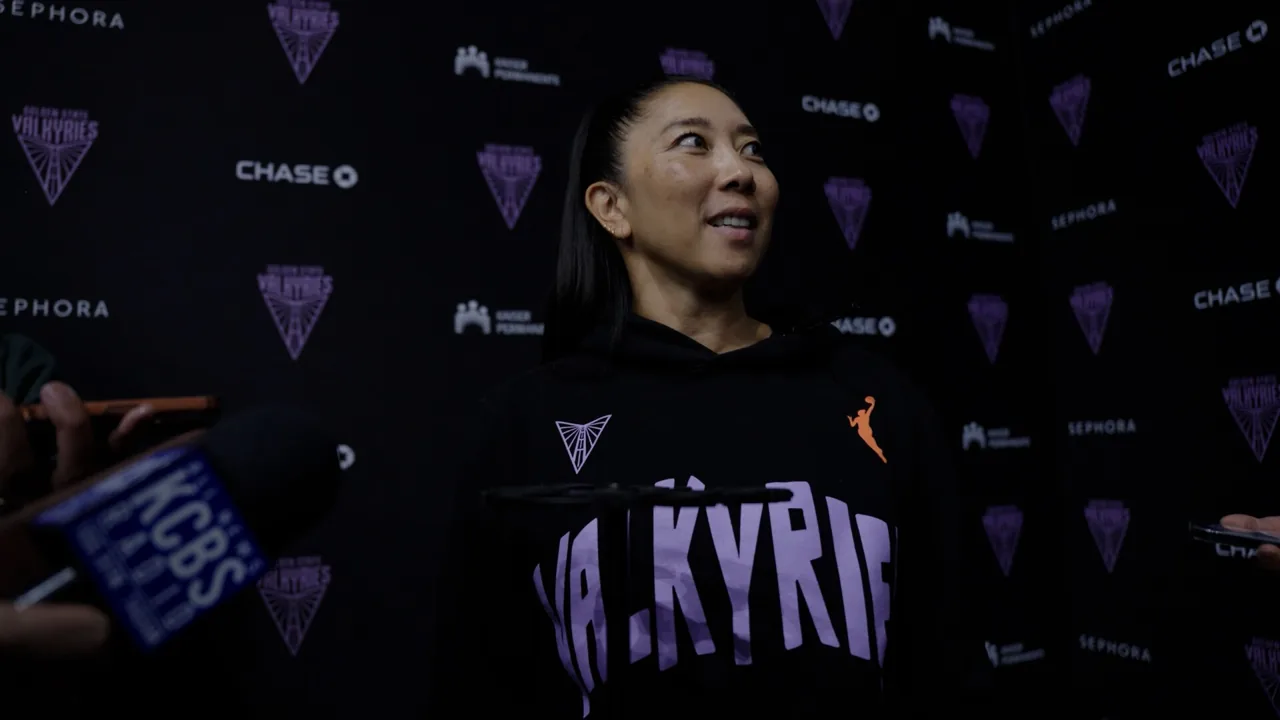
To find a WNBA postgame press conference, start with the league's Watch page and the teams' official video libraries. Search by the game date, opponent and speaker, then check whether the result is a full question-and-answer session or a shorter interview clip. Public posting times vary; a media-availability rule is not a promise of an immediate fan livestream.
Updated November 10, 2026. The examples below are completed events, including historical team interviews. This guide helps you locate and understand the right recording. It does not announce a live press conference tonight or guarantee that every player's full session is publicly available.
Start with official league and team video libraries
The most useful starting points are the league's video hub and the two teams' official sites. These sources help establish who published an interview before you spend time deciding whether it contains the exchange you want. A search result with a familiar player in its thumbnail can still be a compilation, commentary video or repost.
Check the WNBA Watch page
Open WNBA Watch and look for the relevant event or press-conference collection. When checked in November 2026, the hub separated Finals press conferences from game highlights, recaps and other features. Those labels are useful: a recap tells you what happened in a game, while a press-conference recording preserves some of the questions and answers afterward.
Read the session title before playing. It may identify a coach, a group of players or an event rather than both complete teams. If you want a particular player's comments, inspect the named participants and related videos. One team's interview appearing in a collection does not establish that every participant from the matchup appears in that same upload.
Follow the team's official video links
Next visit the team's own Videos or News area. The Valkyries' dated Natalie Nakase postgame page, for example, identifies the session and provides a route to the team's social-media links. That route helps you establish an account's relationship to the team instead of relying on a copied logo or a similar channel name.
From a verified team channel, search its videos and previous live broadcasts for the game. Check the opponent's official library too, especially if you want the visiting coach's explanation. Coaches and players may have separate videos, so one short result should not end your search.
Our guide to official WNBA viewing on YouTube explains the broader difference between game streams and other league content. Here, the goal is narrower: locate the authorized interview and confirm its identity before judging its completeness.
Search by game date, opponent and speaker
A useful search identifies an event rather than simply asking for "WNBA interviews today." Find the matchup in the WNBA game calendar, then combine the team, opponent, game date and the words "postgame press conference." Add the coach or player if you are seeking one person's answer.
For a playoff series, include the game number as well as the year. Teams can meet several times within a short period, and similar thumbnails are common. If the first search finds only a short clip, try "full interview," "media availability" or the coach's name within the official team's library. These are discovery terms, not guarantees that an upload is complete.
Check the event date separately from the date attached to the page. One concrete example is the Valkyries' championship press-conference page marked October 31, 2026. The league's related Game 7 page naming Natalie Nakase, Kiah Stokes and Gabby Williams carried a November 1 publication date. A next-day page date need not mean a different game.
When numeric dates are ambiguous, compare the written month, opponent and season. A video uploaded after midnight can appear under a different calendar day from the game. Searching only the upload date may therefore hide the interview you wanted.
Use a short verification checklist before listening: correct team, correct opponent, correct game or event, correct speaker, and postgame rather than pregame. If the title does not name the speaker, read the description and inspect the opening introduction. Keep searching if those details do not agree; relevance is more useful than accepting the first result with a familiar face.
Identify the interview format before you watch
Several different videos can follow the same game. A full press conference, an individual interview, a broadcaster's closing conversation and a social clip all provide different amounts of context. Decide which one you need before treating a result as the complete record of a player's remarks.
The league's 2026 All-Star postgame press-conference page is an example of an event-level session. A team may instead organize its library around individual coaches or groups of players. Read the description and opening introduction to establish the participants, then check whether the recording contains the exchange you are seeking.
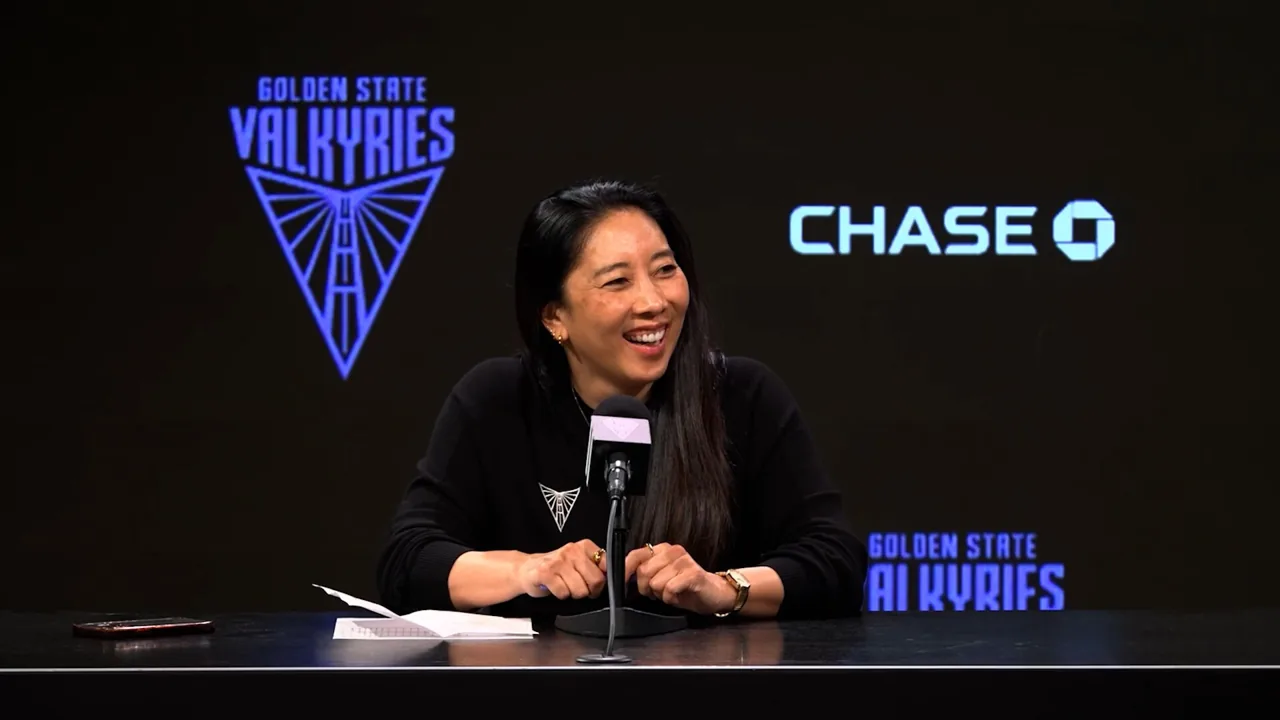
Separate a podium session from a courtside interview
A podium session generally involves questions from reporters in a designated interview setting. A courtside broadcaster conversation is often focused on a few immediate reactions. The latter can be valuable without containing the longer discussion you saw quoted elsewhere. Look for a change of interviewer, setting or participants before assuming two clips belong to the same session.
Pregame and practice availability are different again. A coach discussing preparation before tipoff is not explaining the result afterward. Check the event label and date even if the same backdrop and clothing appear in several videos.
Duration offers a clue, not a verdict. A short upload can contain a complete brief interview; a much longer video can combine several unrelated segments or include waiting time. Listen at the beginning and end, look for obvious edits and read any description of highlights or selected answers.
For a disputed exchange, seek the question, the answer and any immediate follow-up in sequence. If the available upload begins halfway through an answer, describe that limitation instead of calling it the full conversation. The correct standard is enough context to understand the statement, rather than a particular running time.
Understand why an interview may not appear immediately
A media session taking place and a public video becoming available are different events. The 2026 WNBA Media Access Policy required each head coach and two key players per team to be available in the press-conference room no later than ten minutes after the game. That requirement concerned media availability; it was not a promise that fans would see a YouTube upload within ten minutes.
The policy also required teams to upload postgame press conferences to the WNBA's Content Network. It did not establish one public viewing link or a uniform public release deadline. An internal delivery requirement should therefore not be read as a guarantee that every team's full session will appear in the same consumer app at the same time.
If the league or team announces a public live session, use that announcement's actual link and instructions. A scheduled video can help you find the right destination, but check whether it has started, ended or become a recording. A page still carrying a live label after the event may now be an archive.
If no public link is available, check the official video library again later and search the other team's page separately. The absence of a search result immediately after a game does not establish that no interview occurred. It also does not tell you why a particular upload is missing.
A practical approach is to save the official collection once, then return to it rather than opening repeated reposts with increasingly dramatic titles. If you only need a specific answer, a credible report may help identify the speaker and subject while you look for the original session. Keep a distinction between that report's description and the interview you have actually watched.
Read the full question before judging the answer
The question establishes what an answer refers to. Before sharing a reaction, listen far enough back to identify the subject, the time period and whether the reporter is asking about one possession, the whole game or the season. A brief response can sound much broader when the question is missing.
Also establish who is speaking. In a group session, a player may add to a teammate's answer or respond after the coach. If a clip cuts between speakers, check the original sequence before attributing the entire exchange to one person. Preserve uncertainty when an off-camera question cannot be heard clearly.
Keep tactical comments in their game context
Consider a hypothetical coach discussing a late substitution. To evaluate the explanation, first identify the quarter, score, available lineup and possession being discussed. Compare the interview with the correct game's official box score or play-by-play. A box score can establish minutes or fouls; it cannot establish everything a coach intended.
The same principle applies to comments about pace, rebounding or defensive coverage. An answer about one stretch of the third quarter should not automatically become a claim about the team's entire season. Separate what the speaker described, what the game record shows and your own interpretation of whether the decision worked.
Watch for qualifying language and follow-up questions. A speaker can correct an initial impression or narrow an answer later in the session. Keeping that sequence intact makes an explanation more useful than building a conclusion around the most dramatic isolated sentence.
Treat injury and availability comments carefully
A postgame interview captures information at that moment. For a later game's participation status, consult the official WNBA injury report and subsequent team updates. An earlier comment about how someone felt after a game should not become a guaranteed return date or a diagnosis.
When taking notes, record the interview date and distinguish the speaker's actual statement from a reporter's question or your inference. If captions appear to disagree with the audio, replay the passage rather than repeating a doubtful word. When the audio remains unclear, leave that point unresolved instead of filling the gap with a confident interpretation.
Know what public viewing access does and does not include
Watching a published interview, watching a game and entering a media room are separate forms of access. A game ticket, television subscription or League Pass purchase should not be treated as a press credential. The league's media policy governed working-media access and left credential issuance subject to team requirements and discretion.
A public video link lets you view what its publisher has made available under that page's conditions. It does not authorize joining a restricted media call, entering an interview room or asking questions. If you are covering a team professionally, consult that team's current media instructions rather than using a consumer viewing guide as an access request.
For ordinary viewing, inspect the actual video page before assuming payment is required. Some interview pages are public-facing while other basketball content has subscription conditions. Neither an open highlights page nor a paid game package proves that a specific full press conference is available through the same route.
If you really wanted the game broadcast, return to the WNBA TV and streaming schedule. A postgame interview cannot substitute for live game coverage or a full replay. Conversely, do not buy a game package solely because a search result loosely associates it with postgame content; first verify that the interview you want is actually included.
If an official page opens but the player fails, distinguish the missing-video problem from a sign-in or device problem. Check another official page on the same service and read its help instructions. The WNBA App setup and sign-in guide addresses the league's app, while a team website or another provider can require its own support route. A failed player alone does not establish a new fee or a right to enter a restricted session.
Keep a useful archive of the sessions you find
Once you locate the right interview, a small amount of organization saves another long search later. Bookmark the direct official session page as well as its broader collection when useful. A hub can change as new events arrive, while an individual title gives you more precise information for finding the recording again.
Save the event identity with the video
Use a note with the team, opponent, game date, speaker names and the official page link. Record the publication date separately if it differs from the event date. Include whether the item is a full session, one participant's interview or an edited clip. That last detail prevents a short excerpt from gradually becoming remembered as the complete conversation.
For an answer you want to revisit, save the timestamp where the question begins, not just the most quotable part of the response. Add a short subject label such as late-game rotation or defensive adjustment. A timestamp helps you return efficiently, while the subject label reminds you what the discussion actually concerned.
If you compare several interviews over a series, keep them in game order. A coach can discuss a problem after one game and a different adjustment after the next. Treat those statements as a sequence rather than combining them into a single undated position. When later official information changes an availability issue, note that update beside the older interview.
For sharing, use the official link and enough surrounding description to identify the event. Avoid attaching a confident conclusion to a recording you have only seen in fragments. If a page moves, the saved team, date and speaker details give you a useful new search without assuming the original link will remain permanent.
The repeatable approach is to identify the game, enter through an official library, check the format and participants, then listen to the complete question and answer. That method makes postgame coverage more informative whether you follow one team closely or compare perspectives from both sides of a matchup.
Sign in with Google to join the discussion.