
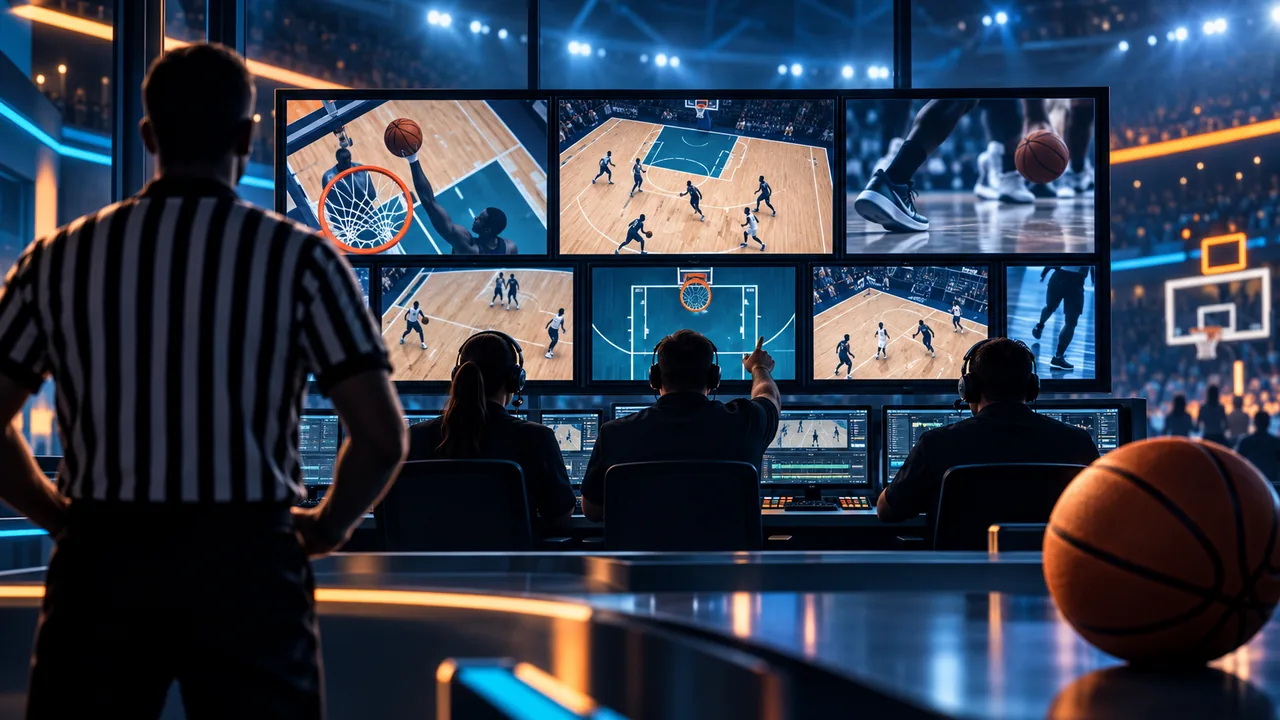
The WNBA will launch centralized Replay Center operations at the start of the 2027 WNBA season, according to its July 25 official announcement. The news matters because it addresses one of the league’s loudest current pain points—how officials review disputed plays—without claiming that technology can erase every controversial call. The center will use the NBA’s Replay Center in Secaucus, New Jersey, connect to every WNBA arena, and send multiple camera angles to replay personnel when a play is eligible for review.
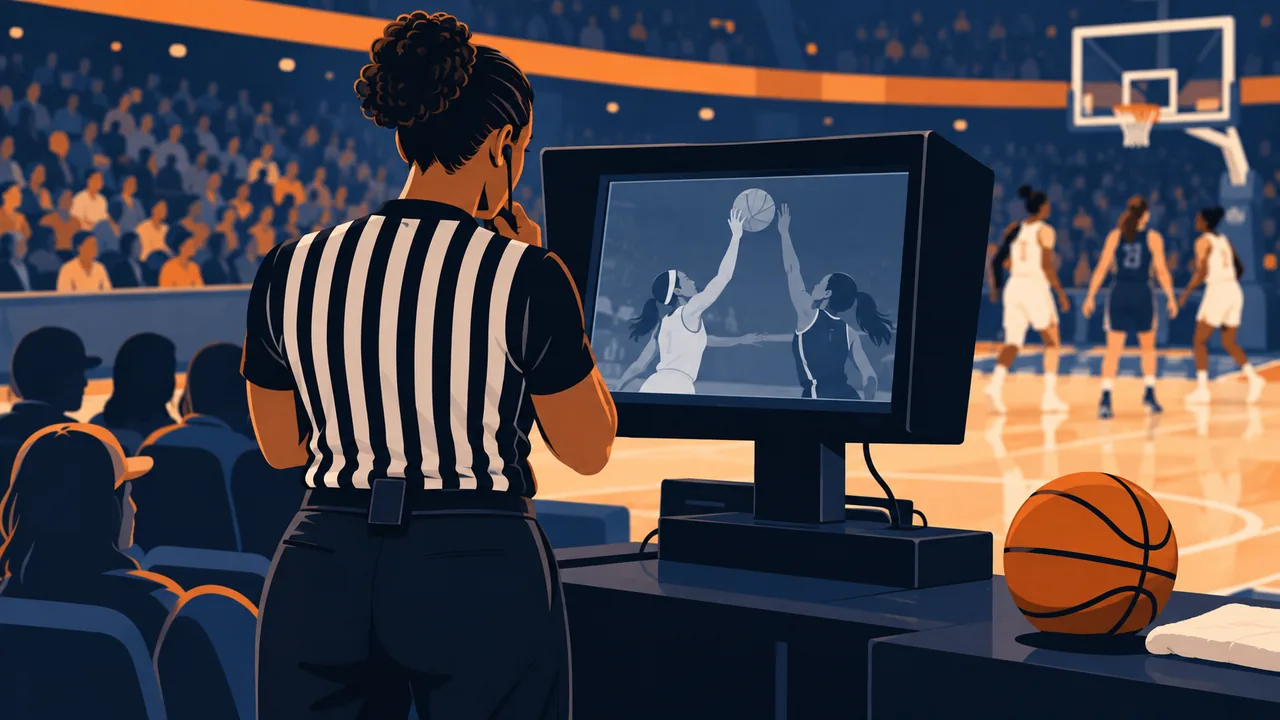
What the WNBA announced about the 2027 Replay Center
The Secaucus hub and arena-to-center connection
In its July 25, 2026 release, the WNBA described the project as a centralized review operation rather than a new on-court officiating crew. The league will leverage the NBA’s existing Replay Center in Secaucus, N.J. That facility will serve as a hub for reviewable situations in WNBA games, with a direct, high-speed connection to every arena.
That distinction is important. “Centralized” means replay staff can work from a common operation instead of relying only on the small set of screens and personnel available at the venue. It does not mean a remote official automatically overturns a call, and it does not mean every complaint becomes reviewable. The on-court crew remains responsible for applying the playing rules; the center is designed to improve the information and support available during that process.
The announcement also places the investment in the league’s broader growth. As the WNBA adds attention, games, travel demands and nationally visible moments, a consistent review workflow becomes part of the product fans experience. The center is therefore both a technology project and an accountability test: the league will have a more sophisticated system, so viewers will reasonably expect clearer and more consistent outcomes.
What happens when a play is eligible for review
The announced workflow is straightforward. When a play is eligible under WNBA playing rules, broadcast and in-arena camera angles are transmitted to the Secaucus center. Replay personnel identify the most conclusive views and provide them to the officials on the floor. Additional replay personnel, League Operations leadership and rotating officials can assist when necessary.
“Eligible” is the key word. The release does not announce a universal review of every foul, a new coach’s-challenge menu, public referee microphones or a guaranteed time limit. Those details belong to the rules and operating protocols the WNBA may publish later. The existing rulebook describes review as a crew-chief-led process with assistance from the calling official and, when needed, the third official. The 2027 center can strengthen that process by improving access to evidence; it does not, by itself, rewrite the list of reviewable events.
For fans, the practical takeaway is to separate three questions after a disputed play: Was the event reviewable? Did the officials receive the clearest available angles? And did the final ruling correctly apply the rule? The new center primarily targets the second question, while the first and third still depend on the rulebook and human judgment.
Why officiating and replay became a flashpoint for WNBA fans
The complaints fans repeat most often
WNBA discussion boards and sports coverage show a familiar pattern: supporters are less interested in blaming one referee than in knowing whether the same contact is being judged the same way at both ends of the floor. Fans complain about foul thresholds that appear to shift from game to game, missed views on out-of-bounds decisions, and reviews that seem unable to settle the most emotional moments. Players and coaches also occasionally speak after games about calls they believe changed momentum. Those reactions establish a real conversation, but they are not an official audit of every call.
Another frustration is communication. A viewer may see several replays on a broadcast while hearing little about what the crew is checking or why a ruling stands. Even when the decision is correct under the rule, a quiet process can look arbitrary. That gap between the visible video and the explanation fuels clips, posts and arguments long after the final buzzer.
Physical play adds another layer. The WNBA’s faster, stronger style creates difficult borderline decisions involving verticality, screens, hand-checking, landing space and contact away from the ball. A centralized replay operation cannot turn every judgment into an objective measurement. It can, however, make sure the crew sees the relevant angle and has experienced support when the rules permit a review.
Why growth raises the standard for review decisions
The league’s own announcement ties the center to the WNBA’s growth and its investment in the overall game experience. More viewers, more national broadcasts and more high-stakes games naturally create more scrutiny. A disputed call that once stayed inside an arena can now be replayed across multiple broadcasts and social feeds within minutes.
That visibility should not be confused with proof that officiating has suddenly become worse. Search results contain strong claims, but the league has not published a finding that errors increased by a particular percentage. The better conclusion is that the standard for trust has changed. Fans expect a professional review process that is as coordinated as the rest of the league’s expanding operation.
For a plain-language explanation of the broader 2026 officiating discussion, readers can use our WNBA officiating changes guide. The 2027 Replay Center is the next infrastructure step, not a substitute for publishing and applying clear rules.
What centralized replay could improve in 2027
More angles, specialized staff and consistency
The clearest benefit is access. The WNBA says replay personnel will receive broadcast and in-arena angles immediately and identify the most conclusive views for the crew. That can reduce a common source of frustration: a decision made with an incomplete view when another camera clearly shows the boundary, clock or position of a player.
A centralized staff can also create a repeatable workflow. Officials in different arenas should be able to reach the same kind of support, rather than having review quality depend on the venue’s equipment or how quickly a local operator finds a clip. Rotating officials and League Operations leadership add another layer of experience when a play is unusually complicated.
Those are intended improvements, not a guarantee that every decision will be correct. A better angle can clarify what happened while leaving a difficult rules question. Consistency also requires training, evaluation and communication after the video is found. The center supplies a stronger foundation; the league still has to use it well.
Faster information is not the same as a faster ruling
The WNBA describes the operation as supporting more accurate and efficient decisions, but it has not published a maximum review time. That matters because fans often use “faster” to mean a shorter stoppage, while the announcement mainly promises faster access to multiple views.
The NBA has previously reported improvements after opening its own Replay Center, but an old NBA review-time figure is not a WNBA forecast. The leagues have different schedules, crews, camera layouts and operating details. In 2027, a long review may still be justified when the evidence is difficult; a short review is not automatically a good review.
The useful test is whether the center removes avoidable delay without rushing a high-stakes decision. Fans can track that balance alongside the league’s expanded 2027 calendar, which our WNBA 50-game season explainer covers in detail.
What the Replay Center will not automatically solve
Reviewable plays versus judgment calls
A centralized video room cannot make every no-call eligible for review. The WNBA rulebook determines which circumstances can be checked, and the announced release does not expand that list. If a fan believes a defender was too physical or a screen was illegal, the play may still remain a live judgment made on the court.
That boundary is not a loophole; it is how replay stays manageable. If every contact could trigger a remote review, games would lose rhythm and officials would be asked to re-referee ordinary possessions. The real question for 2027 is whether the league explains the boundary clearly enough that viewers understand why a request was—or was not—allowed.
Transparency, accountability and the human decision
The announcement does not promise public referee microphones, a written explanation after every review, automatic error reports or a fan-facing grade. Those may become discussion points, but they should not be presented as features already approved. A camera can show the evidence; officials and league leadership still interpret the rule and decide what the ruling means.
That human element is why the center should be judged alongside communication. If a ruling stands, viewers need enough information to understand the standard. If a call is overturned, they need to know what evidence changed the result. Better transparency would not make every fan agree, but it could make disagreement less dependent on guesswork.
How fans should judge the rollout during the 2027 season
Five questions to ask after a controversial review
Fans do not need an officiating degree to evaluate whether the new system is doing its job. Start with five practical questions:
- Was the play reviewable? If not, the center could not legally turn a request into a review. That is a rules question, not evidence that the technology failed.
- Did the crew receive the best available angle? The 2027 promise is immediate access to broadcast and in-arena views. A clear angle should be part of the explanation when a review changes a ruling.
- What rule was applied? Viewers should distinguish a boundary, clock or shot-clock correction from a subjective foul judgment. Those decisions require different expectations.
- Was the stoppage proportionate to the question? The league has not set a public time target, so fans should watch for avoidable delays without assuming every long review is excessive.
- Does the standard repeat? One controversial play can be noisy. The stronger test is whether similar situations receive similar treatment across arenas, crews and weeks.
This scorecard also helps keep online discussion fair. A clip can show what happened while leaving out the rule, the available angle or the review restriction. Asking the five questions turns a reaction into a more useful evaluation of the system.
Where to follow schedules, broadcasts and rule updates
The center begins with the 2027 season, so its final operating details may arrive in stages. Follow official WNBA releases for any update to reviewable situations, challenge procedures, communication or staffing. Do not rely on a social post that presents a proposed feature as league policy.
For the surrounding calendar, our WNBA season dates guide explains how to read season windows, while the 2027 50-game season article covers the broader schedule expansion. On game days, the WNBA games today page is the right place to check the live slate rather than searching a static article for a changing tip time.
In short, the Replay Center is a meaningful investment because it improves the review information pipeline. It is not a promise that every foul will be reviewed, every fan will agree, or every controversy will disappear. The 2027 season will show whether better angles, centralized expertise and clearer communication can earn the trust the league is asking viewers to give it.
That is also why the rollout should be judged over a sample of games, not a single viral clip. Early-season equipment issues, unfamiliar procedures or a particularly difficult ending can distort first impressions. A fair review will compare decisions across venues, note whether explanations become clearer, and ask whether players and coaches experience a more predictable standard. The WNBA has made the investment; the next responsibility is to publish enough information for the public to measure it.
Frequently asked questions
Will the Replay Center review every foul? No. The WNBA announcement applies the center to reviewable situations under the playing rules; it does not make every judgment call reviewable.
Will reviews be public? The release does not announce public audio or a written explanation for every decision. Fans should wait for official protocol details.
Does it guarantee fewer controversial calls? No. It is designed to provide better angles and support, while the final ruling remains a human, rules-based decision.
When does it start? Centralized operations are announced for the start of the 2027 WNBA season. A more specific opening date was not included in the release.
Sign in with Google to join the discussion.