
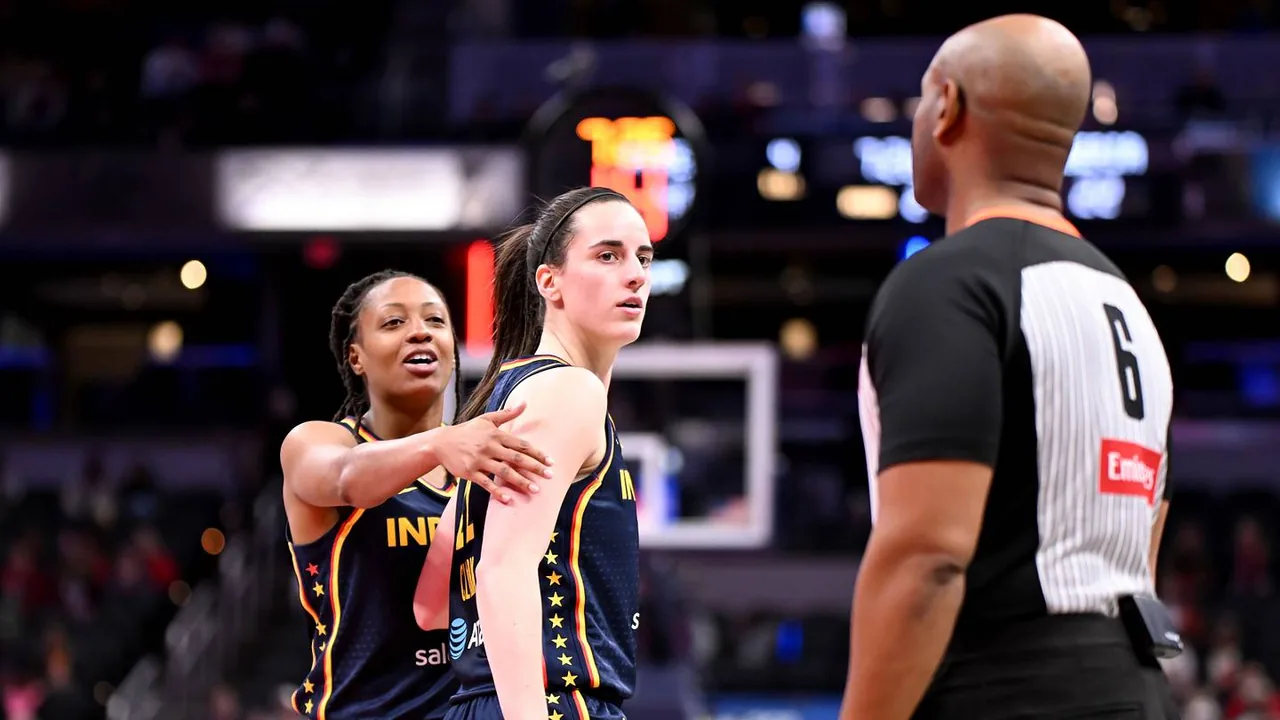
WNBA foul calls rose early in 2026 because officials were told to enforce existing freedom-of-movement standards more strictly after years of concern about excessive contact. That is the essential answer. The league did not replace its basic foul rules with an entirely new rulebook. Instead, referee leaders, coaches and basketball executives worked through an offseason process that put greater emphasis on contact that restricts, redirects or displaces a player.
The immediate result was predictable: more whistles while players, coaches and crews adjusted. It also produced two apparently conflicting reactions. Some observers welcomed an attempt to clean up rough play; others felt marginal contact was being called too often and that repeated stoppages hurt the rhythm of games. Both reactions can be sincere without proving that the policy itself succeeded or failed.
This guide separates the official explanation from opinions about individual calls. Statistics are labeled by their actual sample window, comments are attributed, and no foul-count difference is treated as evidence of bias. It was last reviewed on September 3, 2026, before complete full-season officiating totals were available.
The short answer: existing rules were enforced more strictly
The most important distinction is between changing a rule and changing how closely officials police conduct already covered by that rule. In an Associated Press report from May 14, WNBA head of referee performance and development Sue Blauch said the task-force work did not produce a new rule or a new interpretation. The practical change was stricter enforcement of current guidelines, especially freedom of movement.
That distinction matters because “the WNBA changed the rules” suggests that a previously legal defensive act suddenly became illegal. The league's account was narrower: contact that should already have been penalized had sometimes been allowed as the game became more physical, so crews were asked to recognize and call it consistently. The official 2026 WNBA rule-book hub remains the authoritative place to read the written rules.
What the task force actually asked officials to do
The offseason response had two layers described by Sports Illustrated: a broad “state of the game” council and a smaller officiating task force. Their discussions gave referee-development staff a clearer teaching target. Officials were to pay closer attention when contact prevented a player from getting where she was entitled to go, whether the action happened with the ball, away from it, near the arc or around the lane.
A point of emphasis is not an automatic-call instruction. Referees still have to judge position, timing, displacement and advantage in real time. Nor did the task force become an appeals court for every disputed whistle. Its purpose was to align stakeholders and provide film-based guidance. That leaves room for mistakes and disagreement while explaining why a familiar type of contact could draw a whistle more often in 2026 than viewers remembered from 2025.
What freedom of movement means on a WNBA possession
Freedom of movement is easiest to understand as a player's ability to follow a legal path without an opponent holding, bumping or steering her away from it. Sports Illustrated reported that the 2026 emphasis was broad: it applied on the perimeter and in the paint, on both sides of the ball, and to action both on and away from the ball. The focus therefore reaches well beyond a guard driving to the rim.
Imagine a wing trying to cut across the lane. A defender may establish position, anticipate the route and contest the catch. But grabbing the cutter's hip, extending an arm to redirect her or repeatedly bumping her off the route can restrict movement. Similar judgment applies when a ball handler turns the corner, when a post player fights for a spot or when a defender trails someone through a screen. The relevant question is what the contact did, not simply whether two players touched.
Legal physical defense versus displacement
Basketball remains a contact sport. A defender can occupy legal space, move laterally, contest vertically and absorb some incidental contact. Physical effort is not the same as an illegal hold, push or block. The line becomes more likely to be crossed when a defender is late to a position or uses contact to restrict, reroute or dislodge an opponent.
That is why slow-motion clips can still divide viewers. One angle may show a hand on a player's body while another reveals whether it actually changed the path of the play. Timing also matters: contact before a defender establishes position can be judged differently from contact after she gets there. The 2026 emphasis asked crews to recognize meaningful restrictions more consistently; it did not make every brush of an arm a foul.
How much did foul calling increase in 2026?
The clearest like-for-like snapshot came from the opening week. According to the Associated Press, teams averaged 21.6 personal fouls per game early in 2026, up from 19.9 at the same point in 2025. For additional context, the completed 2025 season ended at 17.5 per team per game. The last comparison is useful, but it is not a matched sample: one number covers a few opening games and the other covers an entire season.
| Measure | 2026 opening week | 2025 comparison |
|---|---|---|
| Personal fouls per team per game | 21.6 | 19.9 at the same early point; 17.5 full season |
| Free-throw attempts per team per game | 21.9 | 21.4 at the same early point; 18.2 full season |
The first-week foul increase was clear, but free-throw attempts were only half an attempt higher than at the same stage a year earlier. That is not contradictory. A non-shooting foul early in a quarter usually leads to an inbound, not free throws. Attempts begin to accumulate when a player is fouled in the act of shooting, when the defense reaches the team-foul penalty, or when the applicable rule carries shots.
These numbers establish an adjustment-period spike; they do not grade every call or prove that one team received favorable treatment. Schedule strength, style, pace and tiny early samples all affect totals. Fans looking for broader performance context can compare the league's evolving numbers in the 2026 WNBA team statistics guide, while keeping team performance separate from referee evaluation.
Why more whistles can make games feel slower
A whistle interrupts more than the game clock. Players separate, the official reports the foul, teams may substitute, and play must restart with an inbound or free throws. A single sequence is brief, but repeated non-shooting calls can break the continuity of possessions. That is the “no flow” concern Breanna Stewart raised early in the season, as reported by Sports Illustrated.
Foul trouble changes the experience too. When a starter collects two quick fouls, a coach may change a matchup or use the bench earlier than planned. Defenders who are worried about another call may concede space, while offensive players may attack that hesitation. Once a team reaches the penalty, later common fouls produce free throws and another full stoppage. The influence therefore extends beyond the seconds consumed by a referee's signal.
Still, “felt slower” should not be confused with a verified league-wide increase in average game length. Public discussion and the sources reviewed for this article documented more early calls and complaints about rhythm, but they did not provide a complete, comparable duration dataset through September 3. Overtime, reviews, timeouts, late-game fouling and broadcast breaks also affect how long a telecast lasts.
For a viewer, the practical response is to allow some schedule buffer rather than assume every WNBA game ends at a fixed minute. The WNBA TV schedule helps identify the listed start time and channel, but it cannot guarantee the final buzzer. If two games are close together, the opening minutes of the second may overlap the end of the first even when officiating is not the reason.
What players and coaches are actually complaining about
“Bad officiating” can stand for several different complaints, and combining them obscures the debate. One is volume: some participants believed marginal contact was drawing unnecessary whistles. Another is consistency: the same action can appear to be called differently across ends, quarters or crews. A third is communication—teams want timely explanations so they can teach players what will be allowed.
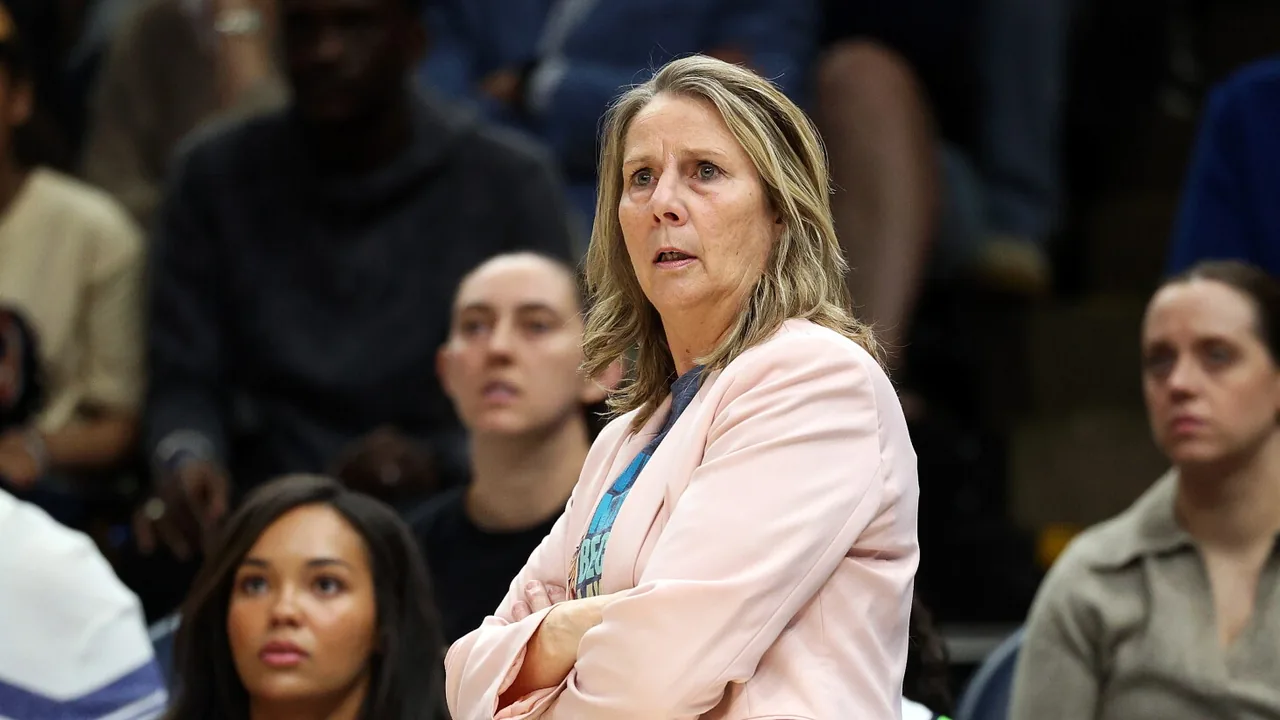
There is no single stakeholder position. The Chicago Sun-Times reported that Cheryl Reeve, a task-force member, regarded the early increase as part of a necessary correction and credited league leadership for becoming more collaborative. The same report described objections from Breanna Stewart and Becky Hammon about flow and particular foul patterns. The Guardian also reported Portland coach Alex Sarama positively describing his communication with referee leadership. Those views can coexist.
Fan discussions add another perspective, but not another fact source. In one large r/wnba thread, commenters repeatedly described uncertainty about what counted as a foul and whether standards changed from one stretch to another. That demonstrates a communication and confidence problem among some engaged viewers. It does not prove that a crew favored a team, missed a specific call or applied a league directive incorrectly.
The fairest summary is that the 2026 criticism was often less about wanting zero physical contact than wanting a stable boundary. Fans, coaches and players may disagree about where that boundary belongs. Many nevertheless want an action called the same way when the teams switch ends and want genuinely dangerous contact distinguished from incidental contact. That is a demanding goal because basketball decisions are fast, contextual and viewed from imperfect angles.
Why stricter enforcement does not automatically solve player safety
Reducing excessive contact is a reasonable safety objective, but a higher foul count is not itself proof that players became safer. An injury can occur during legal action, and an illegal action can produce no injury at all. A whistle after contact may punish the act and discourage repetition, yet it cannot reverse what already happened. Those distinctions are essential when a dramatic collision drives the public conversation.
There are at least three separate questions. First, did the written rule prohibit the action? Second, could an official see and judge it correctly in real time? Third, does later video justify a review outcome or discipline under the applicable process? A league can improve one part without eliminating error in the others. More tightly calling holds away from the ball, for example, does not guarantee that every fast collision at the rim will be detected or classified perfectly.
The 2026 debate also involved competing risks. Allowing too much restriction can reward roughness and make skilled movement harder. Calling every marginal touch can make defenders tentative and turn ordinary contact into frequent stoppages. Chicago coach Tyler Marsh described the desired balance in similar terms: preserve defense and physical basketball while drawing a line when contact creates health risk. That was a viewpoint, not an objective formula officials can apply without judgment.
Fans should therefore be cautious with before-and-after injury claims. A credible evaluation would require exposure-adjusted injury data, classifications of contact and enough games to distinguish a trend from chance. The reporting reviewed here did not provide that complete analysis. What it did establish is that player protection was part of the motivation, not that the outcome had already been proven.
How teams and officials adjust during a season
An enforcement emphasis is a feedback loop, not a switch flipped once on opening night. Monty McCutchen, who oversees referee development across the NBA, WNBA and G League, acknowledged in May that crews could initially become over-calibrated. He described a process of separating contact the league wanted removed from contact that should remain legal. The AP also reported that officiating leaders planned frequent meetings to sharpen alignment.
Officials adjust through film review, teaching clips and feedback on positioning and judgment. Teams have their own loop. Coaches submit questions, show players examples and look for patterns that can be addressed through technique. The Guardian reported that Portland coach Alex Sarama had communicated with referee leadership for clarification, an example of the practical exchange the new collaborative structure was meant to encourage.
On court, a defender can adapt by arriving earlier, keeping her hands visible, moving her feet instead of reaching and avoiding a grab when trailing a cutter. Coaches can change how aggressively defenders chase over screens or deny catches. Those are logical tactical responses to a freedom-of-movement emphasis, not universal instructions issued to every team. Personnel, scheme and matchup still determine what is workable.
Offenses adjust as well. Players learn which routes are being protected, but they also must avoid creating illegal contact or exaggerating a normal collision. A tighter standard does not exempt the ball handler, screener or post player from offensive-foul rules. The useful measure is whether the boundary becomes clearer after repeated examples—not whether the second game of the season looked identical to the first.
This is why one isolated matchup is a weak basis for a league-wide conclusion. A crew, two team styles and one set of game conditions create a small sample. Comparing several weeks of similarly classified actions is more informative, especially after coaches and officials have received the same teaching feedback.
How fans can evaluate controversial WNBA calls
Start with the action the official could have been judging, not the reaction after the whistle. A replay that shows a defender's hand on a player is incomplete unless it also shows legal position, timing and whether the contact restricted or displaced someone. Conversely, the absence of an obvious collision from one camera angle does not establish that no hold occurred away from the ball.
Next, identify the consequence. Was the player shooting, was the team already in the penalty, or was play simply restarted from the sideline? This prevents a common misunderstanding in which viewers equate every personal foul with two free throws. The official's signal and any arena or broadcast explanation can narrow the rule category, although an explanation does not eliminate legitimate disagreement about the judgment.
Questions to ask before deciding a call was wrong
- Did the defender establish a legal position before the contact?
- Did a hand, hip or body actually restrict, reroute or displace the player?
- Was the contact incidental, or did it create an advantage?
- Did the action happen during a shot, before the shot, or away from the ball?
- Was the team in the penalty, and what did the official signal?
- Does another camera angle reveal contact or positioning hidden by the first?
Raw foul totals are the last thing to use as a verdict. Teams do not attack, defend or play at identical tempos, so equal officiating does not require equal counts. A large difference can prompt a closer film review, but it does not prove favoritism. Look for comparable actions and standards instead of expecting a perfectly symmetrical box score.
To apply the checklist, use the today's WNBA games page for the current slate, the full WNBA schedule for later matchups and the TV guide linked above for channel information. Those pages tell you what is being played; the rule book and the possession itself tell you what an official may be judging.
What to watch for through the rest of 2026
The opening-week spike answered one question: tighter enforcement initially produced more personal fouls. It did not settle whether that increase persisted at the same level. A responsible final assessment should compare full-season personal fouls, free-throw attempts and—if the league or a reliable data provider publishes it—game duration using consistent definitions and sample windows.
Consistency is harder to reduce to one number. Useful evidence would compare how similar actions were classified across crews, game situations and months. Public teaching clips or a league explanation of future points of emphasis could also show where calibration landed. Until that evidence exists, “the adjustment worked” and “nothing improved” are both broader conclusions than the available opening data supports.
So, did the WNBA introduce a new foul rule in 2026? No wholesale rewrite was identified; the official explanation was stricter enforcement of existing guidance. Were offensive players protected from all contact? No—legal position, incidental contact and offensive fouls remained part of the game. Can total fouls prove a crew was poor? No; film and comparable decisions are necessary.
The stakes of foul trouble rise as the schedule tightens because availability and rotations can influence close games. Readers can follow that competitive context with the guide to WNBA standings and playoff seeding and the 2026 playoff schedule and format. Neither standings nor a result tells us whether a disputed call was correct, but both explain why each possession attracts so much attention.
The balanced conclusion is less dramatic than many social posts: the league responded to real concerns about excessive physicality with tighter enforcement, the response created an expected early adjustment cost, and participants continued to debate the right boundary. The best evaluation will remain specific—one rule, one action and one properly scoped dataset at a time.
Sign in with Google to join the discussion.