
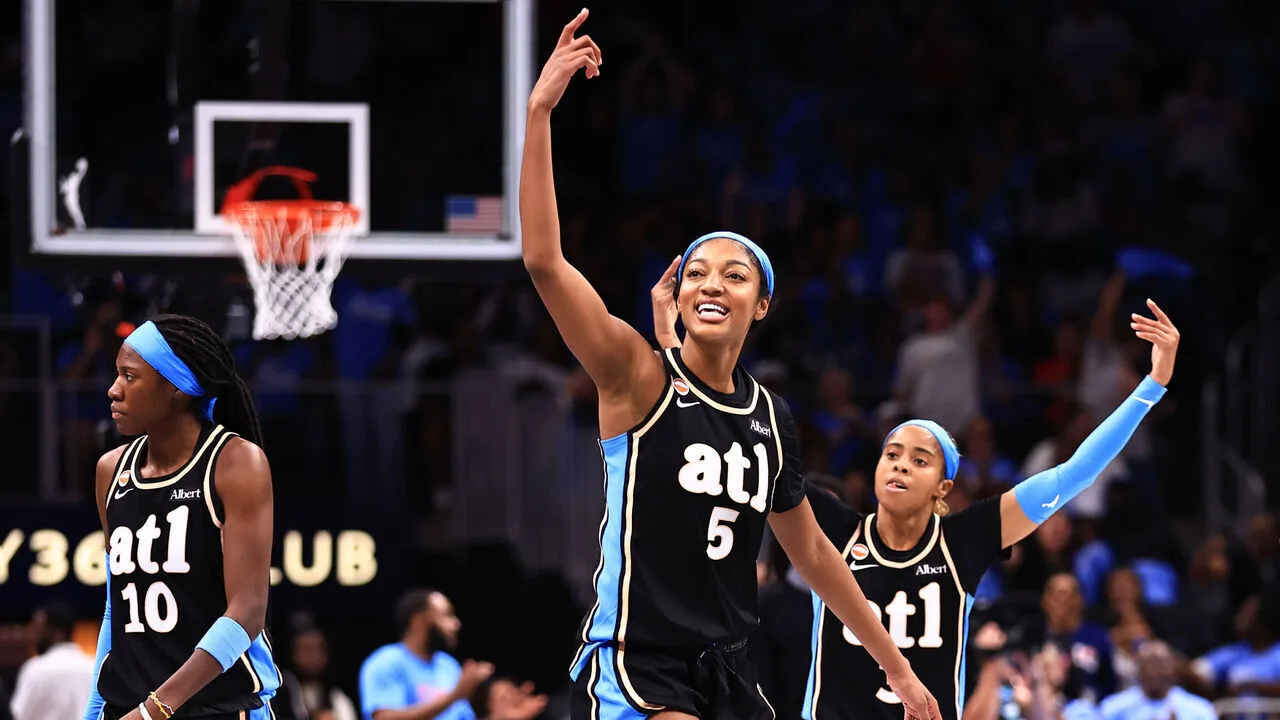
As of October 27, 2026, five active WNBA franchises have never won the league championship: the Atlanta Dream, Connecticut Sun, Golden State Valkyries, Toronto Tempo and Portland Fire. Atlanta and Golden State are competing in the ongoing 2026 Finals, so one will leave this list when the championship is decided. A Finals game victory alone does not remove a team.
Which active WNBA teams have never won a title?
This list uses franchise history, not only the current city or nickname. It also counts the teams playing in 2026 rather than combining active clubs with defunct franchises and future expansion announcements. Those two choices explain several differences between lists you may encounter.
| Active 2026 franchise | WNBA championships as of October 27 | Why its situation needs context |
|---|---|---|
| Atlanta Dream | 0 | Returning to the Finals after three earlier appearances |
| Connecticut Sun | 0 | The franchise began as the Orlando Miracle |
| Golden State Valkyries | 0 | A second-season club competing in its first Finals |
| Toronto Tempo | 0 | An expansion team that began playing in 2026 |
| Portland Fire | 0 | The new 2026 expansion franchise, not a continuation assumed from its name |
The WNBA's current team directory and its official Finals history provide the starting points: identify the active clubs, then check which franchise histories include a championship. Dallas needs an additional lineage check because its titles were won under the Detroit Shock name. That does not make Dallas a never-champion franchise.
Recent expansion also changes the number of clubs with no title even if no established team loses or gains a championship. A new organization begins without a league crown. Comparing the raw count in an older article with today's count therefore requires checking the league's size and the date of the list. Our 2026 team-count guide explains the active field.
For the complete historical winners, use the champions-by-year table through 2025. This article answers the opposite question: which active franchises are still waiting, why some familiar names are excluded and what event changes their status. It does not treat an undecided 2026 series as an already awarded title.
Atlanta and Connecticut have long histories without the final trophy
The Dream and Sun represent a different kind of wait from a first-year expansion club. Both have reached the championship round before. Their absence from the champions column reflects the result of those series, not an absence of significant playoff achievements.
Atlanta's first Finals game win was a milestone, not a title
Atlanta's earlier Finals appearances came in 2010, 2011 and 2013. Seattle won the first of those series and Minnesota the other two, with Atlanta swept each time. That history made the Dream's 2026 Game 2 victory a distinct milestone: the franchise had finally won a game on the Finals stage.
The Dream's official recap records a 79-65 win over Golden State on October 19, led by Angel Reese's 30 points and 16 rebounds. The achievement ended one kind of drought. It did not end the franchise's wait for the series trophy. A headline celebrating the first Finals win needs to be read with the word game attached.
That distinction is especially important in a best-of-seven championship series. One victory is part of the path to four, not an alternative way to become champion. Atlanta's entry on this list therefore remains correct while the 2026 series is undecided, even though the team has already achieved something its earlier finalists did not.
Connecticut's record includes the Orlando Miracle years
The Sun's history does not begin from zero when the name Connecticut appears. The team's official history traces the organization back to the Orlando Miracle from 1999 through 2002, followed by its Connecticut era beginning in 2003. Neither part of that franchise history includes a WNBA championship as of this article's date.
Connecticut has appeared in the Finals in 2004, 2005, 2019 and 2022. Those runner-up finishes demonstrate repeated opportunities and strong teams across different eras. They are not league titles, just as a Finals appearance by another club does not become a championship when many years have passed.
For a historical comparison, specify whether you mean the franchise's complete wait or its years in a particular location. Both questions can be useful, but they have different starting points. A fan remembering the Connecticut contenders and a reader counting the Orlando years are discussing different portions of one continuing organization, rather than two unrelated championship records.
Golden State, Toronto and Portland are newer title pursuits
The three recent expansion teams belong on the same factual list as Atlanta and Connecticut, but their circumstances are very different. A new organization starts with no championships because it has had few opportunities to win one. Describing every team here as suffering a long championship drought would hide that difference.
The Valkyries reached the Finals in their second season
Golden State began playing in 2025 and reached the playoffs that year. Its next step was a place in the 2026 Finals against Atlanta. The Valkyries' official Finals preview describes that progression from an inaugural playoff appearance to the championship series in year two. Neither milestone, by itself, is a league championship.
That makes Golden State an unusual entry: a team can have no title while already being one of the last two contenders for one. A search result written before the Finals might describe the Valkyries as never having reached that round; by October 2026, that description would be out of date even while the championship count remained zero.
For a Golden State fan, the relevant distinction is between reaching a new stage and completing it. The franchise does not need a long history to make a title meaningful, and its rapid progress does not make the championship automatic. The final series determines whether its name stays in this group.
Toronto and Portland joined in 2026
The Tempo and Fire made their debuts in 2026. The league's season announcement set Toronto's opening game for May 8 and Portland's for May 9. Neither reached the 2026 playoffs. Their first championship opportunities therefore ended before the Finals began.
New teams can still employ players who have won elsewhere. The 2026 expansion-draft results, for example, identify Toronto selections Nyara Sabally and Aaliyah Nye as previous WNBA champions. Those individual achievements remain part of the players' careers; they do not add a championship to Toronto's team record.
Our expansion draft explainer covers how new clubs acquire players and rights. Building a roster and inheriting its members' individual experience is a different process from inheriting another franchise's results. That distinction helps explain why a team full of experienced professionals can still be pursuing its first trophy.
Franchise history explains why Dallas is not on the list
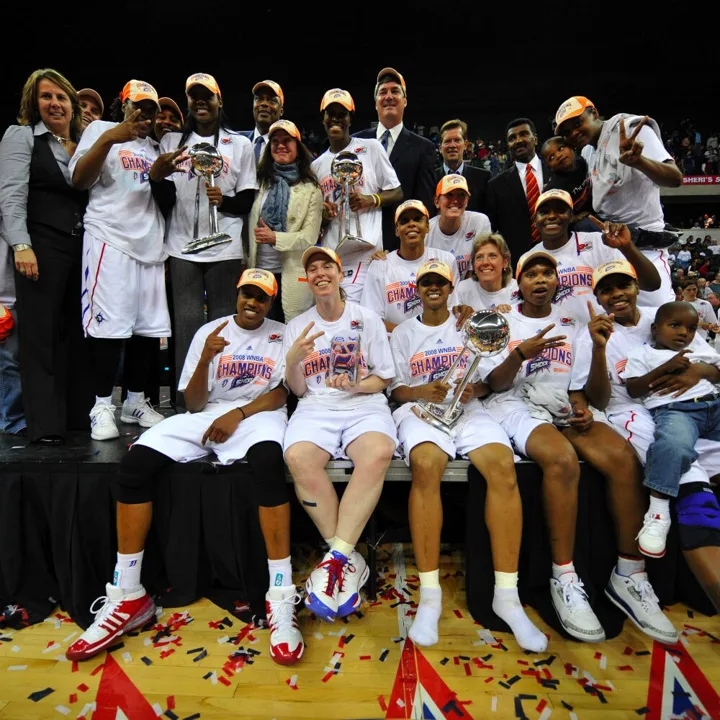
Dallas is the team most likely to produce a disagreement about this question. The Wings have not won a WNBA championship while playing in Dallas. Their franchise, however, won three while it was the Detroit Shock. A list using the full history of active franchises must account for those championships.
The WNBA's Detroit FAQ traces the moves from Detroit to Tulsa and then Dallas. Archived official game notes also place the Detroit and Tulsa seasons alongside the Dallas record and list three WNBA titles. The organizational history did not start again when the jersey changed.
| Identity | Playing seasons | WNBA championship years |
|---|---|---|
| Detroit Shock | 1998-2009 | 2003, 2006, 2008 |
| Tulsa Shock | 2010-2015 | None |
| Dallas Wings | 2016 onward | None through October 27, 2026 |
A city name and a franchise record answer different questions
Consider two questions a fan might ask. “Has Dallas hosted its own WNBA champion?” asks about the team's Dallas era. “Has this franchise ever won?” reaches back through its earlier homes. Answering zero to the first question and three to the second is consistent, provided the scope is clear.
The historical champions should still be called the Detroit Shock in accounts of those seasons. Calling the 2008 winner the Dallas Wings would place a later identity into an earlier event. At the same time, excluding every achievement before 2016 would produce a misleading full-franchise total.
This distinction also prevents a title drought from being confused with a team that has never won. A former champion can go many seasons without another trophy and still remain a former champion. For Dallas supporters, a future title in their city would be a new local milestone; it would not be the first championship anywhere in this franchise's history.
When comparing lists, check whether the author counts city eras, current names or continuous franchises. The answer can change with the question. This guide uses continuous franchises throughout, including Connecticut's earlier Orlando years and Dallas's Detroit championships.
A returning team name does not automatically inherit old titles
Houston presents a different question from Dallas. The original Houston Comets won the WNBA's first four championships, from 1997 through 2000. That is an established part of league history. It does not mean the Connecticut Sun won those seasons, and it does not remove Connecticut from this dated 2026 list.
The official May 13 sale approval says the Sun remain in Connecticut for 2026 and relocate to Houston beginning in 2027. The Sun's FAQ explains that Houston will receive the rights to player and coach contracts at the handover. This is a relocation of the Sun, rather than an extra Houston team competing alongside Connecticut in the 2026 standings.
There is a heritage question beyond that transaction. KPRC reported that team officials said the Comets' history and records would carry forward. Houston supporters can celebrate the original dynasty and the return of its name. The league's sale approval, however, does not spell out how future statistical records will combine or distinguish those histories.
For this article, the answer stays anchored to the season being counted: Connecticut played in 2026 without a WNBA title in its Orlando-to-Connecticut history. There is no need to decide a future Houston record-book convention to answer that question. Our 2027 Houston relocation guide covers the move separately from the current championship list.
Portland illustrates another form of return. The league's expansion announcement awarded a new franchise for 2026 and acknowledged the earlier Fire, which played from 2000 to 2002. The familiar name connects generations of local fans, but the current club arrived through expansion. It did not play an uninterrupted sequence of seasons dating from 2000.
That distinction matters even when it does not change the numerical answer. Neither Portland era produced a league title, so Portland belongs here either way. Yet calling 2026 its twenty-seventh playing season would give a false impression of its opportunities. A city can have a long basketball memory while its current roster and organization are beginning a new competitive history.
What counts as a championship and when this list changes
For this list, a championship means the WNBA league title awarded at the end of the postseason. In 2026, the Finals are a best-of-seven series, as the official postseason FAQ explains. A team must win four games in that series to become champion. Winning the regular-season standings, advancing through an earlier round or earning an individual award does not complete that requirement.
The Commissioner's Cup is a different competition
The word “championship” also appears in the Commissioner's Cup Championship. The WNBA's Cup explainer identifies it as an annual competition held during the season, with its own qualifying games and final. That trophy is meaningful, but it answers a different sporting question from the league title awarded after the playoffs.
A useful example is New York. The Liberty won the 2023 Commissioner's Cup, while Las Vegas won that year's WNBA Finals. New York's first league championship followed in 2024. The league's account of their rivalry separates the two achievements. A fan remembering New York lifting a trophy in 2023 is remembering a real victory; the competition attached to that trophy determines which historical list it belongs on.
The same care applies to players. An Olympic gold medal, college championship or WNBA title with a previous employer is an individual career achievement. It is not a championship for every WNBA team that player later joins. Look at the franchise's winning seasons when answering a team-history question, and at the athlete's career record when answering a player-history question.
Update the list after the clinching result
The date at the top of this article matters because both 2026 finalists appear in the table. The league's October 26 announcement of Game 6 on October 29 places this October 27 update during an unfinished series. Neither Atlanta nor Golden State should be removed simply for reaching the Finals or winning an earlier game.
Once the official clinching result is final, the winner leaves the group and the runner-up remains. Within the fixed group of fifteen teams active in 2026, that would reduce the count from five to four. It would not erase the runner-up's successful season, and it would not award a title based on which team had the better regular-season record.
Future seasons require a fresh list of active franchises as well as a fresh list of champions. Expansion can add teams without titles; relocation can change the name used to display an existing team. Those changes should be dated instead of silently mixed into a 2026 total. For the next game in a live title pursuit, check WNBA games today; for a historical claim, first identify the season, competition and franchise being counted.
Sign in with Google to join the discussion.