
How this all-time ranking was built
Who is the best WNBA player of all time? There is no single statistic that can settle it. Diana Taurasi has the strongest case across a full, two-decade career, while A'ja Wilson has an extraordinary peak and a record five MVP awards through 2026. This ranking puts Taurasi first and Wilson second as of October 10, 2026, with the rest of the list judged on the same mix of achievement and influence.
We weigh five things: how dominant a player was at her best, how long she remained elite, what she contributed in the playoffs, whether her defense matched her offense, and the context of her era and teammates. Championships matter, but a title is a team result. MVP awards matter, but they do not capture every defensive possession or every crucial pass. A long career can outweigh a short peak; a historically great peak can sometimes compensate for fewer seasons. The order below is an editorial judgment, not an official league ranking.
The WNBA's W25 announcement is a valuable point of reference. In 2021, a panel selected 25 great and influential players without ranking them from first to 25th. Fans subsequently voted Diana Taurasi their GOAT from that group. Those are two different exercises, and neither automatically settles where active players belong five years later. For a snapshot of what current players were doing in 2026, use our 2026 player ranking; an all-time list asks a broader question.
The ten best WNBA players of all time
These ten players have different routes to greatness: a guard who ran a dynasty for two decades, centers who controlled both ends of the floor, and scorers who changed what an offense could ask of its star. The ranking includes the confirmed October 2026 MVP award and championships through 2025. It does not assume an outcome for the unfinished 2026 postseason. Reading the cases matters more than treating one place as a permanent verdict.
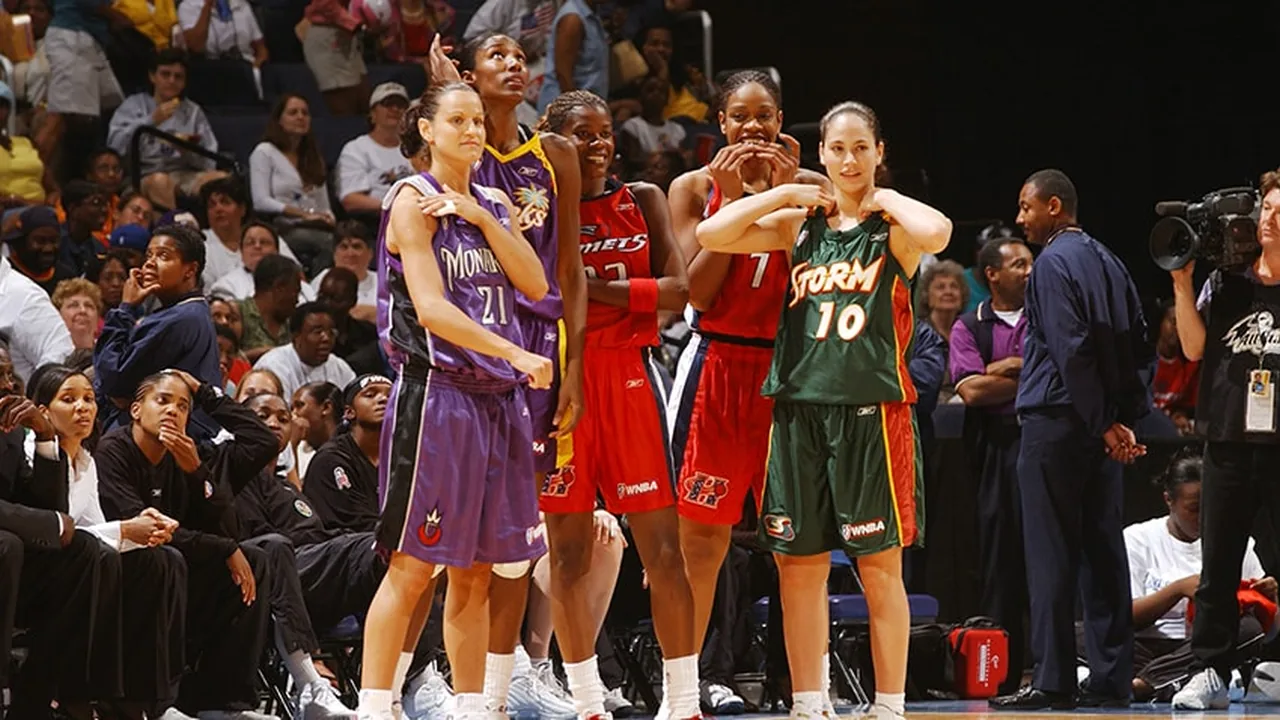
10. Sue Bird — the point guard who sustained Seattle
Bird's greatest skill was making an excellent team function on demand. She led the Seattle Storm to four WNBA championships, spanning different teammates, coaches and eras. An all-time assists leader and a 20-year one-franchise player, she created high-quality shots without needing to lead every night in scoring. That is easy to understate on a ranking built around MVP trophies or points per game: the pass that forces a rotation may be as valuable as the shot that follows it.
Her case grows when you consider how long Seattle could count on her decision-making. Early-career Storm basketball and the 2020 title team had different offensive demands, yet Bird remained the organizer. She belongs among the greatest for lasting elite guard play and championship leadership. At No. 10, the distinction is that several players above her combined comparable team success with a stronger individual scoring or defensive-award peak. A fan who values floor generalship most could reasonably place her higher.
9. Sylvia Fowles — the two-way center benchmark
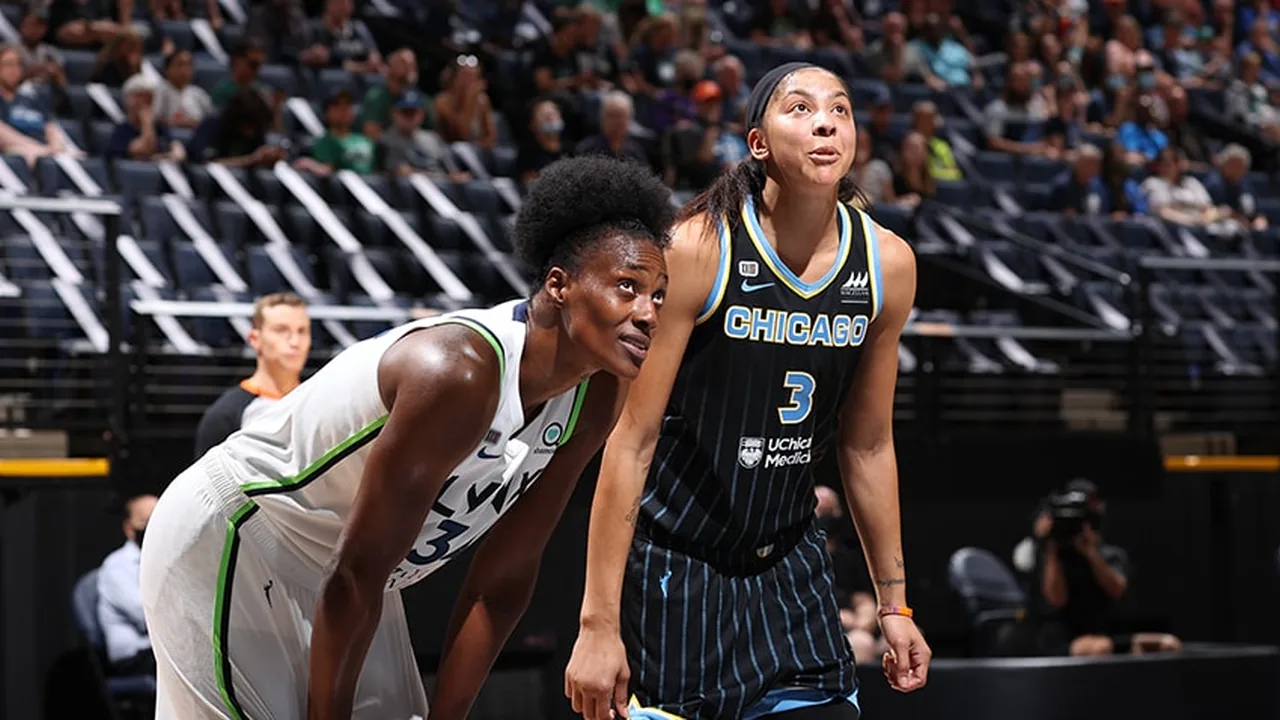
Fowles gave a team reliable offense near the rim while taking away the same shots at the other end. Her résumé includes two championships with Minnesota, the 2017 regular-season MVP, four Defensive Player of the Year awards and two Finals MVPs. That combination captures her value better than a points total alone. On many possessions she finished a play with a rebound before the opponent could get another chance.
Great center defense can be hard to compare with a guard's creation, because blocks and steals record only part of the work. Fowles changed where opponents could shoot and made missed shots into possessions for her team. She was also a consistent finishing target, which gave Minnesota's perimeter stars a different route to efficient offense. Her rank reflects that rare balance. She might move above more decorated scorers for readers who give rim protection and rebounding the same weight as an offensive engine.
8. Maya Moore — a shorter career with a towering peak
Moore's WNBA career was shorter than those of most players on this list, but her eight seasons were remarkably dense with success. Minnesota won four titles while she was a central piece, and Moore added a 2014 MVP and the 2013 Finals MVP. Her scoring could swing a game without requiring one predictable type of shot: she could find space on the perimeter, score from the midrange and finish in transition. In the biggest games, that variety made her difficult to scheme out.
The longevity question keeps Moore eighth here; it does not erase how high her peak reached. She was a leading player on a sustained Lynx run, rather than a brief playoff surprise. When discussing a dynasty, it is also fair to acknowledge the strength of her teammates instead of assigning every team win to one star. Our WNBA dynasty ranking examines the team side of that story. A ranking that weights peak seasons over total years could put Moore nearer the top five.
7. Sheryl Swoopes — the original two-way superstar
Swoopes helped define what an elite WNBA wing could be from the league's earliest seasons. She won four straight titles with the Houston Comets, earned three regular-season MVPs and collected three Defensive Player of the Year awards. Those honors show the breadth of her game: she could carry scoring responsibility while also taking demanding defensive assignments. Houston had several great players, yet Swoopes was far more than a beneficiary of a strong team.
Judging the first generation requires some historical care. The league had fewer teams, different roster depth and a different style of offense than the 2020s. Swoopes still dominated the competition she actually faced, which is what an era-sensitive ranking should reward. She belongs high because her impact was visible on both ends and because she helped establish the league's standard of star power. A purely statistical comparison across seasons would miss much of that original context.
6. Tamika Catchings — an unmatched defensive legacy
Catchings is the player whose defensive résumé can change the shape of any all-time list. She won a record five Defensive Player of the Year awards, but she also had the offensive burden of leading Indiana for years. Her 2011 MVP made clear she was much more than a specialist. In 2012, she and the Fever won the championship, with Catchings taking Finals MVP after delivering at both ends in the decisive series.
The case for a higher place is straightforward: a wing who can pressure the ball, anticipate passing lanes, rebound and still serve as a primary scorer gives her team several ways to win. Those contributions can be less visible than an explosive scoring night. Catchings' sustained excellence in Indiana also shows how to evaluate a great player without requiring a long championship count. One title was a team outcome; her repeated defensive dominance and leadership were individual constants.
5. Lauren Jackson — the stretch big ahead of her era
Jackson combined the skill of a perimeter scorer with the size and defensive presence of a frontcourt anchor. She won three MVP awards, two Seattle championships, a Finals MVP and a Defensive Player of the Year award. Her range pulled defenders away from the basket, creating space that traditional centers did not always provide. At the other end, her shot blocking and positioning gave Seattle a defensive center of gravity.
Her peak is one of the league's clearest examples of a player changing the geometry of a game. An opponent could not simply assign a big defender to protect the paint, because Jackson could score from outside; using a smaller defender introduced a different problem near the basket. Injuries and a shorter WNBA run than some rivals are part of the discussion, but the three MVP seasons demonstrate sustained elite dominance within that span. She is fifth because the top four have either a longer defining career or a singular postseason case.
4. Cynthia Cooper — the league's first dominant closer
Cooper arrived when the WNBA launched and quickly became the offensive standard. She won the league's first two regular-season MVP awards and the first four Finals MVP awards as Houston captured four consecutive championships from 1997 through 2000. Four Finals MVPs are a remarkable answer to the question of who could control a series under pressure. The Comets' success also belonged to a deep core, including Swoopes and Tina Thompson; Cooper's individual postseason honor is the reason her own case stands apart.
She was already 34 at the league's launch, so a simple total of WNBA seasons understates how good she was. At the same time, the shorter WNBA career makes a direct longevity comparison with Taurasi or Bird difficult. This ranking gives her credit for dominating the competition available to her and for turning that dominance into title-series production. A peak-and-playoff-first ranking might reasonably put Cooper first; ours gives some additional weight to sustained excellence across later league eras.
3. Lisa Leslie — the original franchise cornerstone
Leslie was a foundational figure for the Los Angeles Sparks and a complete center by the standards of any era. She earned three regular-season MVP awards, two Defensive Player of the Year awards, two championships and two Finals MVPs. She could score, rebound, protect the rim and lead a team through a postseason. Her first dunk in a WNBA game is an enduring historical moment, but it is only one small part of a much larger on-court résumé.
Leslie's placement above Cooper reflects both duration and breadth. She remained a league-defining player beyond the WNBA's first four seasons and was rewarded for excellence on both sides of the ball. The Sparks' title years proved she could carry that level into the Finals. Her game also offers a useful bridge between the original generation of WNBA stars and the more versatile frontcourt players who followed. A fan who prioritizes the league's earliest standards could choose Leslie as No. 1 without making a frivolous argument.
2. A'ja Wilson — a modern peak with room to rise
Wilson already has an individual award record no other WNBA player had reached: five regular-season MVPs. She won the fifth on October 8, 2026, after collecting her third Las Vegas title and second Finals MVP in 2025. The Aces' run gives her case team achievement as well as extraordinary individual production. She can anchor a defense, rebound in traffic and supply efficient high-volume scoring, so there is little need to excuse one side of her game when arguing for the other.
Why place her second rather than first? Her career is still in progress. Taurasi offers a fully completed, 20-season body of work with long-term scoring records and three titles. Wilson's peak may be the strongest of anyone here, and her fifth MVP makes the GOAT debate considerably closer. Future seasons can change the answer. This page will evaluate confirmed results rather than award her a championship or postseason honor from a playoff run that has not finished as of this update.
1. Diana Taurasi — the full-career case
Taurasi's claim joins peak scoring, creative guard play, longevity and championship performance. Across 20 WNBA seasons, all with Phoenix, she became the league's career scoring leader with 10,646 points, won three championships, earned a regular-season MVP and twice received Finals MVP. She could create a shot late in a possession, punish defenders from long range and make the pass that kept the Mercury offense moving. That varied offensive responsibility lasted for far longer than most star careers.
The WNBA's 2021 W25 panel named Taurasi among its unranked greats, and fans then chose her in the separate GOAT vote. That vote is evidence of how fans viewed her career at the time, not an official verdict over every future player. Our own No. 1 choice rests primarily on the full record: elite seasons, sustained production and playoff success together. Wilson's award peak is a serious counterargument, and Cooper's Finals record is another. Taurasi leads this particular ranking because she combined a historically long offensive prime with a complete championship résumé.
Why reasonable fans rank these players differently
An all-time list is most useful when it makes the argument visible. A player can dominate a single season, sustain a near-MVP standard for many years, or make a championship team substantially better without being its leading scorer. Those achievements are not interchangeable. The WNBA's own W25 panel considered performance, leadership, team success and influence; it did not arrange the players in a first-to-last order. That makes a fresh ranking an invitation to compare values rather than a correction of an official list.
Peak, longevity and team context can change the order
Start with peak versus longevity. Wilson's five MVPs through 2026 are the strongest award-based argument for placing her first already. Taurasi's 20 seasons make a different case: she was an offensive centerpiece long after most players' peak years had passed. Cooper's opening four Finals MVPs make an unusually concentrated playoff case. Moore's eight seasons are shorter than Bird's, but a peak-weighted ranking could put Moore comfortably above her. There is no honest formula that turns those very different careers into one indisputable number.
Team context matters just as much. Championships deserve credit, but Seattle, Houston and Minnesota each built strong cores around their stars. One player does not win a Finals alone, while a great player on a thinner roster should not disappear from the argument. We therefore use titles alongside role, defense, individual honors and sustained quality. That approach also explains why Catchings places above players with more rings: her five defensive awards and long Indiana leadership measure value that a championship tally cannot capture.
Candace Parker, Breanna Stewart and other close calls
The hardest omission is Candace Parker. She won MVP and Rookie of the Year together in 2008, earned another MVP, and collected three championships with different franchises. Her passing from the frontcourt and ability to influence a game without forcing a shot make her a plausible top-ten choice. Breanna Stewart has multiple MVP awards, Finals MVP honors and championship experience; because her career is ongoing, her final historical place is still taking shape. In a top 10 that valued modern versatility slightly more, either could replace someone near the bottom.
Yolanda Griffith, Tina Thompson, Tina Charles and Elena Delle Donne also have serious cases, and the league's W25 gives readers a broader unranked historical group to explore. The list above is therefore a defined selection, not a claim that No. 11 is unimportant. When debating an omission with another fan, ask which criterion changed the outcome: the player's best season, defensive role, playoff performance or total years at the top. That question leads to a better conversation than simply comparing ring counts.
Questions fans ask about WNBA all-time greats
The word “greatest” appears in an official league celebration, several fan polls and many independent rankings. Those sources are useful, but they are not all answering exactly the same question. Here are the two distinctions that most often clear up the debate.
Who did the WNBA name the GOAT?
In 2021, the league named an unranked group of 25 influential and accomplished players called the W25. It then held a separate fan vote among those players. Diana Taurasi won that fan vote; Sue Bird, Maya Moore, Candace Parker and Cynthia Cooper completed the announced top five. The statement “Taurasi won the WNBA GOAT vote” is accurate. The statement “the W25 panel ranked every player and placed Taurasi first” is not. Fans can respect that vote and still make a different evidence-based ranking today.
Can an active player already be an all-time great?
Yes. Waiting for retirement is not a requirement for recognizing a career that has already crossed historical thresholds. Wilson's fifth MVP in 2026 and her confirmed championship work establish an all-time case now. What remains open is her final position: more elite seasons could strengthen her longevity argument, while future injuries or team changes could alter the comparison. The same principle applies to other active stars. To separate this historical judgment from one season's form, check the 2026 statistical leaders and compare those results with the longer careers discussed above.
Sign in with Google to join the discussion.