
Which WNBA history book should you start with?
Start with The W if you want a book specifically about the WNBA, Shattering the Glass for the wider history of women's basketball, or Hoop Muses for an illustrated introduction to the game's culture. Those are different reading tasks. A history of the professional league cannot stand in for the full story of school, college, amateur and international basketball, and a player's memoir offers a different kind of evidence again.
This guide selects books by their documented subject, authorship and edition. The recommendations draw on publisher descriptions and bibliographic records checked on October 17, 2026; they are not presented as firsthand reviews of complete texts. That distinction matters when choosing something to borrow or buy. We can identify what a publisher says a book covers and help you match that scope to your interests without inventing opinions about chapters we have not reviewed.
For a new fan, the useful first question is what feels missing while watching a game. If old franchise names or championship references are confusing, choose league history and keep our WNBA history timeline nearby. If you want to understand how players reached a professional league at all, choose a history that begins well before 1997. If you are drawn to visual storytelling and the relationship between basketball and popular culture, an illustrated guide may be the better entry point.
There is no need to buy a whole shelf at once. Choose one main route, then add a second book with a different scale: national and regional, professional and amateur, or institutional history and individual experience. Two books that ask different questions can be more useful than two general accounts of the same period. The selections below explain those differences, identify editions where they matter, and suggest a practical reading sequence rather than declare a single universal winner.
A final boundary helps: a history book is a fixed account, while the league continues to change. Use the current WNBA schedule to follow today's competition and a book to explore the people, decisions and earlier seasons behind it. A publication year alone does not tell you the exact final event covered in the manuscript.
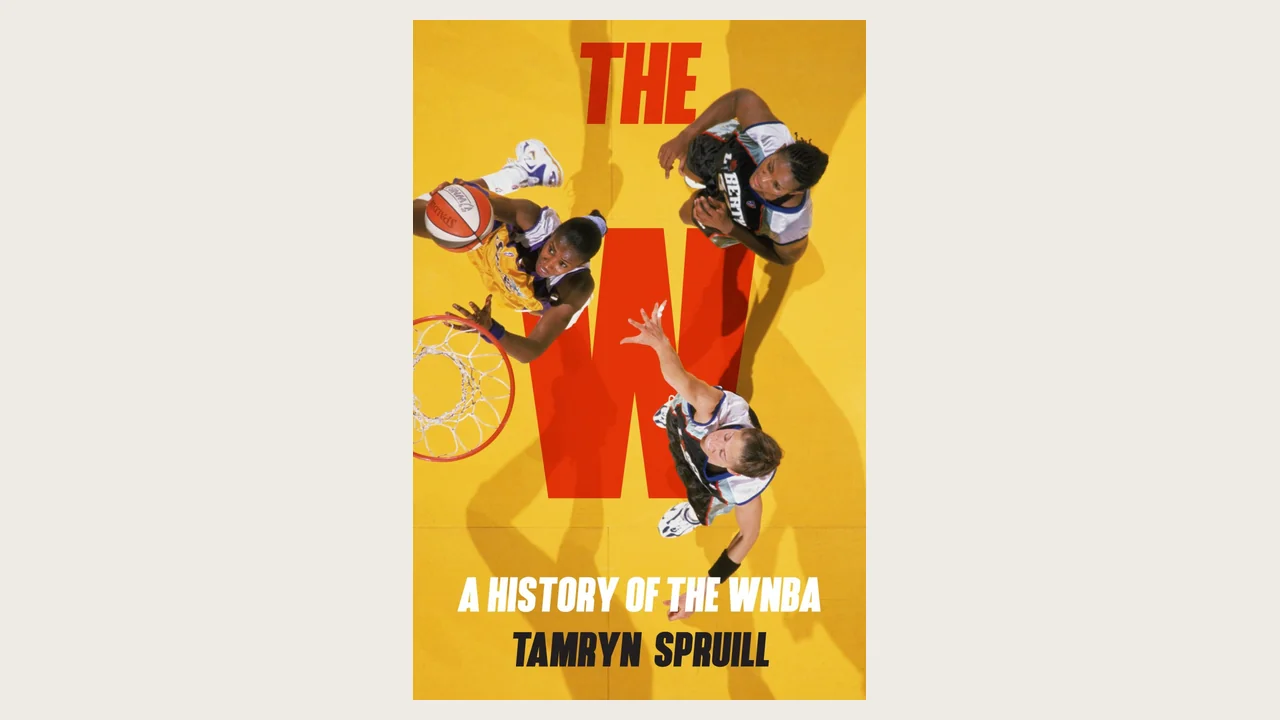
The W: a dedicated history of the league
The W: A History of the WNBA is the most direct fit here for someone whose question begins with the professional league itself. Its subtitle, How the WNBA Survived, Evolved, and Changed Professional Sports, signals an institutional story as well as an account of players and games. Abrams describes its scope as the league's development from its beginnings through difficult years and a later surge in attention.
That makes it a logical first selection when your interests include how a league builds an audience, survives instability and develops a recognizable identity. Read with those questions in mind rather than expecting a season-by-season statistical directory. You can keep a separate record of unfamiliar teams, players and seasons, then look up individual results as needed. This approach helps preserve the difference between understanding the competition's development and merely memorizing who won.
Tamryn Spruill, publication date and edition details
The author is journalist Tamryn Spruill. The Abrams Press hardcover was published on September 22, 2026, with a listed length of 496 pages and ISBN 9781419758812. Those details identify a particular edition; they are useful when searching a library catalog or checking whether two listings refer to the same book. A different format may have a different ISBN, so do not reject an ebook listing solely because its number differs from the hardcover.
A recent publication date is useful, but it has limits. Books pass through reporting, writing, editing and production before they arrive on shelves. Do not assume that a September 2026 publication includes every event later that season, or that a new announcement has already been incorporated. For a reading group, agree to discuss the time period actually covered in the copy you have rather than imposing an imagined cutoff based on its cover year.
One productive way to use a league history is to follow a single question through your reading: what made a particular team or generation possible? Note references to ownership, media access and player influence alongside the basketball results. Then compare that institutional perspective with a book centered on a region or an earlier team. The contrast gives you a manageable second reading choice without asking one volume to explain every form of women's basketball.
Shattering the Glass and Hoop Muses offer different foundations
If your interest extends beyond the league, these two books offer distinct routes into women's basketball. The choice is less about which one is newer and more about how you want to encounter the subject. One is a broad historical account with a revised edition; the other uses illustration and a cultural frame. They can also work as a pair, with one introducing questions that you follow in the other.
Shattering the Glass: choose the revised edition deliberately
Shattering the Glass: The Remarkable History of Women's Basketball is by Pamela Grundy and Susan Shackelford. The University of North Carolina Press lists the revised edition as published on February 18, 2025. Its paperback ISBN is 9781469674780, and the catalog lists 272 pages. The publisher describes a history combining historical research and oral interviews, with expanded attention to the contemporary game and social issues.
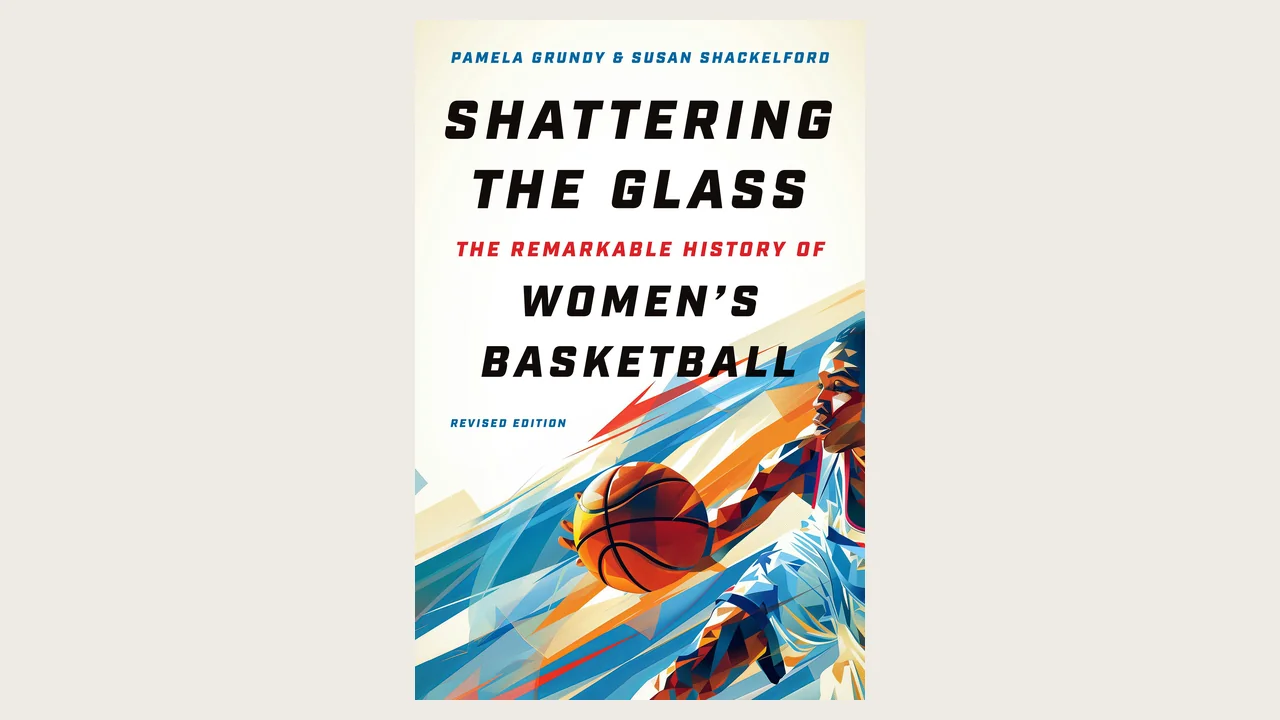
That edition distinction is practical. A library or used-book listing may refer to the original 2005 publication, while a newer listing refers to the revised volume. Neither label should be guessed from a search-result thumbnail. Check the publication statement and ISBN in the actual record. If a bookseller groups formats and editions together, open the details for the copy you intend to order. A used copy can be a reasonable choice, but it should be the version you meant to obtain.
For a reader whose main question is how the women's game developed before and alongside the WNBA, the broader scope is the reason to consider it. Use a preview or library copy to examine the contents, notes and index before committing to a longer reading project. Ask whether the periods, communities and institutions you want to study are visible there. That is a better test of fit than assuming every book with “basketball” in the subtitle offers the same historical coverage.
Hoop Muses: an illustrated route through the women's game
Hoop Muses: An Insider's Guide to Pop Culture and the (Women's) Game brings together Seimone Augustus and Kate Fagan, with illustrations by Sophia Chang. The Twelve hardcover listing gives March 7, 2023 as its publication date, 256 pages and ISBN 9781538709146. Its documented approach combines basketball history, culture and visual storytelling, rather than offering a WNBA-only reference manual.
The publisher also describes an imagined future framing the journey through the past. Treat that device as storytelling, not a claim about what the league has already done or will definitely do. This is a useful distinction for younger readers or book clubs moving between history and creative presentation: identify what is a historical subject, what is an interpretation and what belongs to the fictional frame.
Because illustration is central to the book's presentation, preview the format you plan to use. A print copy, an ebook on a small screen and an audiobook do not deliver visual material in the same way. Check the individual edition rather than assuming a format conversion preserves every part of the experience. If you borrow the audio edition first, you may still want to inspect a physical or digital sample before deciding whether it suits a shared reading group.
These books need not compete for the same place on your shelf. Choose the revised Shattering the Glass for a broad historical reading project, or begin with Hoop Muses when the illustrated cultural approach is what draws you in. Then let the questions raised by your first selection determine the next book.
Rare Gems connects generations through Minnesota
Rare Gems: How Four Generations of Women Paved the Way for the WNBA, by Howard Megdal, narrows the lens from a whole league to an interconnected basketball history. Triumph Books lists the 256-page cloth edition in May 2024, ISBN 9781637271988. The publisher describes a story whose people and institutions connect through Minnesota, spanning generations before and during the modern game.
One figure identified in that description is Elvera “Peps” Neuman, whose basketball life included barnstorming and forming the Arkansas Gems. The geographic details are a reason to read carefully: the regional thread does not mean every team in the story played in Minnesota. Nor does a subtitle mentioning the WNBA mean the book is a complete history of every franchise. Its documented premise is continuity across generations, not a catalog of championships.
This is a useful second-book option after a general league history. A national account can help you locate events in time; a regional account invites questions about how opportunities passed between people and institutions. As you read, track the connection being made in each case. Is it a shared place, a personal relationship, an organization, a coaching influence or an opportunity that became available to the next generation? Those connections are more informative than treating all earlier players as interchangeable “pioneers.”
Fans interested mainly in the Minnesota Lynx should check the contents before assuming this is a team-season retrospective. Our WNBA champions by year guide answers the separate question of who won each title. A generational book has room to explain paths into the sport that a championship table cannot show. Keeping the two tasks separate makes both resources more useful.
For a discussion group, pair this book with a league-wide history and ask how changing the geographic scale changes the story. Which people become visible when the focus moves away from only the biggest national names? What kind of evidence links one generation to the next? You do not need to decide in advance that one scale is superior. The value of the pairing is that it encourages a more specific understanding of how a professional league can rest on much older basketball communities.
Before the WNBA: two books that explain the earlier game
Two more selections take you outside the league altogether. That is intentional. A professional competition has a beginning, but the people, ambitions and barriers that shape it have longer histories. These books focus on particular teams in different periods, giving you a smaller subject to study after a broad overview. Neither should be mistaken for a guide to current WNBA players or an account of an original WNBA franchise.
Inaugural Ballers and the first U.S. women's Olympic team
Andrew Maraniss's Inaugural Ballers: The True Story of the First U.S. Women's Olympic Basketball Team concerns the American team at the 1976 Olympics. The Penguin Random House record places the original publication in 2022 and lists a Viking Books for Young Readers paperback published March 5, 2024, ISBN 9780593351260, at 368 pages. The publisher's age guidance for that paperback is 12 and up.
The date in the subject is as important as the date on the book. This is a 1976 Olympic story, not a book about the 1996 U.S. team or the first WNBA season. Keeping that straight helps you build a useful sequence: international competition, the later creation of a professional league, and the subsequent careers and institutions you encounter in league history. Similar themes do not make those events interchangeable.
For a family or school reading choice, use the publisher's guidance as a starting point and inspect a sample. Consider the reader's interest in historical context, preferred length and comfort with nonfiction. A young-readers imprint does not mean the historical subject is relevant only to children; adults choosing a focused introduction can assess it by the same question of fit. If you plan to discuss it alongside another book, agree which edition everyone will use so page references remain meaningful.
Dust Bowl Girls and a team from the 1930s
Dust Bowl Girls: The Inspiring Story of the Team That Barnstormed Its Way to Basketball Glory, by Lydia Reeder, moves further back. Its subject is a Depression-era women's basketball team in Oklahoma and coach Sam Babb. The Algonquin Books trade paperback was published December 5, 2017, with 304 pages and ISBN 9781616207403. Reeder also explains on her author site that Babb was her great-uncle and describes the family materials and subsequent research behind the project.
Consider this selection when a particular team story appeals more than a century-spanning overview. It lets a reader ask concrete questions about access to education, travel, competition and the circumstances in which athletes played. Those are useful reading questions, not claims that an early team was simply a modern WNBA club in different uniforms. Compare each setting on its own terms.
A good pairing would place this earlier team narrative beside a broad women's basketball history. Use the overview to orient the period, then ask what a single-team account makes visible. Which opportunities depended on a particular coach or institution? What information comes from memories, records or later interpretation? You can explore those questions without reducing the past to a simple march toward today's professional league.
Build a reading plan and check the edition before borrowing
For a league-first route, begin with The W, then choose either Rare Gems for a regional perspective or the revised Shattering the Glass for the wider sport. For a visual introduction, start with Hoop Muses and follow one historical subject that interests you. For a team-story route, choose Inaugural Ballers or Dust Bowl Girls, then use a broader history to place that team in context. These are suggested sequences, not prerequisites.
Before borrowing or buying, compare the full title and author, edition statement, publisher, publication date, format and ISBN. Search by title plus author when you want to discover available formats; search by a specific ISBN when you need the exact edition identified above. The International ISBN Agency's guidance distinguishes editions and product formats, which is why a paperback and ebook can carry different numbers even when their titles match.
If your library does not show the version you want, ask about other branches, ebook services or interlibrary loan. Availability depends on the library, and a catalog record does not guarantee a copy is ready to borrow. If you use a retailer, check the selected format and seller's condition description before checkout. An attractive listing price is not enough to establish that you are getting the revised edition, a complete physical copy or the format you prefer.
Keep reading notes simple. Write down one unfamiliar person, one institution and one question after each session. For a book club, ask what the account treats as its central unit: a league, a team, a region or a generation. Ask whose voices appear, what kind of evidence supports a claim, and which questions remain outside the book's scope. Those prompts encourage discussion without demanding that everyone arrive with decades of WNBA knowledge.
You can also connect reading with watching. Pick one team or historical thread to follow during the season, then consult the WNBA television and streaming schedule for upcoming broadcasts. Keep current announcements separate from a book's fixed publication record. The best reading plan is one you will continue: one well-chosen volume, a clear question and room to follow the next story that catches your interest.
Sign in with Google to join the discussion.