
Which years count as 1990s WNBA basketball?
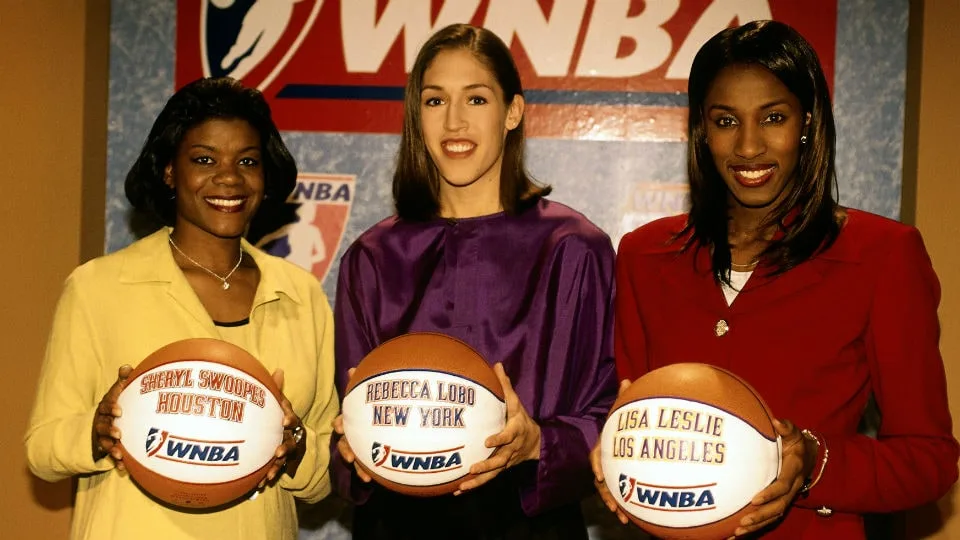
The WNBA players of the 1990s belong to three league seasons: 1997, 1998 and 1999. The NBA approved the league concept in April 1996, and the inaugural season began on June 21, 1997. Cynthia Cooper, Sheryl Swoopes, Lisa Leslie, Rebecca Lobo, Tina Thompson and Teresa Weatherspoon are central names from that first era, but the story also includes international veterans, experienced professionals arriving later and young players taking their first major steps.
That short time frame matters. A famous women's basketball player from 1992 was not necessarily a WNBA player then, because the league had not begun. College achievements, Olympic appearances, overseas careers and other domestic professional leagues supplied important background. Their records should be recognized in their own competitions rather than folded into a WNBA statistical total.
It also means that “rookie” needs context. A first WNBA season could arrive after years of high-level basketball elsewhere. The league's first players were not all beginning their professional development together. Their differing routes help explain why the inaugural era combined established names with draft prospects instead of resembling an ordinary expansion of an already mature competition.
This guide offers selected players and team connections for exploring that era. It is not a complete census of everyone who appeared from 1997 through 1999, nor a greatest-ever ranking. The aim is to make an old roster, game broadcast or championship photograph easier to understand: which team name belongs to the period, how the player arrived and why that player is a useful starting point.
The WNBA's formation chronology separates the approval and roster-building stages from the start of play. For the broader sequence beyond these three seasons, our WNBA history timeline follows the league into later eras. Here, the focus stays on the players who gave the original competition its identity.
The original eight teams and players to recognize
The original team names are the best map for the inaugural player pool. The following examples connect each 1997 club with players from that first season. They are selected starting points, not complete opening-day lineups or a ranking of the most important person on every roster. A name missing from this short table should not be read as a statement about that player's contribution.
| Original 1997 team | Players to start with |
|---|---|
| Charlotte Sting | Vicky Bullett, Rhonda Mapp |
| Cleveland Rockers | Eva Nemcova, Merlakia Jones |
| Houston Comets | Cynthia Cooper, Sheryl Swoopes, Tina Thompson |
| Los Angeles Sparks | Lisa Leslie, Penny Toler |
| New York Liberty | Rebecca Lobo, Teresa Weatherspoon, Kym Hampton |
| Phoenix Mercury | Michele Timms, Bridget Pettis |
| Sacramento Monarchs | Ruthie Bolton |
| Utah Starzz | Dena Head, Wendy Palmer |
Keep the historical spelling when looking up a game: Utah used “Starzz,” and the Sacramento team was the Monarchs. Searching only a current franchise name can hide the period you want. Conversely, finding a familiar city in an old record does not establish that every later club in that city is the same organization. Start with the year and the exact team name, then follow any franchise history separately.
How the first rosters were assembled
The founding teams were built through several stages. Established players were assigned to teams in January 1997. The February Elite Draft followed, with Dena Head selected first by Utah. The later draft for college players and unsigned veterans began with Houston choosing Tina Thompson. The official 1997 draft archive presents the Elite Draft and regular draft as distinct lists.
This explains an apparent contradiction in accounts of the league's first No. 1 pick. Head and Thompson were first in different selection processes. It also explains why a founding star's team connection may be described as an allocation rather than a regular draft pick. Before comparing players' entry positions, identify which process the record is describing.
The roster-building sequence is part of the players' story. An established international or Olympic player and a recent college graduate could join the same new club by different routes. Calling everyone an inaugural player is useful shorthand; treating everyone as the same kind of prospect removes the experience that helped shape the first competition.
Houston's championship core set the early standard
The Houston Comets won every championship played during the 1990s: 1997, 1998 and 1999. They added a fourth consecutive title in 2000. The league's Houston retrospective identifies Cooper, Swoopes and Thompson as the core of that first dynasty. The distinction between three titles in the decade and four in the overall streak avoids moving a 2000 achievement backward into the 1990s.
Cynthia Cooper's immediate impact
Cooper won the first two regular-season MVP awards, in 1997 and 1998, and led the league in scoring in each of its first three seasons. She also received the championship-series MVP award throughout Houston's four-title run. Those honors make her an essential starting point for anyone asking which player most immediately shaped the league's competitive standard.
Her arrival also illustrates why a WNBA debut should not be confused with a professional debut. Cooper brought extensive experience from basketball outside the new league. When watching an early Comets game, pay attention to how an experienced scorer creates a useful shot rather than only to the final points total. The history becomes more informative when the player is understood as a developed professional, not a prospect who emerged fully formed in the league's first summer.
Sheryl Swoopes and Tina Thompson completed the core
Swoopes was one of the league's defining founding faces. Thompson arrived through the inaugural regular draft and earned All-WNBA First Team recognition in 1997 and 1998. The WNBA's Thompson profile places her alongside Cooper and Swoopes throughout the four championships. Their collective success is a reminder that the period's most visible scorer did not operate in isolation.
For a viewer, the useful comparison is how several major players share a game. Follow where the other two are when one has the ball, how the defense must account for them and how a possession develops after the first action. That offers a better introduction to the Comets than treating the stars as three separate highlight reels. It also leaves room to notice teammates whose contributions do not dominate a short historical summary.
Our champions-by-year guide supplies the wider title sequence. The early Houston years belong near the beginning of a player study because every opponent in this period had to contend with the same championship standard, even as the rest of the league's talent pool changed.
The early stars beyond the Comets
Houston's titles supply the central competitive thread, but the original era should not be reduced to one roster. Other clubs provided different styles, major personalities and the opponents who made those championships meaningful. A player guide becomes more useful when it follows those relationships instead of listing only the eventual winners.
Lisa Leslie and the Los Angeles Sparks
Leslie was a founding star and an All-WNBA First Team selection in 1997. The Sparks' inaugural-season account also identifies Penny Toler as the player who scored the league's first basket against New York. Those are different forms of historical significance: Leslie's sustained role as a central player and Toler's place in a specific opening moment.
Do not move Leslie's later championship peak into the wrong decade. The Sparks' consecutive titles came in 2001 and 2002, after the period covered here. Watching their late-1990s games can instead show the team before that breakthrough. A later Hall of Fame career does not make every earlier season identical; the chronology is part of what makes revisiting the footage worthwhile.
New York's frontcourt and backcourt identities
Lobo and Weatherspoon offer two entry points into the early Liberty, while Hampton, Vickie Johnson and Sue Wicks widen the picture beyond the founding publicity. New York reached the championship round in both 1997 and 1999. The team's historical account places Weatherspoon's famous long-distance buzzer-beater in Game 2 of the 1999 Finals. It forced a deciding game; it did not win the championship.
That distinction is a useful lesson in remembering highlights. A memorable shot may become the defining image of a series without changing who ultimately won it. Revisit the score and series situation alongside the clip. Then look at the possessions that came before the finish: the frontcourt work, ball movement and defensive effort that made the game close enough for the final attempt to matter.
Playmakers, international players and the wider league
Timms brought an established Australian basketball background to Phoenix through the initial allocation. The Mercury's official biography connects her to its 1998 Finals team and the first All-Star Game in 1999. Her story makes clear that the league's foundation included international experience from the beginning. Janeth Arcain in Houston and Haixia Zheng in Los Angeles are further names to follow in the inaugural draft archive.
Cleveland's Eva Nemcova and Sacramento's Ruthie Bolton joined the inaugural All-WNBA First Team. Their presence is a reminder that a season's best-player discussion extends beyond the championship matchup. Look at honors, game roles and team context together, rather than assuming that the most frequently replayed Finals clip contains every important early player.
New arrivals changed the league in 1998 and 1999
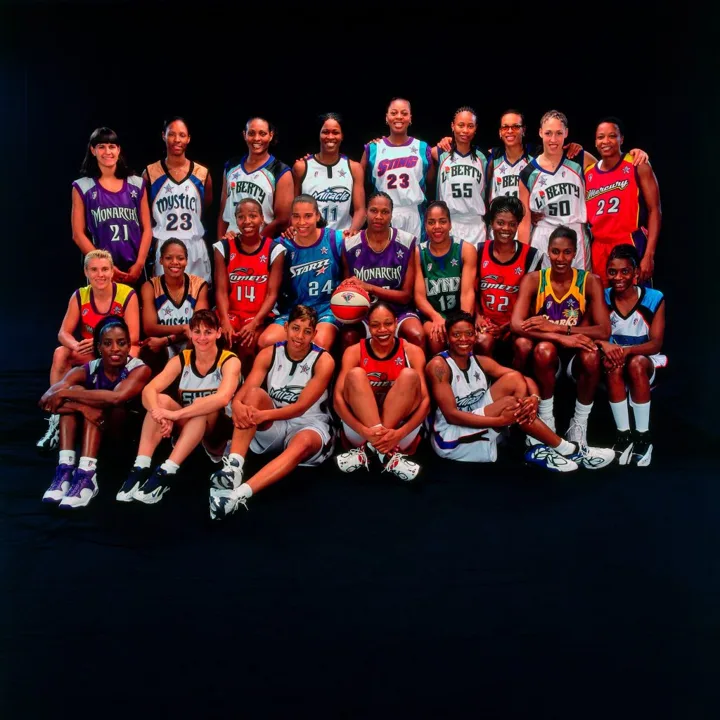
The player pool changed quickly after the inaugural season. Detroit and Washington began in 1998, followed by Minnesota and Orlando in 1999. The league therefore grew from eight teams to twelve within its first three seasons. A list of original 1997 players cannot represent every major name associated with the late 1990s.
The 1998 draft brought Margo Dydek to Utah as the first selection and Ticha Penicheiro to Sacramento as the second. These additions provide two contrasting paths into an early-player study: a center and a playmaker, arriving in the league's second season rather than its first. Their entry years matter when looking at a roster or asking why a familiar name is absent from an inaugural team photograph.
Yolanda Griffith and Chamique Holdsclaw in 1999
The end of the American Basketball League also changed the available talent. The Aces' history of the 1999 draft describes experienced players entering that selection pool. Washington chose Holdsclaw first, and Sacramento selected Griffith second. The resulting group mixed college arrivals with professionals who had already built substantial careers elsewhere.
The 1999 WNBA awards record gives the clearest distinction: Griffith won MVP, Defensive Player of the Year and Newcomer of the Year, while Holdsclaw won Rookie of the Year. Those are different honors. Describing both simply as the same kind of rookie hides the way the league recognized experience from outside its own competition.
Griffith's immediate MVP season is especially important to the decade's story. Houston continued winning championships, but a Sacramento newcomer won the league's top regular-season individual award. Team dominance and the distribution of individual talent were not identical. Penicheiro and Griffith also make Sacramento a useful alternative to a history told entirely through Houston, Los Angeles and New York.
For a chronological reading list, organize players by their first WNBA season before comparing achievements: the founding 1997 group, the 1998 arrivals and the 1999 additions. Then record the relevant team and the honor or role you are studying. That simple organization makes it easier to appreciate the league's rapid development without pretending that its first three years were one unchanging roster.
How to read an early roster or compare players fairly
First identify what kind of list you have found. A preseason roster, an opening-day roster, a draft result and a season's statistical register answer different questions. Being selected in a draft does not, by itself, establish every game a player appeared in. A season register may include someone who joined later or played only briefly. Use the appropriate game record if you need to establish who was available on one specific night.
Next, keep competition and period separate. A college award belongs to a college career, an ABL performance belongs to that league and an Olympic result belongs to international basketball. They explain the player's background, but they should not be added to WNBA totals. Likewise, a player's later championship or career scoring milestone should not be presented as something already achieved in 1999.
Schedule length also affects comparisons. The WNBA's historical overview records 28 regular-season games in 1997, 30 in 1998 and 32 in 1999. Total points or assists therefore reflect different numbers of available games even within this short period. Per-game numbers can help, but they still require attention to minutes, role and the way a team played.
For an introductory comparison, ask three questions: What did the player do in the season being discussed? What responsibility did that player have? What evidence supports the conclusion? An award list, a statistical table and a full game can each contribute a different part of the answer. None needs to be treated as the only acceptable measure.
Finally, notice how an archive labels a retired player. An old profile may preserve a former team's name and use present-tense template language. Read that as an archival record, not an announcement that the player is on today's roster. Keeping the season visible avoids many of the most common errors in searching for early WNBA players.
Three starting points for exploring the first era
If the names now feel familiar but the era still seems distant, choose a small number of historical games to study. Look for official archival material where available, and distinguish a full broadcast from a short highlight compilation. This is a viewing and reading sequence, not a promise that every game is currently offered free or on a particular subscription service.
- New York at Los Angeles, June 21, 1997. The first game connects Lobo, Weatherspoon, Leslie and Toler with the league's opening setting. New York won 67-57. Study the whole team's movement around the recognizable stars rather than watching only for the first basket.
- Houston against New York in the 1997 championship game. The Comets won 65-51. The official postseason archive preserves the result and the single-game championship format. It is a concise introduction to the first champion and its main challenger.
- Games 2 and 3 of the 1999 Finals. Watch the context around Weatherspoon's famous Game 2 finish, then follow what happened in the deciding game. Houston ultimately won the series 2-1. Pairing the games keeps one extraordinary highlight connected to the championship outcome.
After each game, write down one player you recognized and one you want to learn about. Use the season's roster, draft archive and awards to follow that second name. This approach gradually widens a history that otherwise can become a loop of the same handful of celebrated clips.
The value of exploring the first era is seeing how quickly the league acquired distinctive teams, experienced stars and new challengers. Its first three seasons provide a manageable place to begin. When you return to the present, our current WNBA games page and league schedule offer a separate view of today's competition without confusing modern rosters with the names in an archival photograph.
Sign in with Google to join the discussion.