
The players who made the first WNBA seasons work
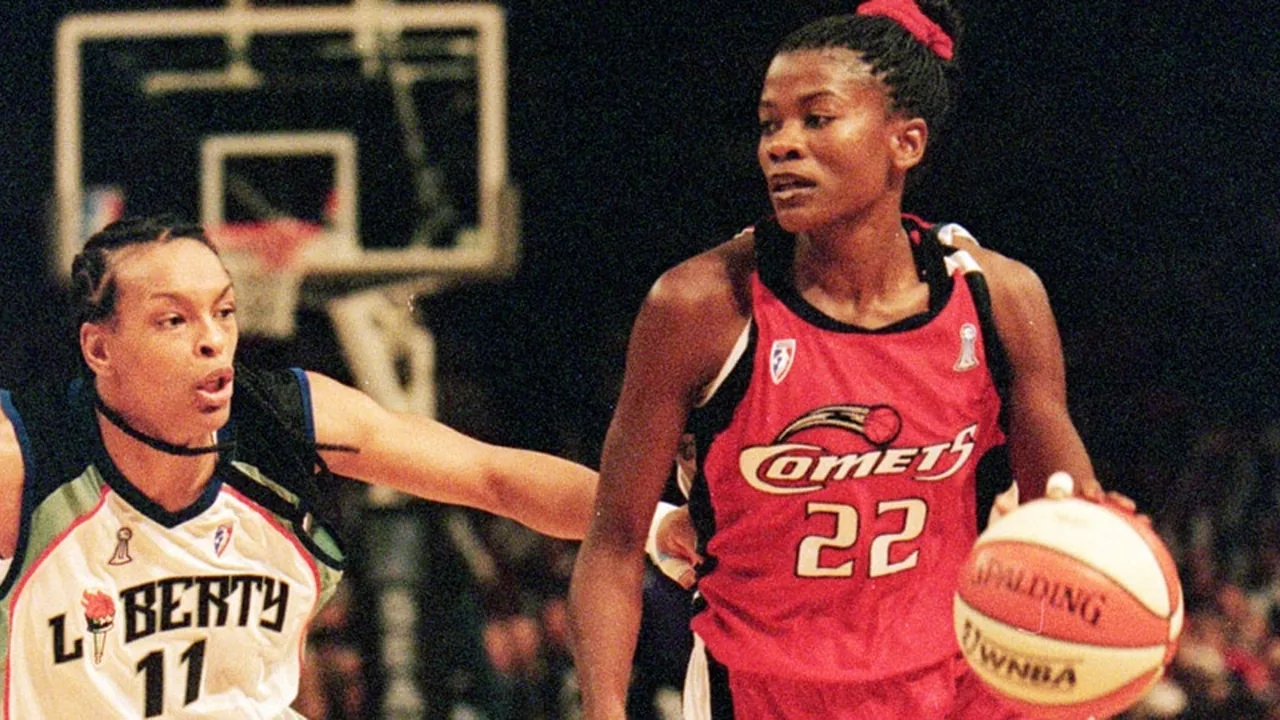
Black players helped build the WNBA's first championship teams and expanded what later teams could ask their best players to do. Sheryl Swoopes brought scoring and perimeter defense to the Houston Comets. Cynthia Cooper could make a defender pay for leaving either a driving lane or room to shoot. Tina Thompson gave Houston a forward who could score away from the basket. Together they offer an early example of a question coaches still face today. How do you build an offense that gives three excellent players room to use their best skills?
Before they were teammates, each took a different route into the league. The WNBA's formation timeline places Swoopes and Rebecca Lobo among its first signees on October 23, 1996. The league assigned its first group of players to teams in January 1997. Dena Head went first in the February Elite Draft, which was for signed veterans. Houston selected Thompson first in the April draft for college players and unsigned veterans. That distinction matters when you read that Swoopes signed first or that Thompson was the first overall pick. Those accounts describe different steps in setting up a new league. WNBA formation chronology and league history timeline
Houston showed how stars could share the floor
The Comets won the first four championships, from 1997 through 2000. Cooper won two regular-season MVP awards and took Finals MVP in all four title years. A WNBA retrospective describes a guard who had spent more than a decade overseas before the league began and could create an opening off the dribble. She could attack a defender's feet and finish at the rim or rise for a shot once the defender backed off. From the wing, Swoopes could come off a screen and pull up, then take on a difficult defensive assignment at the other end. Thompson's shooting drew a forward out of the lane and gave both guards more room to work. WNBA retrospective on Houston and Finals MVP archive
New York gave that group a difficult test in 1999. In Game 2 of the Finals, Thompson described scoring late out of a pick-and-pop before Teresa Weatherspoon hit the long shot that kept the Liberty alive. Houston still won the series. Moments such as Thompson's score show how the offense could go to another option in a pressure possession. The Comets also needed players around the three stars to keep the ball moving, defend the next possession and give the offense time to reset. The Houston championship rosters put those supporting players in view. WNBA oral history of the 1999 Finals
Lisa Leslie and Tamika Catchings expanded the picture of defense
A defensive possession can change well before anyone touches the ball. A center who gets to the rim early can turn a layup into a pass back outside. A forward who sees that pass coming can send her team the other way. Lisa Leslie’s Sparks and Tamika Catchings’ Fever gave fans two ways to appreciate how a defender can control a game while carrying a heavy scoring load. Both players won league MVP and Finals MVP in careers that also put them repeatedly on the WNBA’s Defensive Player of the Year list.
Lisa Leslie as a scoring and defensive anchor
Leslie’s first WNBA dunk, against the Miami Sol on July 30, 2002, is the highlight most likely to introduce a new fan to her career. Stay with the games around it and you get the case for a franchise center. Los Angeles won its first two titles in 2001 and 2002 with Leslie as Finals MVP both times. She won three regular-season MVPs and was named Defensive Player of the Year in 2004 and 2008. Her official career profile puts those jobs side by side.
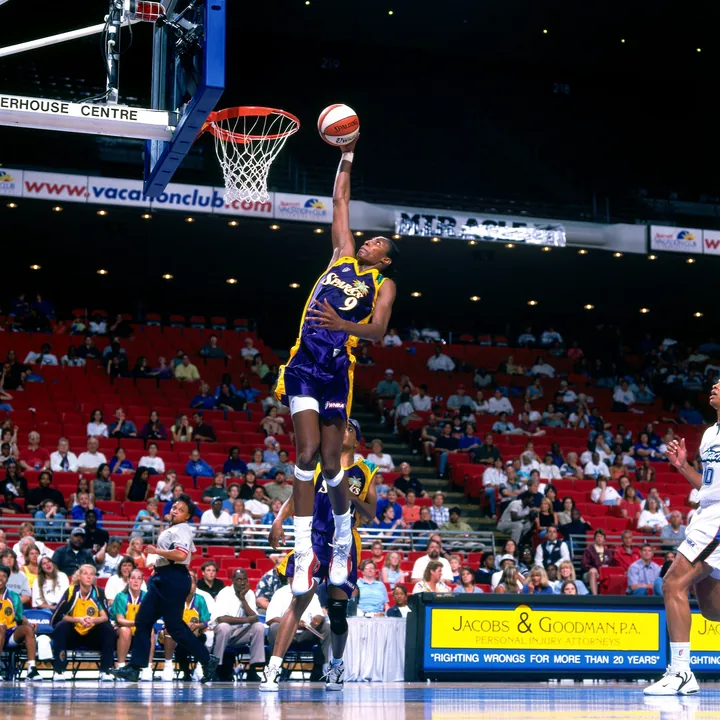
On defense, watch where Leslie is when a driver picks up the ball. If the center has already established a position between the ball and the glass, she can challenge the shot from balance and protect rebounding position. Her teammates are then free to stay closer to perimeter shooters. At the other end, Leslie’s presence near the paint asked defenses to make the inverse decision. An extra body sent toward her opened room for someone else. A highlight of a dunk gives you the vertical reach. Those possessions explain how the reach mattered even when nobody left the floor.
Tamika Catchings and possessions that changed hands
Catchings’ five Defensive Player of the Year awards capture a forward’s version of that influence. Watch her away from the ball. On a drive, the help defender must track the driver and the player she is leaving. A defender who commits before the pass is possible can hand over a clean shot. A defender who reads it a beat later can take away the passing angle and start a break. That judgment is why a sustained run of steals is more interesting than a single spectacular interception. Catchings retired as the league’s career steals leader.
Indiana’s first championship shows how those decisions added up. Catchings scored 25 in the 2012 Game 4 clincher against Minnesota. Across the Finals she averaged 22.3 points with 2.0 steals and 2.3 blocks, production that came while she was also helping finish possessions and begin the next ones. That 2012 Finals MVP followed her 2011 regular-season MVP. The WNBA’s playoff breakdown gives fans several games to revisit from that run.
Maya Moore and Candace Parker won with different kinds of versatility
Maya Moore and Candace Parker landed on opposite sides of the 2016 Finals. If you have time for two games, start with Game 4 in Los Angeles and Game 5 in Minnesota. Moore scored 31 in an 85–79 Game 4 win that kept the Lynx alive. Parker had 28 points and 12 rebounds in a 77–76 Game 5 win that gave Los Angeles its first championship since 2002. Four days apart, two forwards took control in ways that are worth keeping separate when people use the word versatility. WNBA 2016 playoffs archive.
Moore could make a defender work from the moment Minnesota crossed half court. A player threatening to shoot off a catch can pull her defender a step farther up the floor. A step like that puts a cut behind the defender or a route to the offensive glass in play. Follow Moore for a possession after someone else gets the initial touch. The movement before her catch helps explain why she could slot into a loaded Lynx lineup and still be its leading scorer in the 2016 Finals. She was the 2013 Finals MVP, the 2014 regular-season MVP and a champion with Minnesota in 2011, 2013, 2015 and 2017. Minnesota Lynx career honors.
With Parker, the interesting moment is often when a defense sends help against a drive or a post touch. As a big with a clear view over traffic, she could pass over the help, shoot from that spot, or take the ball farther inside. A defensive rebound in her hands could become the start of the offense before a guard had time to come back for an outlet. The Sparks drafted her first in 2008, when she won both Rookie of the Year and MVP. The 2016 title and Finals MVP came with Los Angeles. She went on to win championships with Chicago in 2021 and Las Vegas in 2023. Las Vegas Aces career recap.
Moore’s buzzer-beating three in Game 3 of the 2015 Finals in Indiana is another good starting point. Then spend a quarter tracking where defenders pick her up when a teammate has the ball. Give Parker the same time and track what happens immediately after she secures a rebound. The two exercises reveal how one player can create room before the ball gets to her and how another can create a new angle as soon as it does. The WNBA Finals series guide puts those games in context.
A’ja Wilson set a new standard for a two-way center
Go to Game 3 of the 2025 Finals against Phoenix for a single-game look at what A’ja Wilson asks of opposing teams. She scored 34 points, took 14 rebounds, added four assists and blocked three shots. With 2.2 seconds left she made a turnaround under pressure to put Las Vegas ahead 90–88. The winner is an easy clip to find. The box score from the rest of the game tells you how often she had already needed to make a decision at one end and get back to affect the next one. WNBA Finals honors and game records.
Think about the two reads a center makes on an ordinary ball-screen possession. With Wilson screening, a defender who stays deep risks giving her time for a face-up shot or leaving the guard with room to turn the corner. A defender who comes higher has to get back to Wilson before she turns the catch into something at the rim. Flip ends and Wilson is reading the same angles from the defender’s side. She can show the ball handler a body in the lane and still try to recover to the big. The choice is usually made a step or two before a block makes it into the box score.
In the 2026 regular season those responsibilities showed up on both leaderboards. Wilson led the league at 26.2 points and 1.9 blocks per game and won her fifth league MVP, her third in a row. A scoring lead tells you how often she finished a possession. The defensive number counts shots she got a hand on. On a replay, look for the drives where a guard sees her in position and pulls the ball out. The effect on the opponent’s next choice matters even if the shot clock is the only place it appears. WNBA’s 2026 MVP announcement.
Las Vegas won titles with Wilson in 2022, 2023 and 2025. She was Finals MVP in 2023 and 2025. Chelsea Gray won the 2022 award, a reminder to look at who is handling the ball and who is drawing the second defender on a particular title run. Wilson plays a position Lisa Leslie helped define, in offenses that can ask a big to operate farther from the basket. Watching those games across eras shows how much of the old work still happens near the rim, and how many more decisions a modern center may have to make on the way there. The WNBA records guide puts the award totals in their historical context.
Player leadership from the court to the bargaining table
Freeze the final Sparks possession of 2016 as Nneka Ogwumike goes for her own blocked shot. Minnesota has made the first defensive play and is seconds from winning the title. Ogwumike retrieves the ball and makes a short jumper with 3.1 seconds left. Los Angeles wins 77–76. The same player shot 66.5 percent from the field in the regular season and won league MVP. The title-winning play captures what was so difficult about getting her off a spot. The defender had already stopped the first attempt and still needed to beat her to the rebound. WNBA Game 5 recap and 2016 season records.
Fans following the 2026 labor negotiations heard a different side of Ogwumike’s work. She was president of the Women’s National Basketball Players Association when the union and league announced a tentative agreement on March 20. She spoke about players sharing in the league’s growth. The floor of a player’s contract, the way teams travel, standards for facilities and retirement benefits were among the terms the parties highlighted. Those details matter to players at very different points in their careers. A rookie entering the league has a stake in minimum pay and working conditions from day one. A veteran who has spent years in the league also has decisions to make about life after her last season. March 2026 joint bargaining announcement.
Players ratified the terms on March 23 and the league’s Board of Governors did so the next day. The two sides announced on May 22 that the full agreement had been signed. The deal runs through the 2032 season. Following that sequence keeps one prominent player’s role in perspective and shows where the rest of the players had their say. The 2026 WNBA collective bargaining guide explains what the agreement changes.
For a tour of the basketball, start with Houston and watch who still moves when Cynthia Cooper has the ball. Follow Leslie early on an opponent’s drive, then look for the moment Catchings leaves her own player to help. In the 2016 Finals, pick a Parker rebound and a Moore catch to see who has to react first. Finish with Wilson in Phoenix and track how often she’s in the middle of the play as the ball changes ends. Every clip has a star. Taken together, those possessions show how many ways Black players have shaped the basketball teams can play in the WNBA.
Sign in with Google to join the discussion.